
A review copy of Kobayakawa was kindly provided by Hachette Boardgames UK. Thoughts & opinions are my own.
Another colourful Oink game joins the gang. This time it’s an older game that’s been given a facelift. Jun Sasaki’s Kobayakawa has a simple premise: bet on a single hand of cards; high card wins. Doesn’t sound too exciting when you put it like that, but there are a couple of twists which make this game so much more than the sum of its parts.
VERDICT
players 3-8 | playing time 15 mins
Kobayakawa does with single-card hands what a lot of cards fail to do with five or more. More small-box excellence from Oink Games.
betting
small-box
bluffing
deduction
If the name Jun Sasaki rings a bell for you, but you’re not sure why, it’s probably because you have an Oink game in your collection. Jun has a load of games in his name under the Japanese small-box publisher’s banner. Maskmen, Rafter Five, Deep Sea Adventure, A Fake Artist Goes To New York and many more. He has a knack for creating games which fit in very small boxes but deliver games that feel a lot bigger.
What is Kobayakawa all about?
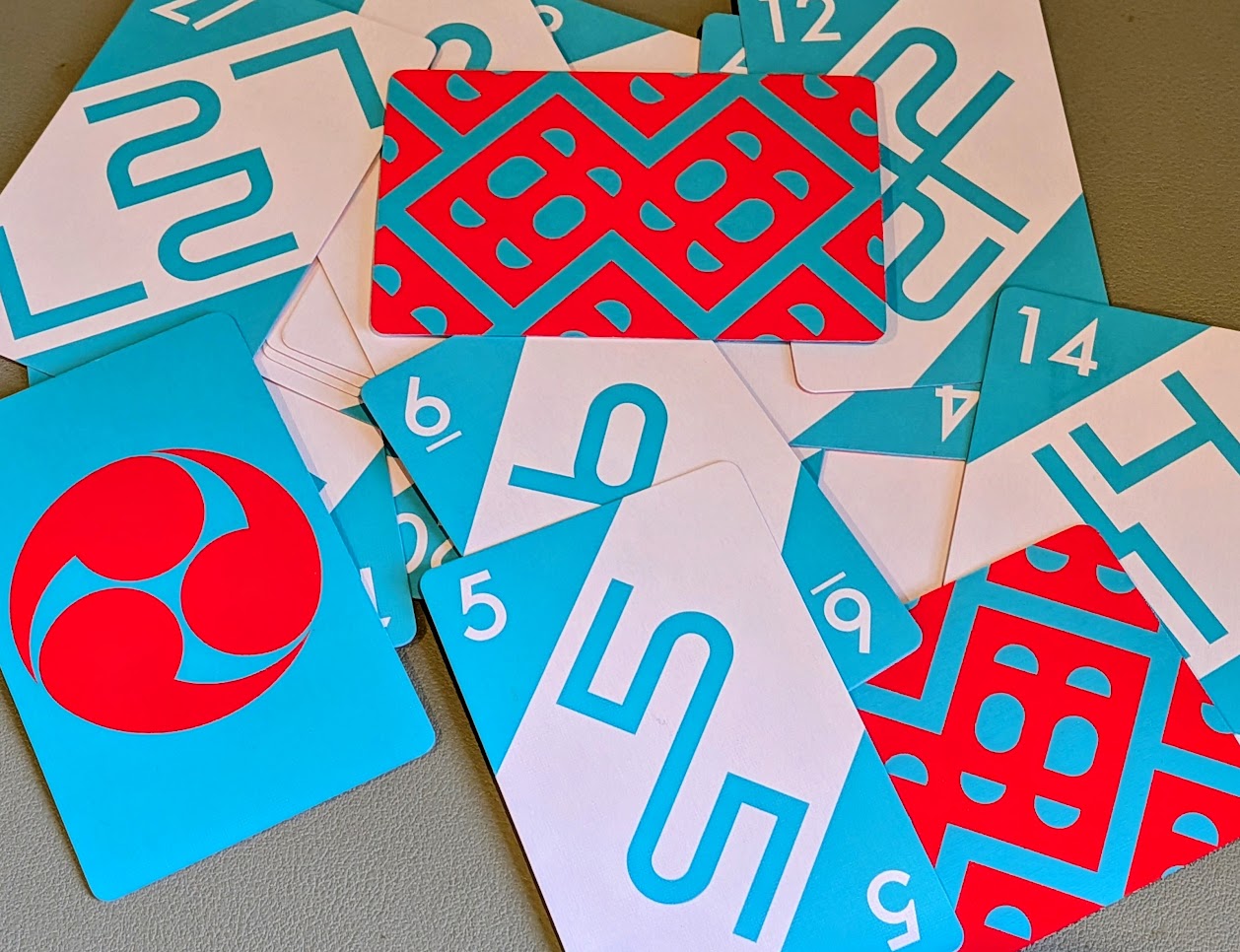
Kobayakawa is so simple in concept that I can teach you how to play right here, right now. There’s a deck of cards, each with a different number on it. Each player gets one card. The top card of the deck – the Kobayakawa card – is turned face up. The player with the lowest value at the reveal gets the Kobayakawa card added to their total. The highest number wins.
On its own, this would be pretty dull, but thankfully there are a couple of interesting little twists. First, every player gets one action. You can either draw a card, keep one, and place the other face up in front of you, thereby giving the rest of the table some information. Or, you can flip the top card of the deck and replace the Kobayakawa card.
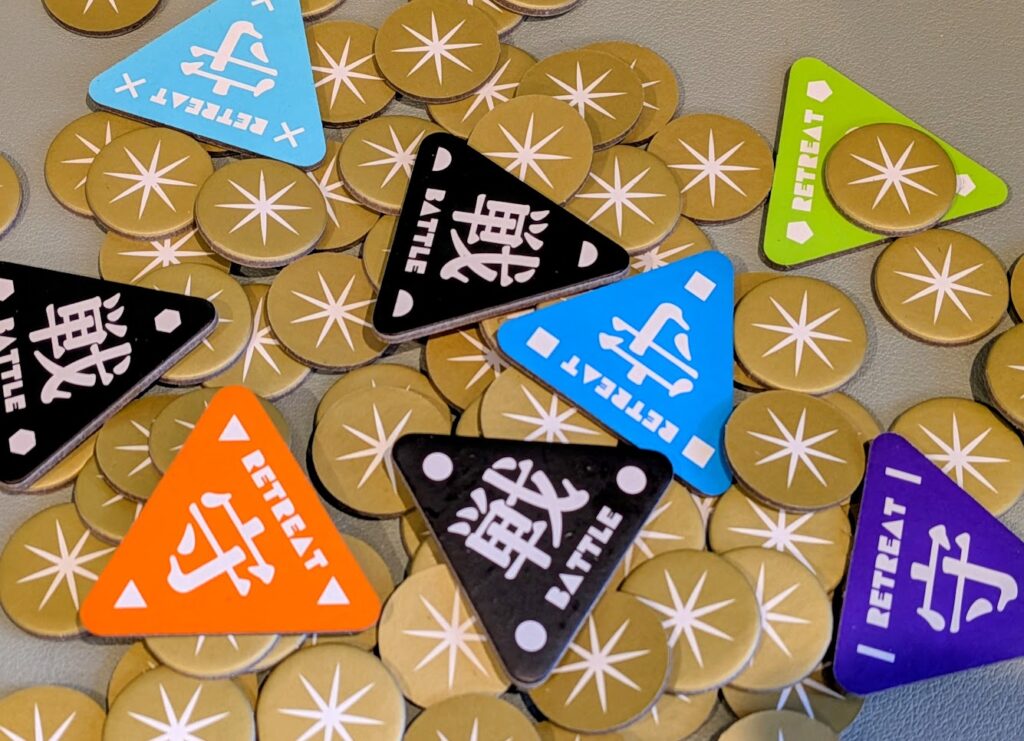
After everyone has done one of those actions, you do a round of Poker-style betting. If you want to stay in for the reveal, you bet tokens. You either match, raise, or fold and drop out of the round. Once everyone has matched the bet or folded, each player who dropped out now gets a chance to bet on the outcome. They stack some tokens on their player token and slide it in front of the person they think will win.
The winner gets the betting pot. Each player who bet on the winner gets their stake doubled. Everyone else loses their bet. The winner also gets a token which matches the current round number, worth that many points. Whoever has the most at the end wins.
Rinse, repeat, reveal
You might be this far through the review wondering why it’s fun. I mean, it sounds interesting when you write it out, but not the stuff of game night stories for weeks to come. Where Kobayakawa comes to life is when it’s had a chance to be played lots. Once everyone around the table knows how to play the game, its true nature starts to emerge.
Kobayakawa’s intrigue comes from the bluffing and betting. Trying to read the other players’ faces when that shared river card gets changed is really good fun. Seeing someone’s eyes light up when it changes from a 5 to an 11 is a good sign that they’ve got a low card.
Or is it?
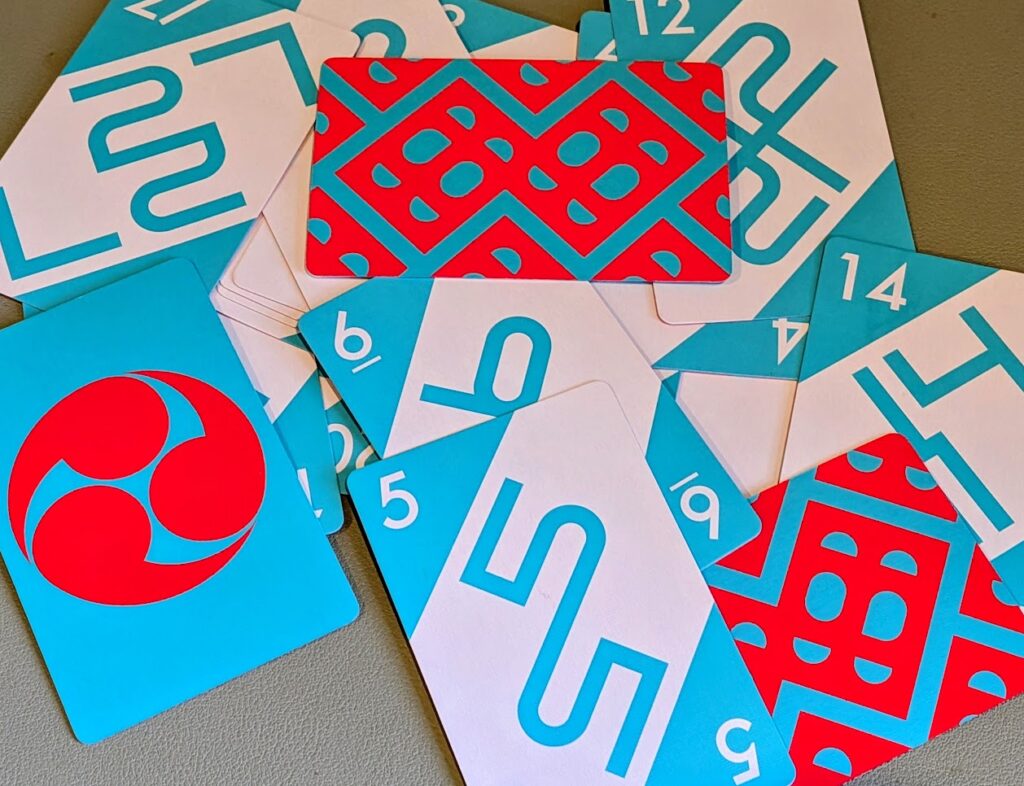
You soon realise that bluffing is a really powerful tool. You can make it seem like things are going amazingly well for you, knowing that you’ve got some terrible, middle-of-the-road total, in the hope that others don’t call your bluff. You can bow out of the betting war if you can read the other players and have a firm idea of who’s going to win.
It’s like Poker in microcosm, and it’s a lot of fun.
Final thoughts
I was already a big Jun Sasaki fan before Kobayakawa landed on my doorstep, so I had high hopes for it. My hopes were rewarded with a great game.
There’s really not too much more to say about the game that I haven’t already said. After all, it’s a game where the players bet on the strength of a single card each. When it’s written out like that, it sounds boooooring. It’s a cliché to say it, but Kobayakawa is much greater than the sum of its parts.
Most of the extra fun is from the way the Kobayakawa card shifts allegiance during the game. Here’s an interesting fact for you: the game is named after Kobayakawa Hideaki, a samurai who famously switched sides during the Battle of Sekigahara. You can read more about that here. It’s really interesting.
The nice thing about pretty much every Oink game in print is that they’re safe gambles. The games are small and cheap, so even if they’re mediocre, it doesn’t really matter. But that’s not the case here. Kobayakawa is a great game, and already one of my favourite starting or ending games for games night.
THANKS TO MY SUPPORTERS
Krissie  Craig Paul Brendan Brett Gary Becky
Gavin Chris Mark Johan Richard Simon Ben Sam (new!)
Help me keep Punchboard independent by joining the supporters

 Buy me a coffee
Pros & Cons
Pros
- Quick and easy to teach
- Poker-style betting with no hand knowledge needed
- Oink Games’ small boxes are gorgeous
Cons
- If you don’t like gambling, you’re not going to have a good time
Want to get this to the table?
Kobayakawa
3-8 Players | Ages 8+
Purchasing via this Zatu link supports Punchboard via an affiliate commission at no extra cost to you.
Kobayakawa (2013)
Design: Jun Sasaki
Publisher: Oink Games
Art: Biboun
Players: 3-8
Playing time: 15 mins
More games like this one