
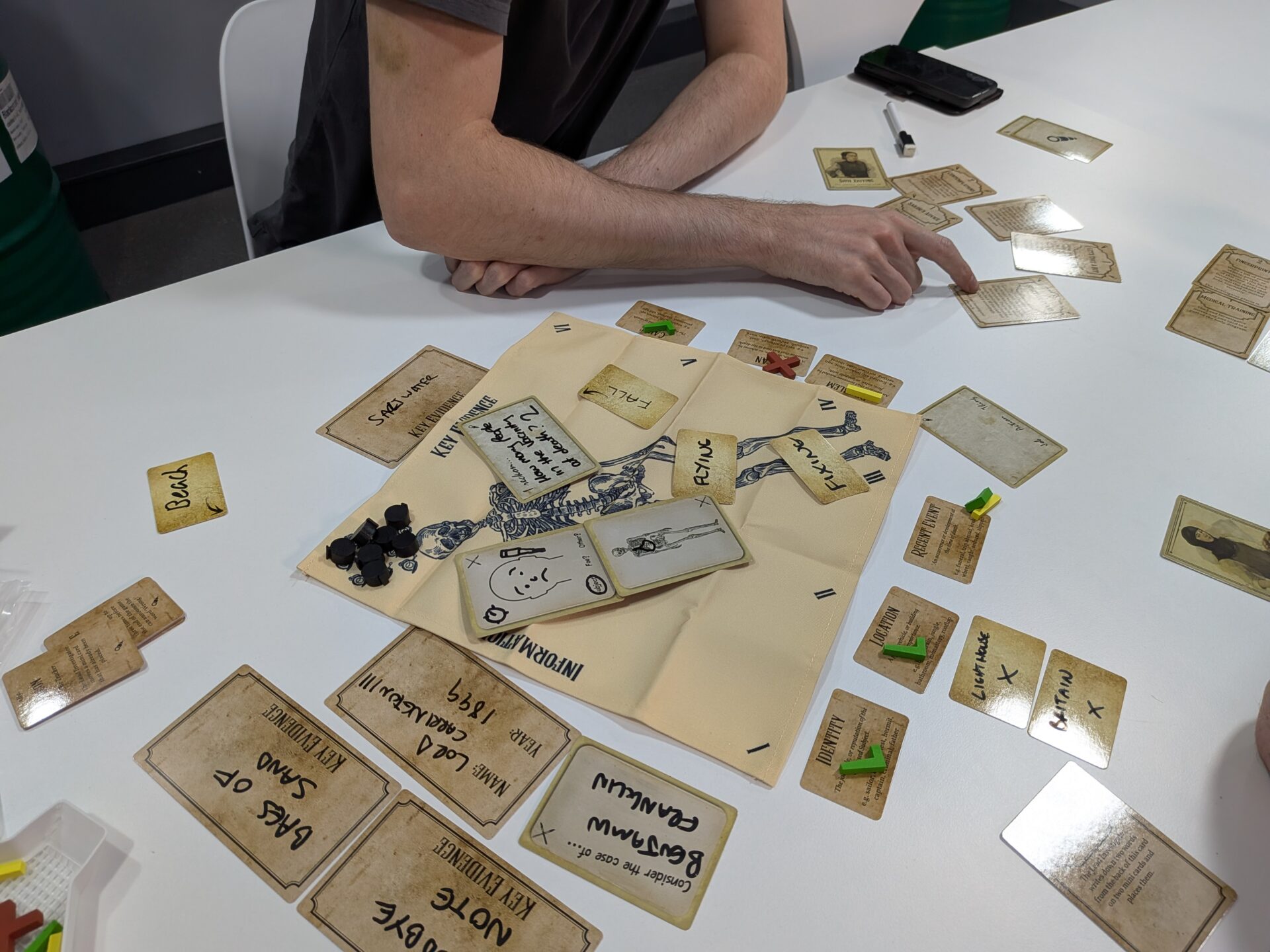

A review copy of Here Lies was kindly provided by Zatu Trade. Thoughts & opinions are my own.
I went into Here Lies with no preconceptions and with barely any idea what the game was about, and came away both surprised and delighted. A cooperative game of deduction, sleuthing, and actually quite a lot of storytelling. Jasper, Jakob, and Bobby have created something a little bit special here, which demands your attention.
VERDICT
players 2-5 | playing time 30-60 mins
Here Lies is the best deduction board game I’ve played. Few games feel as satisfying to unpick as a mystery in this box.
cooperative
deduction
card-driven
mystery
This is a difficult review to write without giving away too much in the way of spoilers, but I’ll do my best. Here Lies gives each player the role of an investigator, each with their own specialities in the realm of deduction. One player is the Lead Investigator, and they act as the other players’ guide through the mystery.
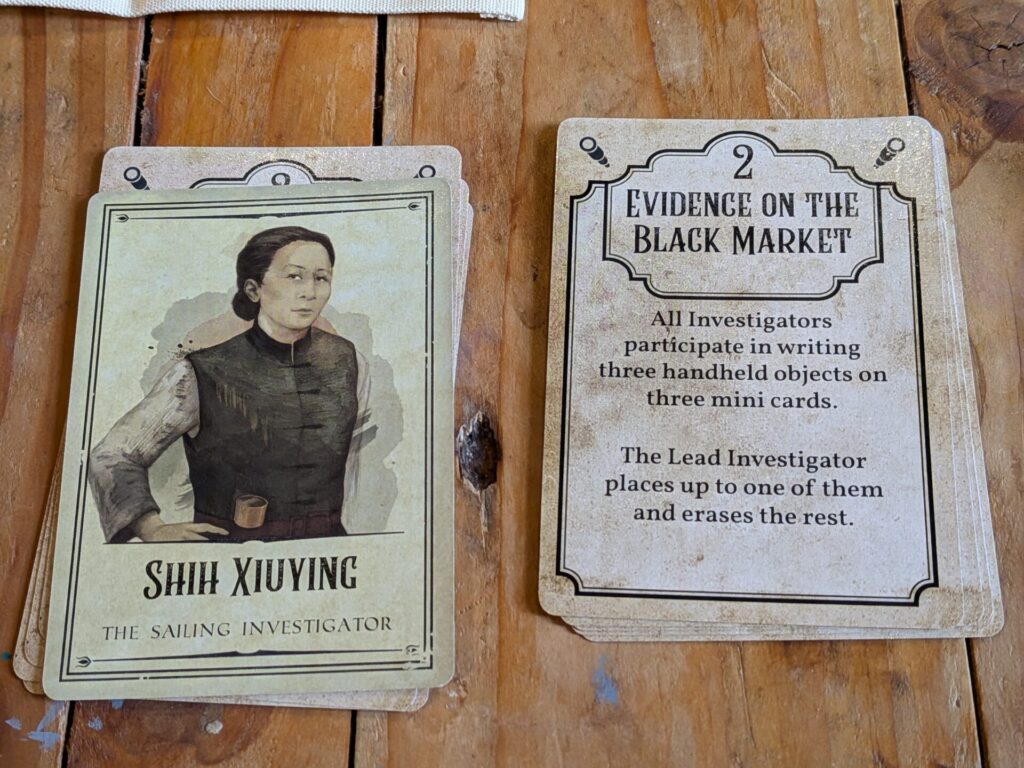
The Lead Investigator knows the full story of the puzzle on the table and has to lead the other investigators to figure out what happened. Each mystery, once you get past the introductory ones, tasks you with figuring out six different things about a mysterious death. Throughout the review, I’ll refer to one of the early mysteries and try not to spoil it. In this example, you need to come up with:
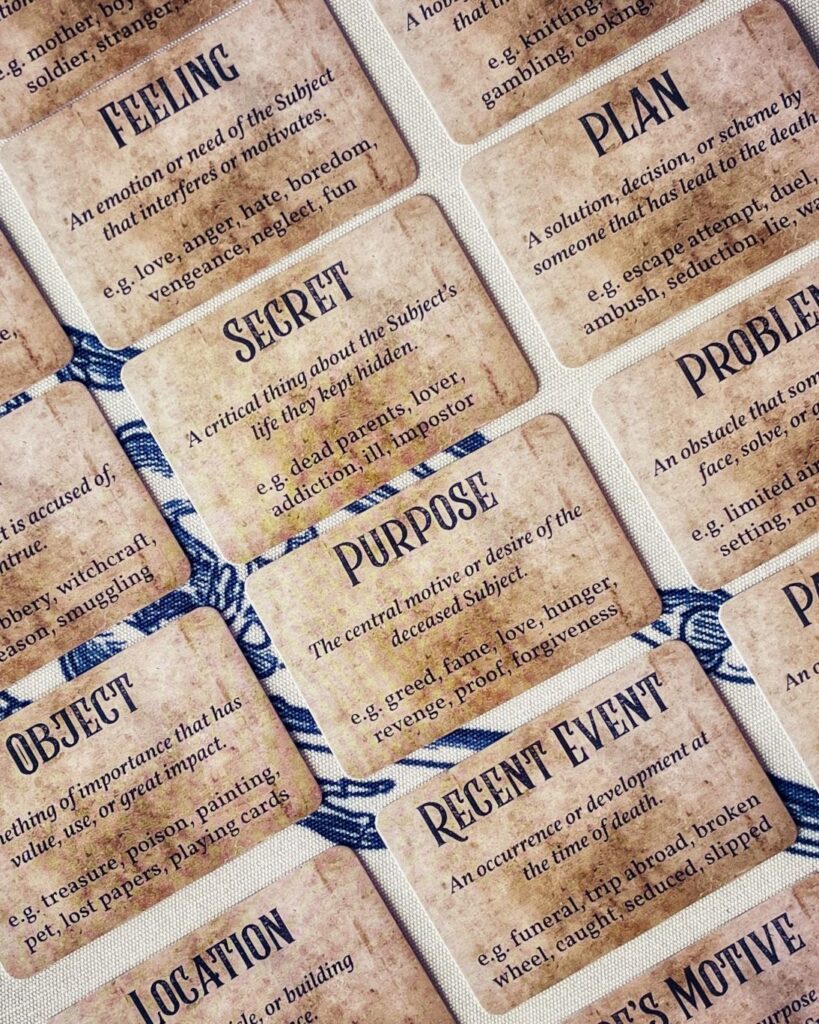
- Identity – you know the name of the person who died, but who were they? What did they do?
- Location – where did the incident occur? On a barge? In a cave? At the top of a mountain?
- Recent Event – what happened that led to things going south?
- Problem – what happened as a result of the recent event?
- Plan – what did the people involved come up with to fix the problem?
- Cause – ultimately, what led to the death?
The problem the investigators face is that at the start of the game, they know next to nothing. They know the name of the subject, the year it happened, a single piece of information, and maybe a little flavour text read by the Lead Investigator.
The Lead Investigator needs to keep their ears tuned, because at the end of each round they’ll add a big green tick, a red cross, or a yellow line to each card with the six things you’re trying to deduce. If they heard the correct answer at all, the card gets a tick. If they didn’t come close, it’s a red cross. If they’re on the right track, but still not quite there, they get a yellow line.
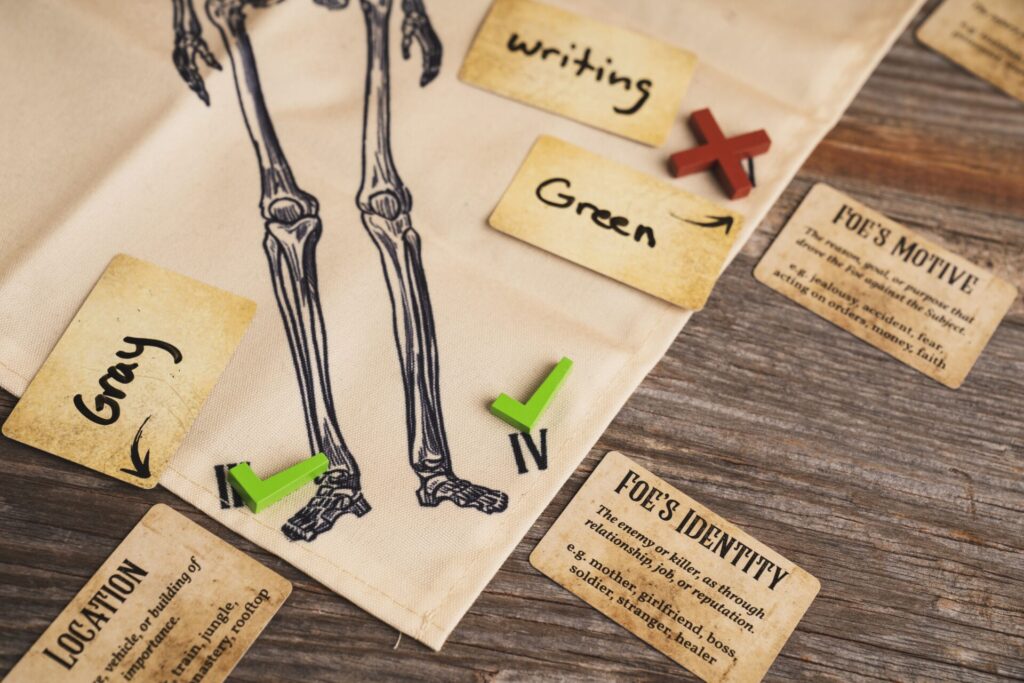
It’s a clever mechanism, because it means if the investigators yap too much, when they get a tick they might not remember everything they were talking about.
So how do we get from clueless to conclusion?
Cards on the table
Literally. Cards on the table. Each investigator has a deck of cards and draws a hand from it. Which cards they have is open knowledge, so the first thing to do is to splay all the cards on the table so that everyone knows what’s available.
Cards have actions on them. Actions have time costs, and in each round of the game there’s a set number of time tokens available to the players as a group. If they play a card with a ‘2’ at the top, they need to have two tokens to dismiss.
The actions are really fluffy. They’re not something like ‘Tell us where it happened’. One might be a card which has a skeleton on the back. The investigator gives it to the Lead Investigator and asks them to draw a substance of some kind, and draw that in a place on the skeleton which is relevant. So, in the case of drowning, the Lead Investigator might draw a water drop on the skeleton’s chest.
Another card might ask the investigators to write ten ‘things’ on the back of the card, hand it to the Lead Investigator, and ask them to mark which are relevant in some way.
Writing on cards?? The horror! Luckily, every card in the game is dry-wipe, and there are dry-wipe pens in the box. It’s really useful, because you’ll want to make notes all of the time. As well as the cards, there’s a cloth board with a skeleton printed on it. Where a card gets placed on the board can be as important as what’s written or drawn on the board. If you’ve played games like Mysterium and Dixit, you’ll understand the importance of cryptic, or less-than-obvious clues, and Here Lies gives you so much to play with in the same space.
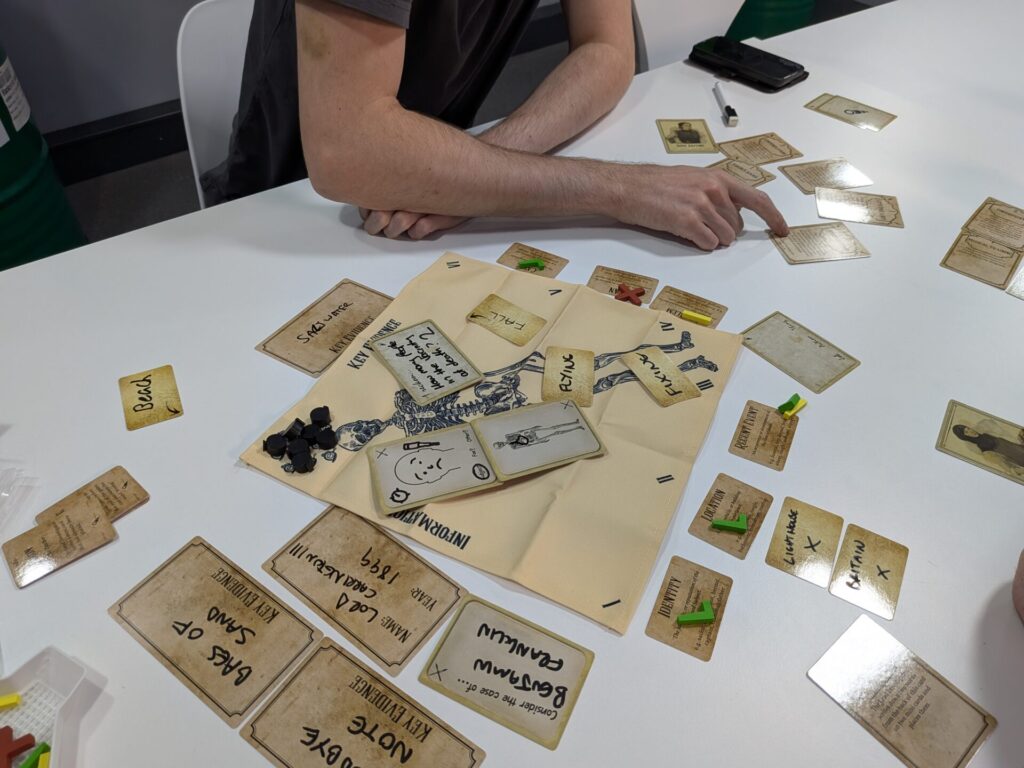
There is such communal joy to unravel in Here Lies; it’s a wonderful experience. There’s something magical about watching the players’ eyes light up when you move a small clue card from one place on the body to another. The echoing clink of collective pennies dropping is glorious.
Final thoughts
Here Lies is one of those games that you really need to experience for yourself. I can wax lyrical about it, but I’ve had great experiences with it, and I absolutely love mysteries. I can’t guarantee it’ll land the same way for you. The way the game pulls together is nothing short of mind-blowing. I remember playing as Lead Investigator in the game I photographed above. The investigators had next to nothing to go on at the start of the game, but by the end of it they had nearly everything correct, just by pulling at threads and seeing what unravelled.
It’s a kind of collective storytelling that we don’t get much of in the world of board games. Obviously TTRPGs excel at it, but don’t have the same structure around them. Board games come close sometimes, Tales of the Arabian Nights being a notable example, but even games like Mysterium never really feel like you’re putting a jigsaw back together.
THANKS TO MY SUPPORTERS
Krissie  Craig Paul Brendan Brett Gary Becky
Gavin Chris Mark Johan Richard Simon Ben Sam (new!)
Help me keep Punchboard independent by joining the supporters

 Buy me a coffee
Here Lies just nails it. The box is small, the components are great, and the cases you solve are really varied and imaginative. I wouldn’t want to play it with just two players – one Lead Investigator and one investigator – because so much of the game comes out of the way the players bounce off one another. As Lead Investigator, you feel yourself rooting for them when they start making the right noises. It’s just a brilliant game, a total surprise for me, and in the running for my game of the year.
There are 25 cases in the box, more are available online, and an expansion is coming next year, which I can’t wait to get my hands on. For a game that only costs around £25, it’s a total bargain.
Want to get this to the table?
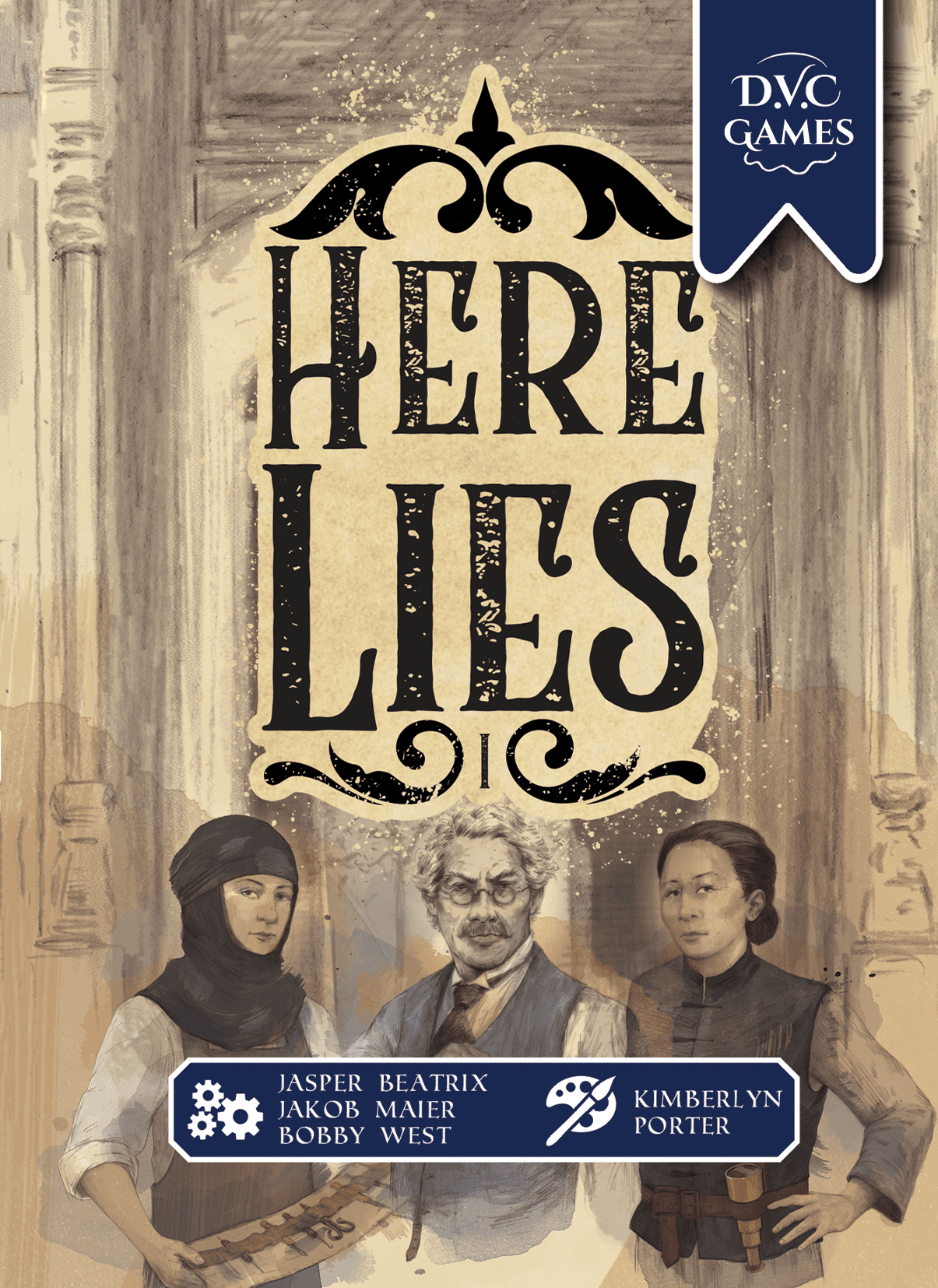
Here Lies
2-5 Players | Ages 13+
Purchasing via this Zatu link supports Punchboard via an affiliate commission at no extra cost to you.
Pros & Cons
Pros
- There’s no better deduction game
- Clever use of an action system
- Beautiful presentation and components
Cons
- Really needs at least three players to be at its best
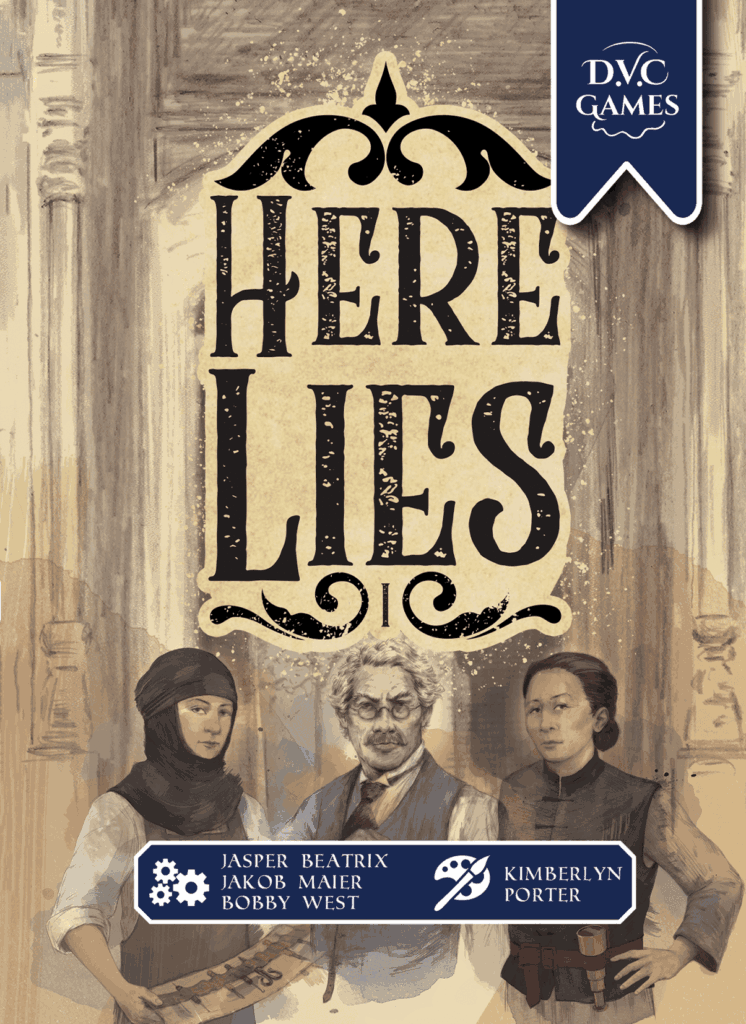
Here Lies (2025)
Design: Jasper Beatrix, Jakob Maier, Bobby West
Publisher: DVC Games
Art: Kimberlyn Porter
Players: 2-5
Playing time: 30-60 mins
More games like this one



Glad to decided / got to cover it! One of my fav coops in recent memory