
A review copy of Decko was kindly provided by Gem Games. Thoughts & opinions are my own.
If you’ve met anyone who’s played Decko and any amount of video games lately, it’s likely you’ve heard it described one way: “It’s like Balatro the board game”. While that’s not strictly true, Decko does manage to capture some of the feel of the absurd poker game, but with its own feel and approach. You’re left with a cracking deck-builder that blends in player interaction in all the right places.
VERDICT
players 1-4 | playing time 30-45 mins
Decko recreates that Balatro feel within the limitations of a tabletop game and delivers a clean, exciting, beautifully made deck-builder
deck-building
poker
gambling
balatro
Let’s start with a bit of context. Balatro is a roguelite deck-building poker game that came out in 2024. The premise is simple. You try to make high-scoring poker hands to meet increasingly difficult targets. You do this by adding special cards to your deck and trying to thin out your starting cards to make stupidly powerful combinations.
The reason Decko draws comparisons with Balatro is that it’s a deck-building game where you try to make high-scoring poker hands, buying powerful new cards to add to your deck while thinning out the starting cards. See the similarity? There are things Decko cannot do because of the bonkers multipliers in the video game, but in the same way the Slay the Spire board game opted to not try to emulate its digital counterpart perfectly, designer Haakon knows where to draw the line.
So how does Decko actually play? Much like a game of poker, actually. Each player draws a hand of five cards from their deck, checks to see what the best hand they can make is, then decides whether to call (match the current bet), raise the bet, or to fold and not risk losing any more chips.
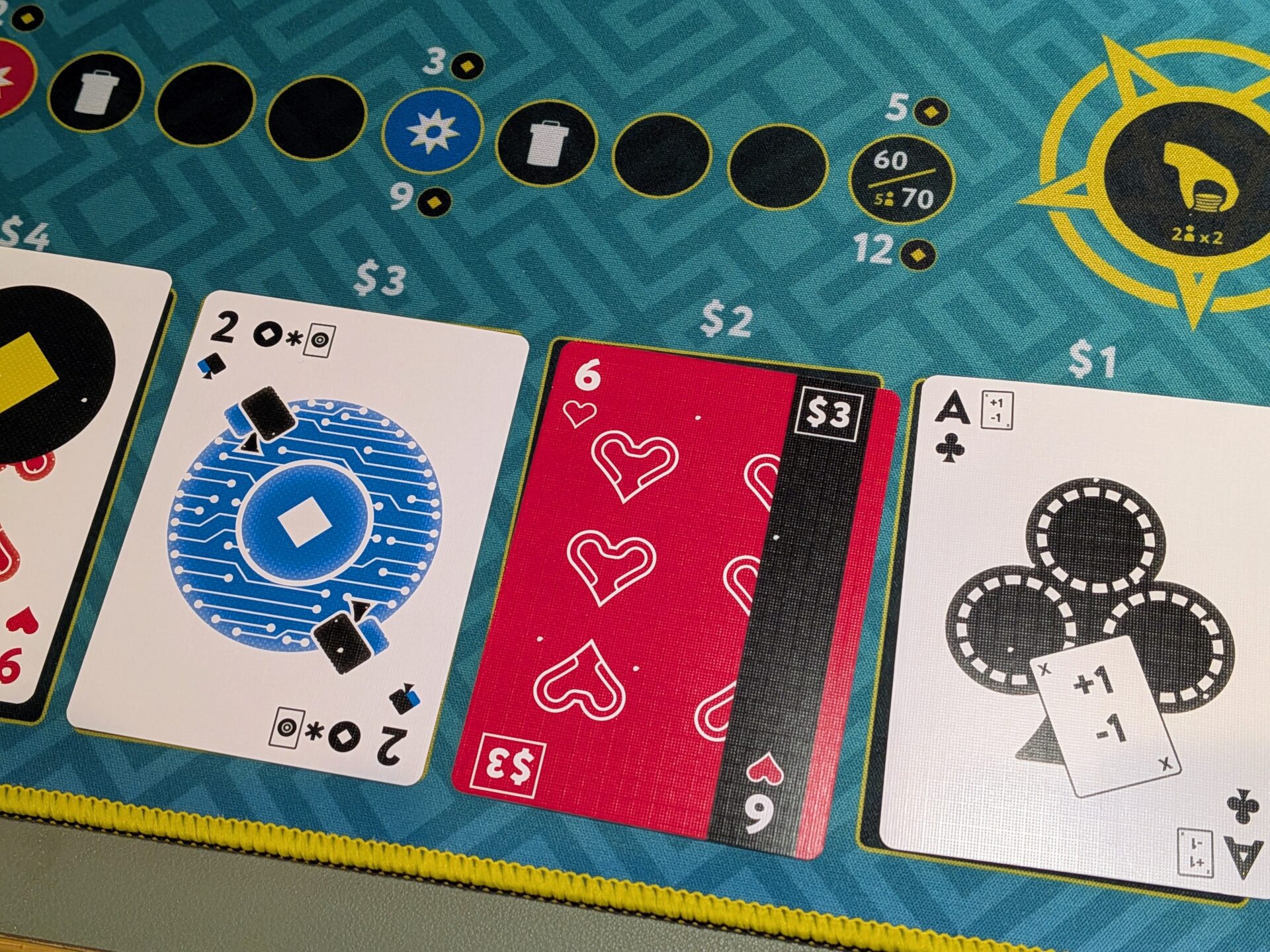
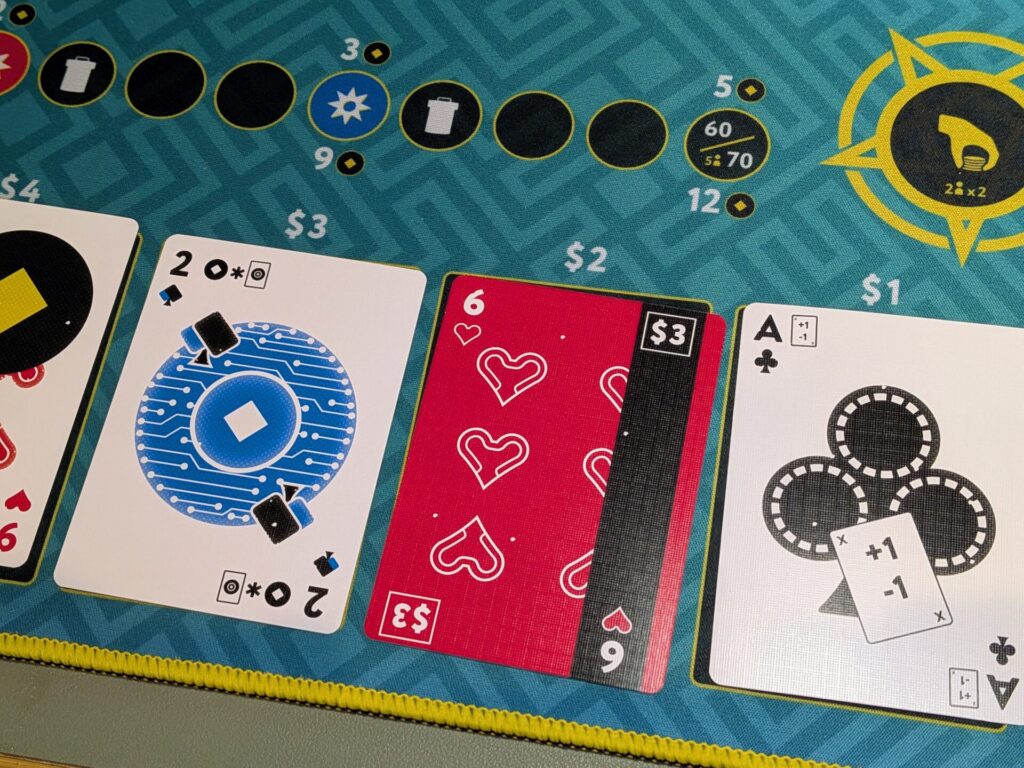
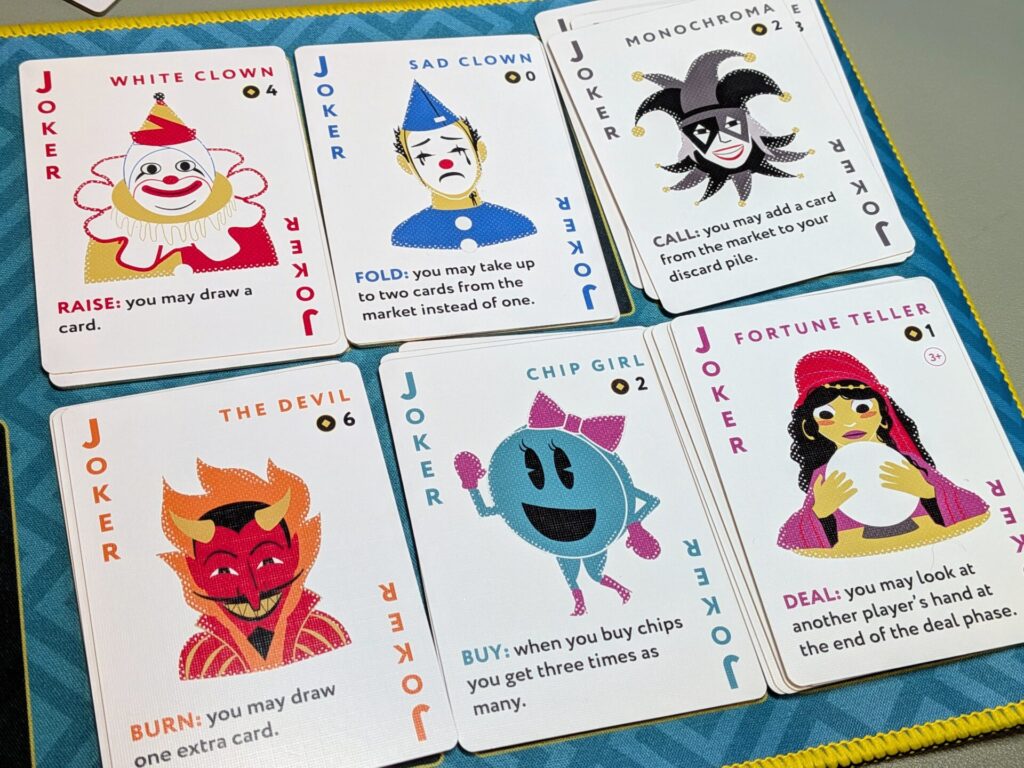
Decko has a market board where the players can buy new cards from the market for their decks, add jokers to their area for ongoing special powers whenever they do something like call, fold, or burn cards, or even buy more chips. If a player folds, they immediately get to take a single card from the market for free. Those who stay in compete to see who has the best hand. The losers get an amount of money to spend at the market based on the best hand they could make. The winner gets all of the chips bet in the round, but don’t get to go shopping at all.
It’s a really elegant system where the players who would otherwise get nothing at all when they fold get a freebie and get first dibs at whatever’s on offer. Those who brave the bet and put their precious chips on the line either win the pot, or at least get to go shopping as a consolation for not winning, but they’ve got to wait for their turn to do it.
Ultimately, the player who has the most chips at the end of the game, or manages to break the 60/70 chip threshold (depending on player count), wins the game. To do so, you’ll probably need to bolster your deck, so there’s a fine line to tread between buying better cards and jokers and choosing when to pull the trigger and put those big raises in.
Dominion
If you’ve played the venerable Dominion before, you know what a good deck-building game feels like. You know the strategy that comes from choosing which cards to remove and which cards to add to make the cards in your deck sing together. The big difference between Decko and a game like Dominion or Aeon’s End is that the card market is ever-changing. There are always five cards in the shop window, they change rapidly, and choosing which has a home in your hand is tricky.
The market cards do all kinds of nonsense. Cards that act as multiple cards at once. Cards which can choose to take the value of a card in the market instead of what’s printed on it. Low-value cards that instantly give you chips every time they’re revealed. Figuring out how to piece together the parts of this crazy jigsaw of success is equal parts tricky and really enjoyable.
And while the deck-building forms the core of the game, the rest of it is really intriguing and kind of emerges with repeated play. In most games of poker, you just want the best hand possible, but in Decko there are times when you win with a straight flush and groan in frustration. You win a dismally small pot and aren’t allowed to go shopping at the market when the perfect cards and jokers are up for grabs. I’ve not played another game quite like it.
Sitting atop all of this is the winged spectre of gambling. Bluffing and baiting. It’s poker, after all. How good is your poker face? Can you force everyone to fold when you were holding a 2, 3, 5, 7 and a Jack? As with standard poker. It’s a great feeling when this happens because your hand value to buy from the market means you could only really take the free card at the end of the market row, but instead you’re now struggling to see over the top of your teetering wall of chips.
Steamroller
Decko isn’t without the occasional sour taste left in the mouth. If you’ve got someone playing who doesn’t understand poker beforehand, there’s some mental overhead involved before they even consider deckbuilding and jokers. I’ve been playing poker for years, so when I’m dealt 2, 2, 4, 4, 6, and I know there’s another 2 in my increasingly small draw pile, I’ve got the Full House alarm bells ringing loudly. You better believe I’m burning that 6 to see if I can move from two pairs to the full house. For someone who doesn’t know poker, though, it’s not as automatic.
There’s also a trend I’ve noticed in my plays where one player will often end up absolutely clobbering the others. There are two wildcard rounds during the game where a couple of things happen. Firstly, the randomly chosen wildcard takes effect. Wildcards do crazy things like making the worst hand win the pot, or forcing everyone to take a hand from their burn pile. Secondly, the minimum bet amount goes up, and the players are forced to bet more for the round.
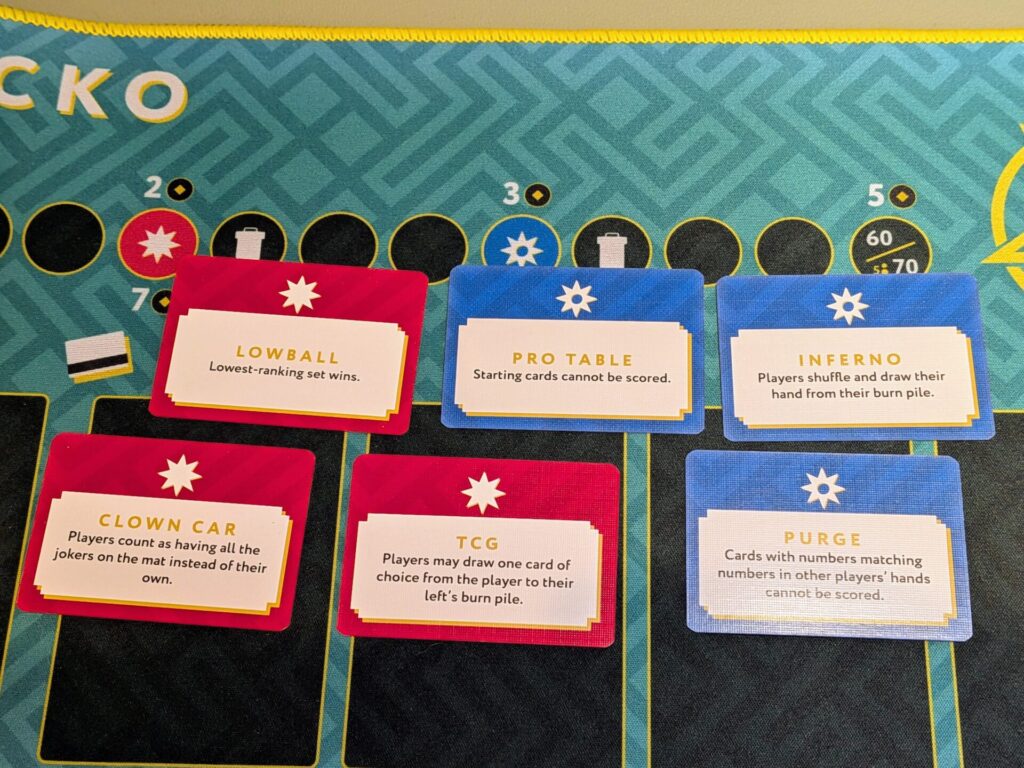
The second time this happens, near the end of the game, it can easily end up with someone pocketing 20+ chips. If you ask me, these ‘big money’ rounds are really good fun. They can swing the game massively, but some people really don’t enjoy it. There’s a danger to feel like you’ve got to weigh in heavily on the wildcard rounds because they’re seen as so valuable, but you don’t have to. I think if you go into it with that mindset, it’s better, but this is poker. Big bets. Lady Luck sitting in your lap after she’s spent the whole game whispering in someone else’s ear and sending a tidal wave of chips in your direction – that’s part of the fun.
Fun for me, that is, and probably for most poker players too. People coming in blind (pun intended, poker fans) and expecting to play a neatly balanced Dominion-type game are likely to be in for a shock, and that’s not always a nice shock for some people. Just bear it in mind when you decide whether to part with your cash.
Final thoughts
I think Decko is great. I played a prototype version back during Full Board Gaming in January and had a great time, and I’m very grateful and happy to have my own copy now, courtesy of Gem Games. You get the feel of that Balatro-ish hand-warping craziness, but without having to count past a million.
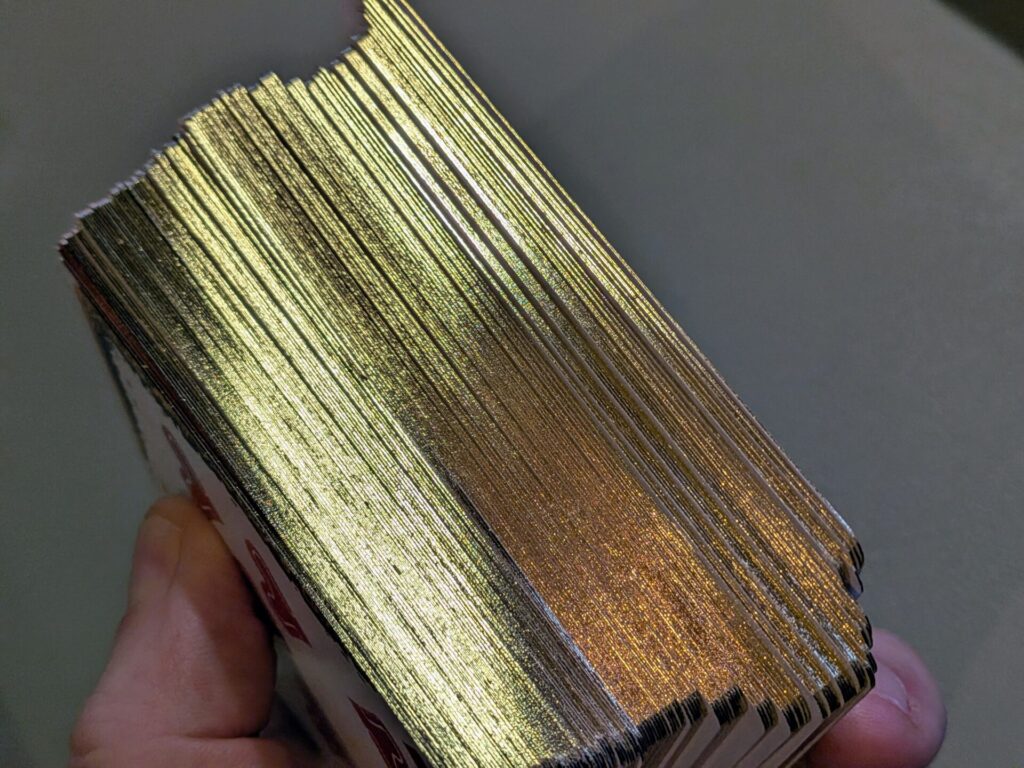
I have to call out the production values, which are through the roof. The board is a printed neoprene mat. The poker chips are proper, weighted chips with plenty of heft. The cards have gilt edging on them. It feels like a shame to sleeve them and hide their golden shine.
It’s definitely not a game for everyone. The wild swinging doesn’t work for everyone, and I’ve seen games end before halfway through when players get too free and easy with their betting. That’s fine if you’ve got a group who are enjoying it, because they’ll probably want to set up and go again, but if you’re not used to playing something like poker, where you can spend an hour playing and walk away with nothing, it can be an odd experience.
For the rest of us, however, Decko is great. Haakon Gaarder has put together a game which successfully combines the deck-building nuance of a game like Dominion with the straight-faced above-the-table bluffing and tomfoolery that poker does so well.
You can get Decko and the new expansion, Pistachio, right now over on the Gamefound page right here.
Pros & Cons
Pros
- Yes, it’s a bit like having Balatro at home
- Tons of variety thanks to the wildcard rounds
- Incredible production quality
Cons
- Can be very swingy and even end early
- If you don’t already know poker you’ll be at a disadvantage
THANKS TO MY SUPPORTERS
Krissie  Craig Paul Brendan Brett Gary Becky
Gavin Chris Mark Johan Richard Simon Ben Sam (new!)
Help me keep Punchboard independent by joining the supporters

 Buy me a coffee

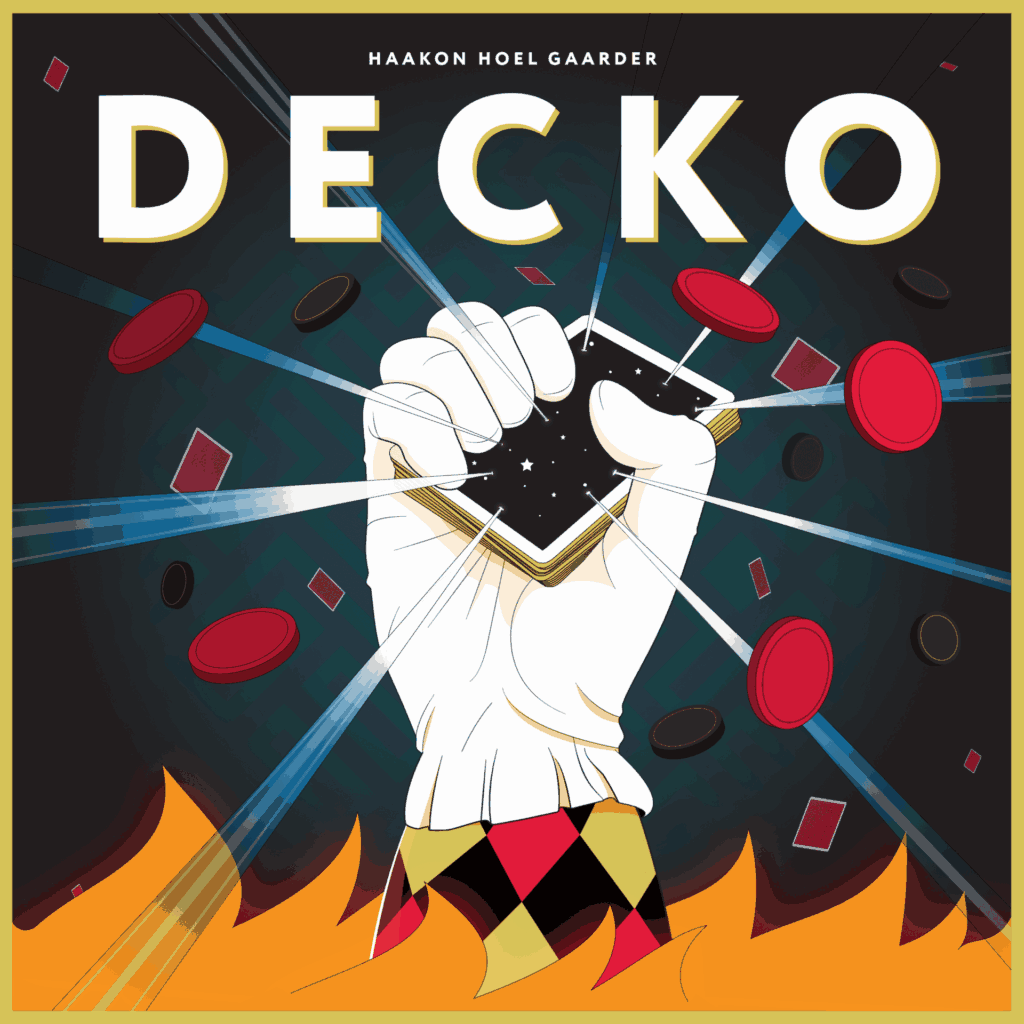
Decko (2026)
Design: Haakon Hoel Gaarder
Publisher: Gem Games
Art: Haakon Hoel Gaarder
Players: 2-5
Playing time: 20-60 mins
More games like this one