
A review copy of Greylune was kindly provided by Hachette Boardgames UK. Thoughts & opinions are my own.
Greylune whisks the players away to a fantasy land inhabited by monsters, magic, and sheep. Action selection via a clever Dutch auction system sits atop a clever engine-builder whose diminutive stature belies a nuanced, tightly woven Euro game. There’s a lot to like about Greylune, and a couple of things I’m not so keen on, but overall it’s a blast.
VERDICT
players 2-4 | playing time 45-90 mins
Greylune packs a tight, clever timing and auction puzzle in a small box and delivers a fantastic game.
dutch auction
timing
engine-building
small footprint
If you’ve been in the hobby for a while, the sight of the 3×3 card market surrounded by meeples might look familiar. 2013’s Spyrium is the direct predecessor to Greylune, also designed by one of modern gaming’s forefathers, William Attia. Yes, the same William Attia who brought us Caylus. I recently ran a little retrospective on Caylus, which you can read here.
Greylune’s premise is cute. You venture off into the wilderness beyond the village in search of adventure. You take companions and items with you, and the various things you encounter later become stories. Stories which you get rewarded for telling later.
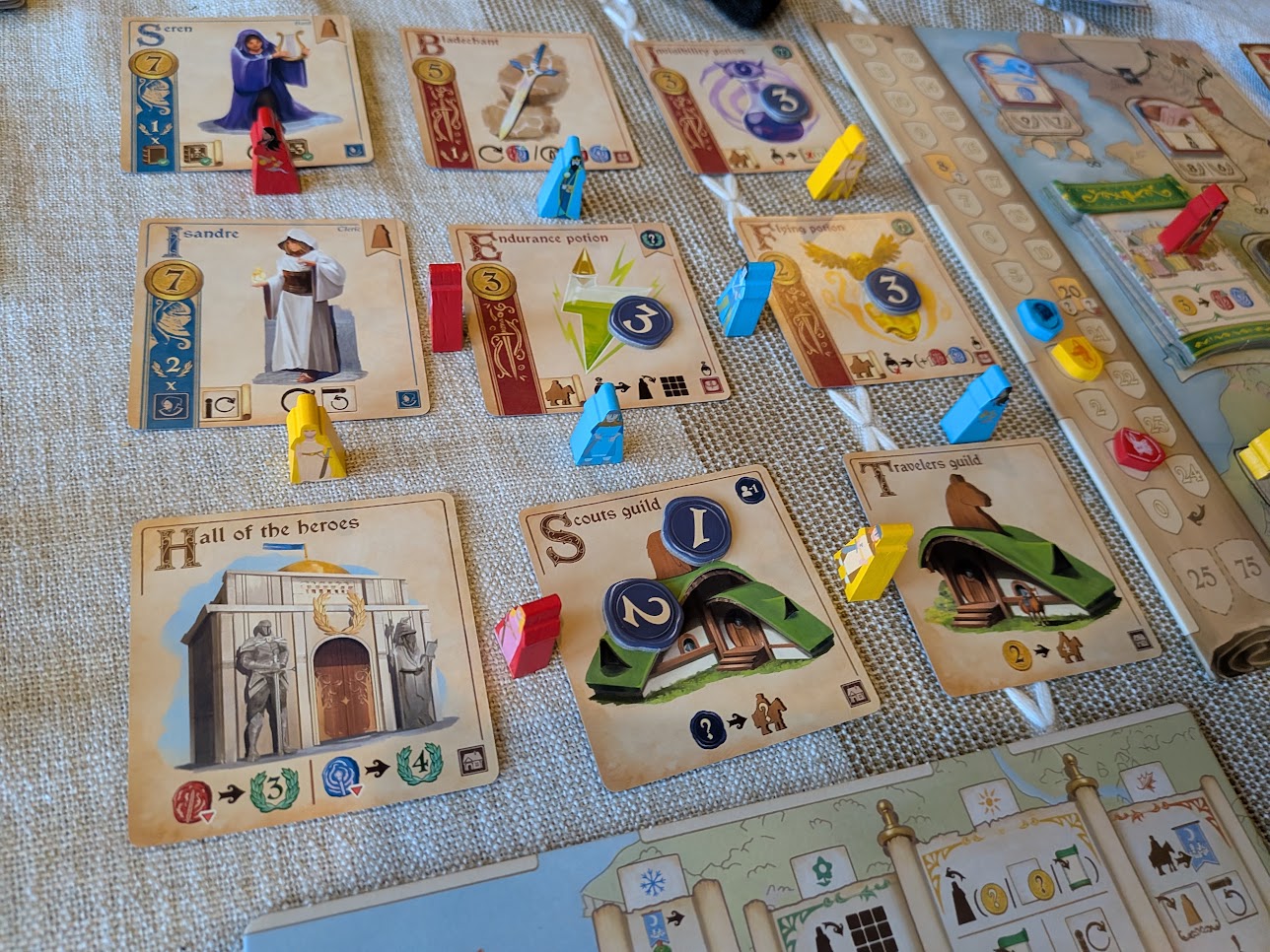
I mentioned the Dutch auction earlier, and it’s this combined with a devilish timing puzzle which really makes Greylune sing, like a bard regaling us with those self-same stories. In a Dutch auction, the price for something starts high and slowly reduces until someone pulls the trigger. The same thing happens with the card market in Greylune, referred to in the game as the Village.
During the Spring phase (the rounds are split into seasonal phases) you can place your available villagers between two cards in the market. It kind of signals intent, because later during Summer you can buy a card (or the use of a card) that one of your villagers is adjacent to. The thing is, each other villager around the card raises its base cost by 1 coin.
So that companion who has some cool ability that you have your eye on would only cost 7 coins usually. But your villager is joined by three around its edges, so the cost is now 10! You could wait and see if another player buys the other card their villager is adjacent to, because that removes them from the village. The cost comes down by 1 for each villager removed this way, but how long dare you hold out, lest someone else swoop in and yoink that card from under your nose?
A matter of time
Your first play of Greylune will feel like a normal game of resource management and engine-building. Trying to get the companions and items that work well together to provide you with the most value during your actions. It soon becomes obvious that Greylune is more about timing than anything else. It’s an intriguing beast.
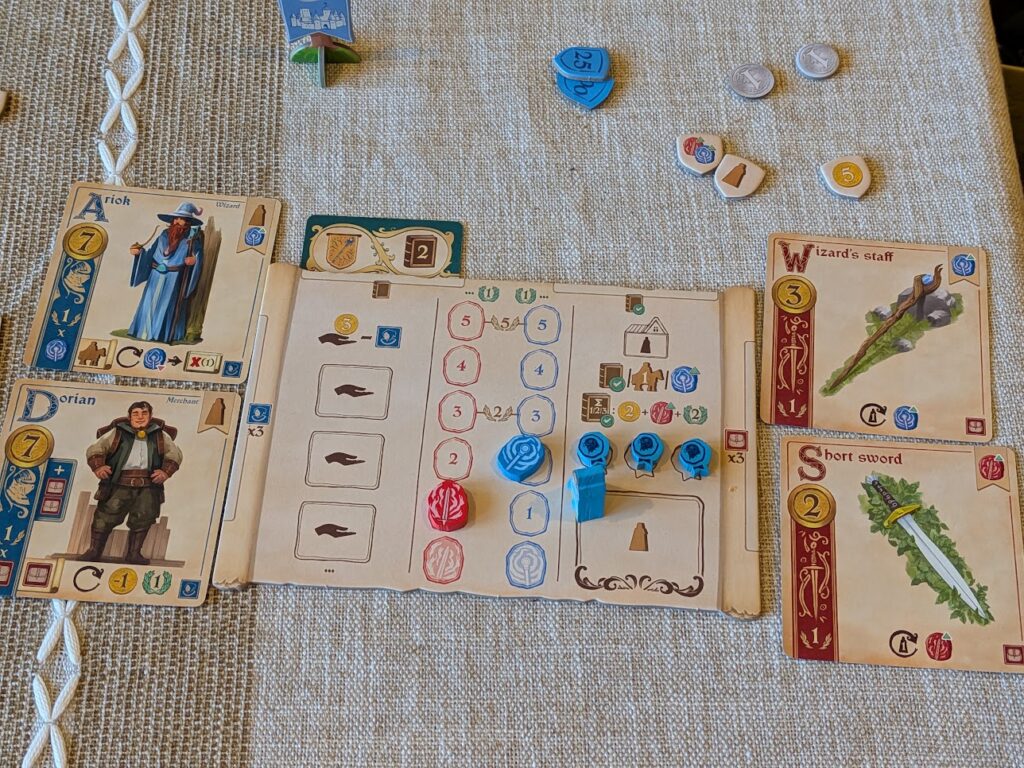
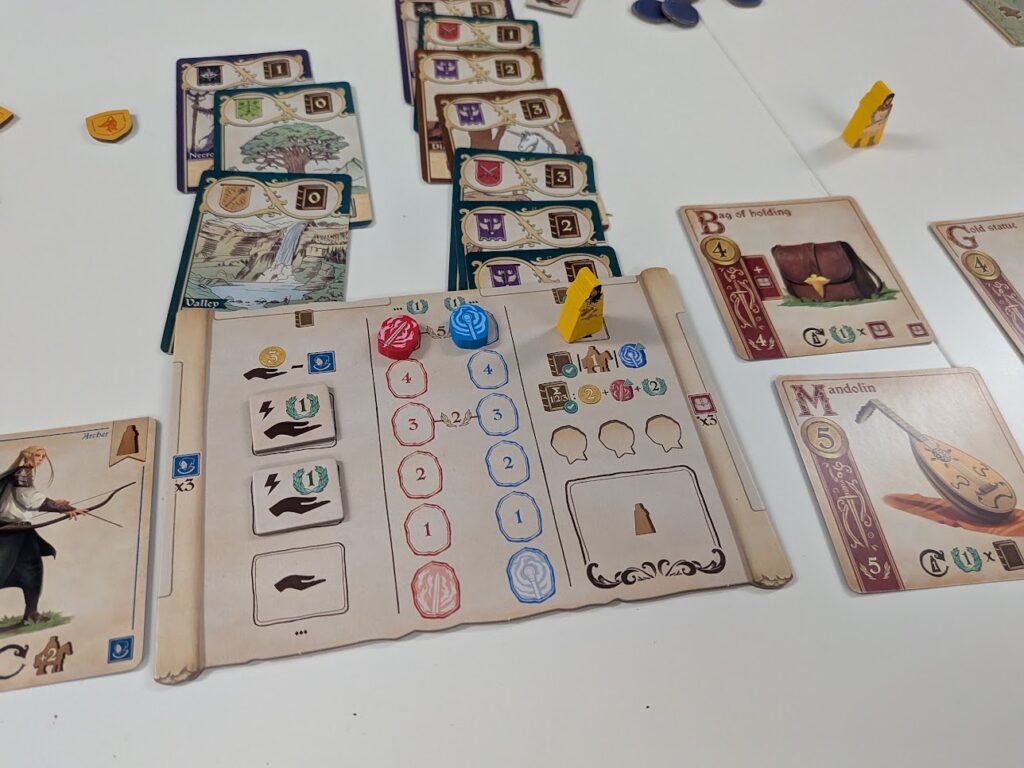
I mentioned the Dutch auction, which is obviously time-dependent, but timing creeps in all over the place. Moving between seasons, for instance. I mentioned above that Spring is when you place your various workers (villagers) out and about. Some actions, however, require that you ‘spend’ active workers to carry them out. In order to do that, you need workers that you didn’t place during Spring. Moving to Summer is an option during your turn, and while you might think it’s best to get all your dudes out in the village to make choice a luxury, some people will move to Summer really early.
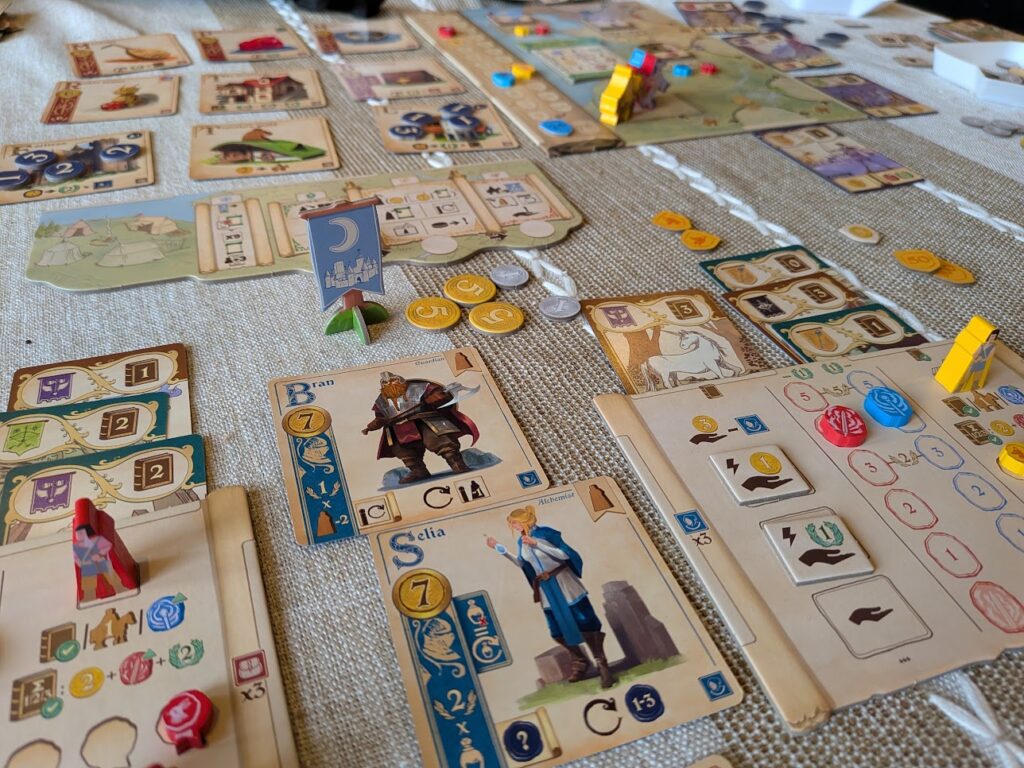
Why? You might ask. The moment you move to Summer, you get to carry out one of the Summer actions, which include buying those cards in the village. The other thing you can do, via various means, is to go adventuring. There’s a little map on the side of the board, and adventuring lets you move your little horsey meeple around the map. When you stop at a location, there might be encounter cards. If you meet the requirements on the card (things like having a certain amount of strength and/or magic, or spending an active worker), you can claim the card, which then becomes a story you can tell later.
The encounter cards are in short supply, though. It’s first come, first served. So, in the later rounds especially, if you loiter in Spring too long, all the good cards could be gone by the time you get to take actions.
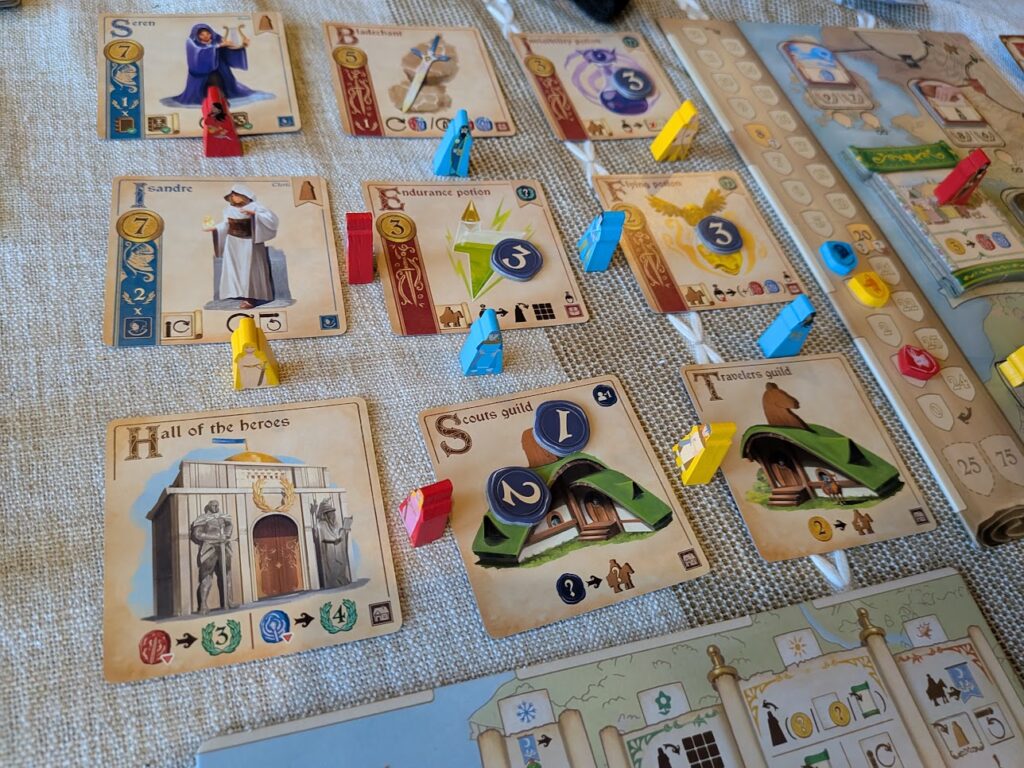
This is my favourite thing about Greylune. How long can you hang around before you pull the trigger and start going for the encounters? If you go early, will you have everything you need to pull it off? If you loiter in the village, can you compensate for the lack of encounters by snaffling up some high-scoring cards? You can be sure that if you take that elusive one more turn then someone else will jump in and do what you were going to. Turn order really matters, and that moves me on to…
Rough edges
When I really like a game, anything that feels rough makes itself more obvious. Greylune has some of these rough edges.
Turn order is my biggest issue. The player who gets to act first can have a huge advantage. One of the Event tiles is first-come, first-served, with some potentially big instant bonuses on it. If it comes up (the events are randomised), the first player can get some great stuff straight away.
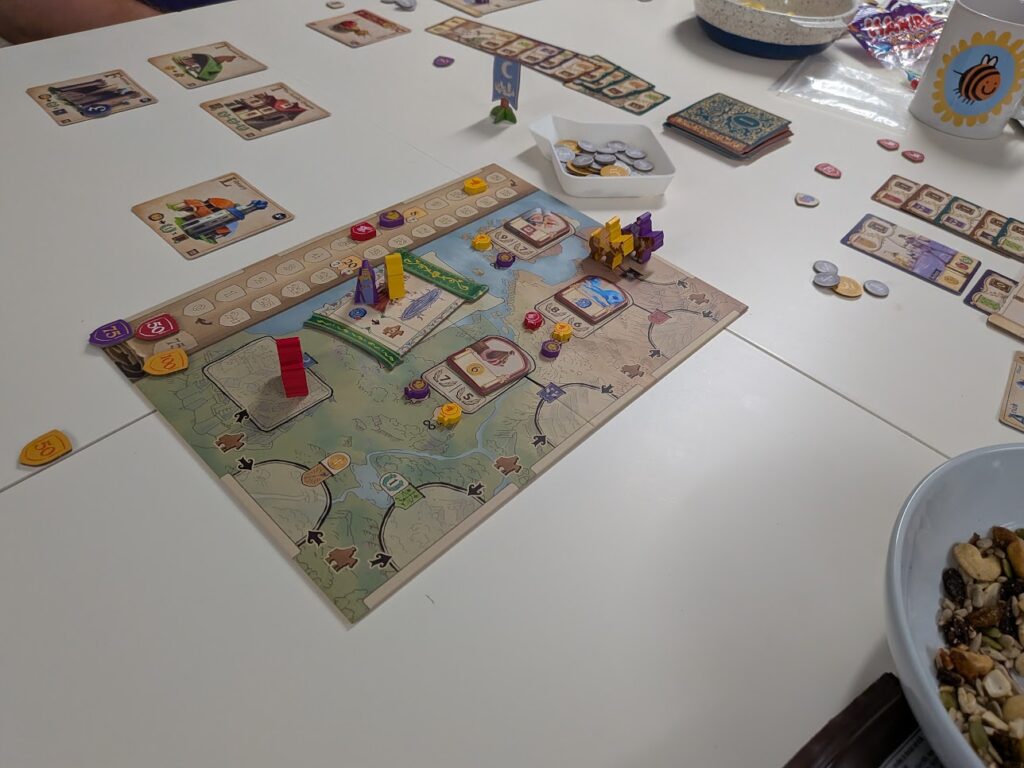
If you’re not the first player and really want a particular card, you might need to skip placing workers just to make sure you can be first to act. That might be okay if you have a ton of things ready to use to claim a card, but what if you’re fourth in turn order, and you don’t have much? What if the first player has an abundance of stuff? They can run riot.
Unfortunately, this can just happen, because the first player marker is just passed clockwise for each of the game’s five rounds. It means at least one person gets two first turns in the game, and in a three-player game, two players get to act first while one player only does it once. I think it should either go to whoever moves to Autumn first, or the lowest on the score track.
My other bugbear is the score track. The score track in Greylune is an abomination. It runs from 0 to 24, then you put a token on the ’25’ space and go around again. Sounds reasonable, but in practice it’s a nightmare. Say you’re on the 19 space and add 13 points for something. In most games, you’d just move your marker to the 32 space. But there isn’t one. Instead, you need to move six spaces up to the 25 space and place a marker there. But instead of now moving your VP marker and counting up another seven spaces, counting as you go, you actually have to move up eight spaces, because there’s a 0 on the track and you need to move up to 7.
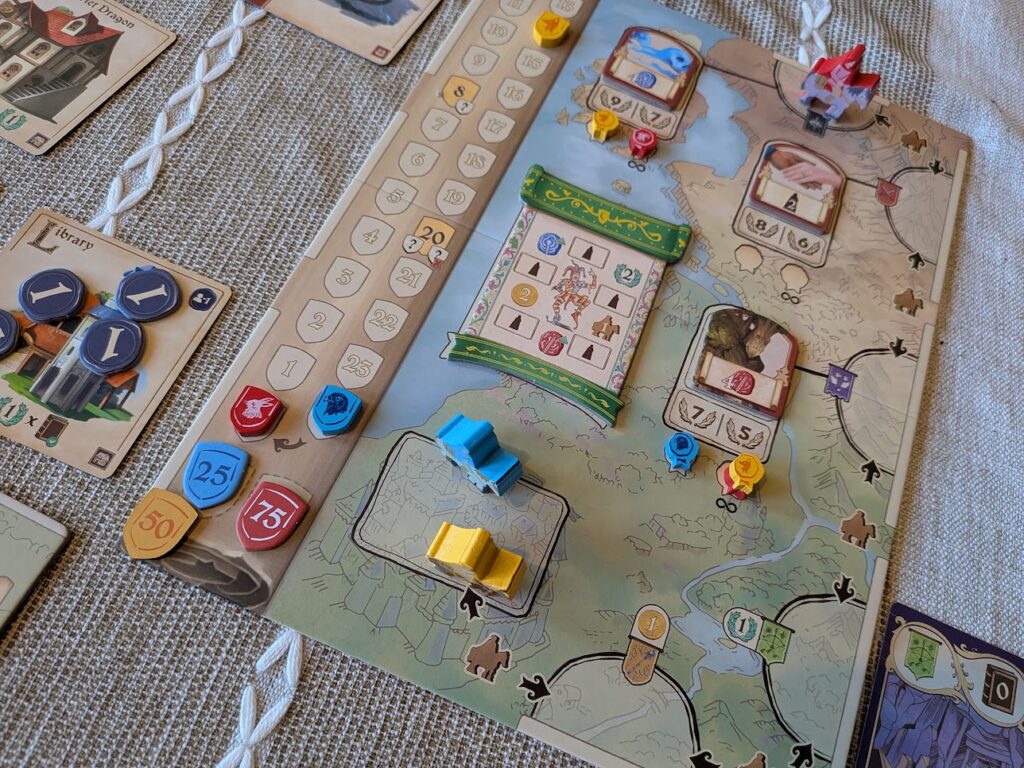
If that last paragraph makes no sense or seems like me fussing about something unimportant, I get it. Just wait until you play it, though; it’s unnecessarily fussy and annoying.
Final thoughts
Despite my grumbles, I think Greylune is fantastic. The little box makes it feel like it’s going to be something smaller and lighter, but there’s a thick, juicy game here. I’ve played it with folk who like lighter games, and I’ve played it with people who like to get their teeth stuck into heavy, complex games, and they’ve all enjoyed it.
Playing with heavy gamers feels different. They have an appreciation for the timing puzzles that Greylune presents, and they’re able to manipulate them. That’s more of an emergent feeling with the lightweight games fans, but it does start to creep in.
Unusually for me, I wish there were more cards in the game. You see mostly the same village and encounters each game, while a few remain in the box. But Era 3, which is the final round, always has the same nine cards in the village. The only puzzle to solve then is which cards in the 3×3 grid are adjacent to which others. Players who have played it before have an immediate advantage because they know what’s coming up and what they should save for. So for those reasons, I’d love to see an expansion somewhere down the line.
The rulebook has a few bits missing. Nothing game-breaking, but it’s worth looking at the official FAQ thread ahead of a revised rulebook, which I understand will be here soon and probably included with the Essen copies onwards.
Greylune is very, very good, and one of my top 5 games so far this year. Especially considering it’s only around £25!
Want to get this to the table?
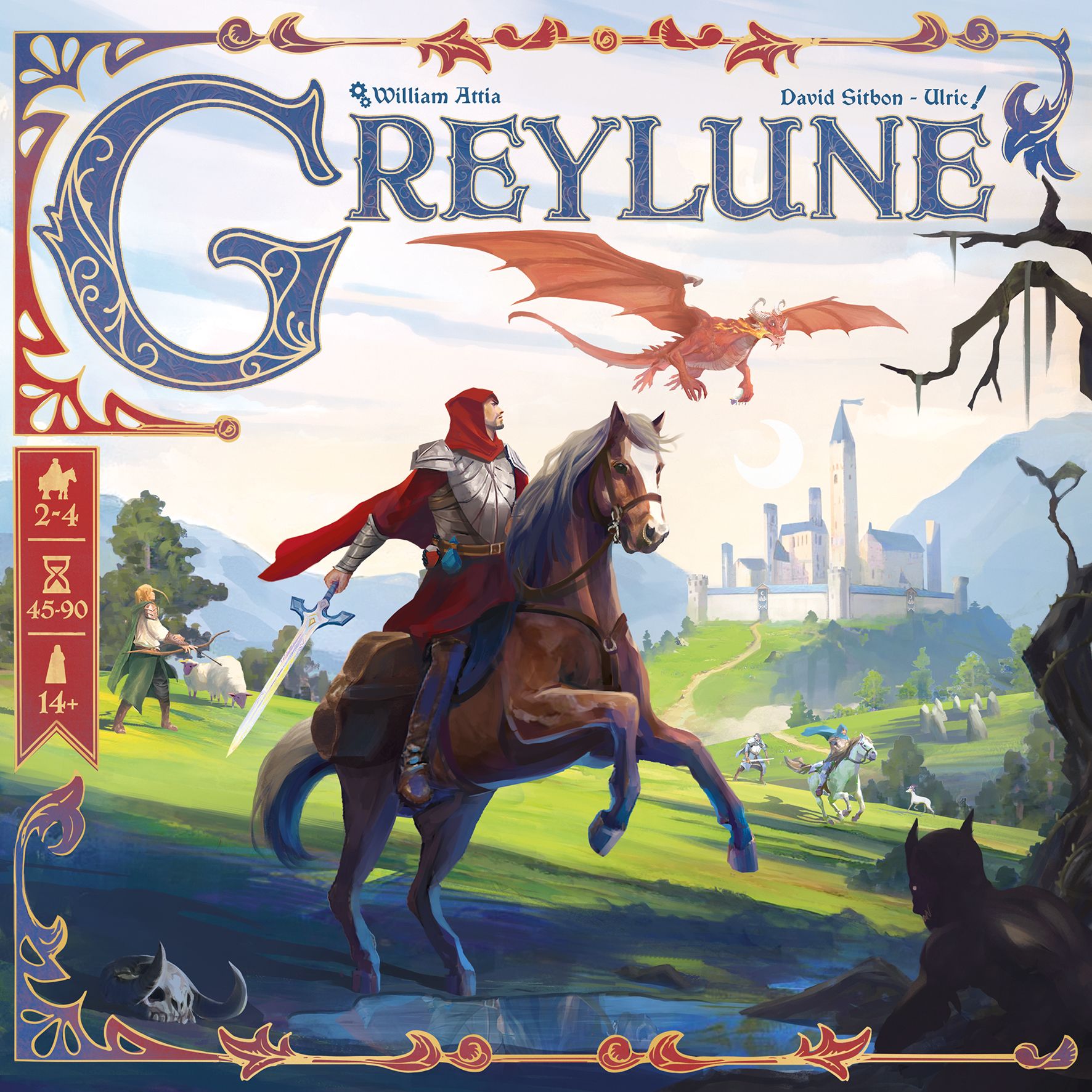
Greylune
2-4 Players | Ages 14+
Purchasing via this Zatu link supports Punchboard via an affiliate commission at no extra cost to you.
THANKS TO MY SUPPORTERS
Krissie  Craig Paul Brendan Brett Gary Becky
Gavin Chris Mark Johan Richard Simon Ben Sam (new!)
Help me keep Punchboard independent by joining the supporters

 Buy me a coffee
Pros & Cons
Pros
- The timing puzzles are superb
- It delivers a big game feel with a small box
- The auction system is really interesting
Cons
- Could do with more cards for variety
- I hate the score track
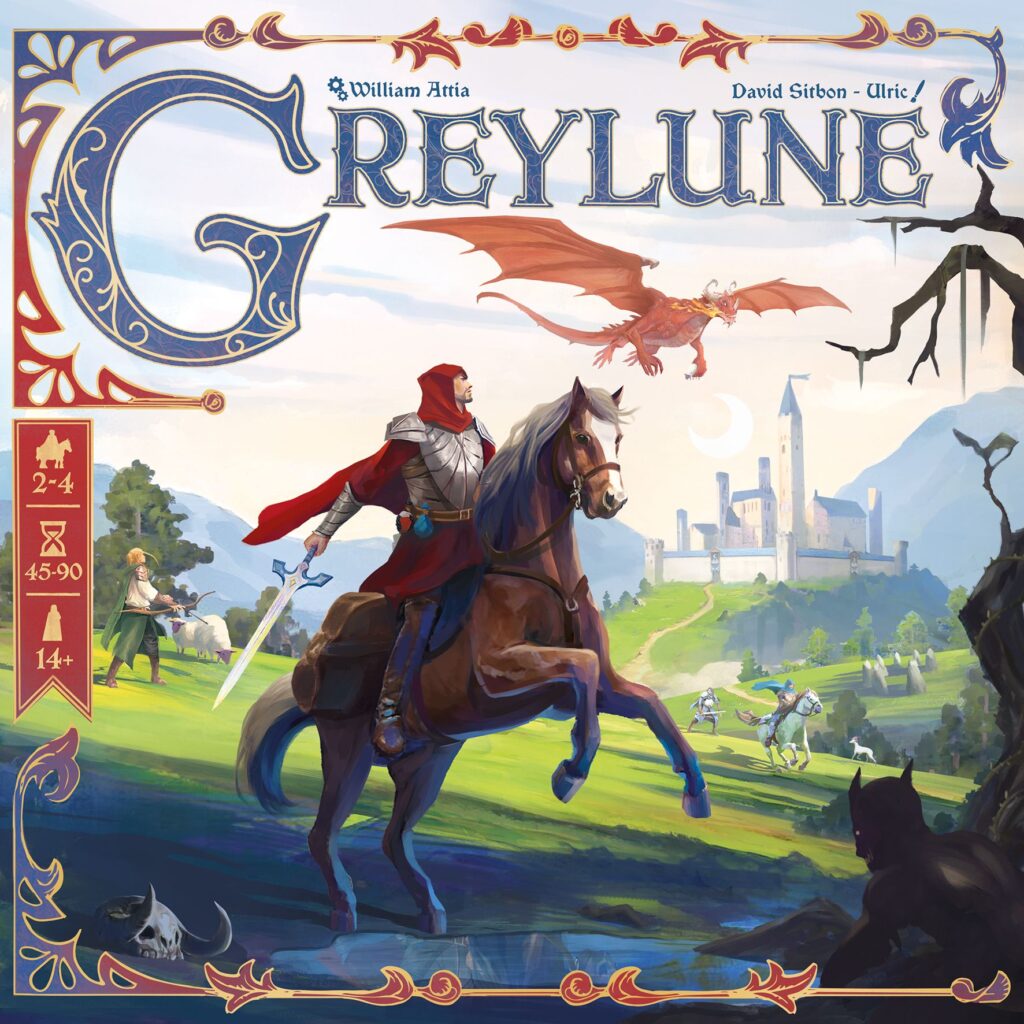
Greylune (2026)
Design: William Attia
Publisher: Sorry We Are French
Art: Ulric Maes, David Sitbon
Players: 2-4
Playing time: 45-90 mins
More games like this one