
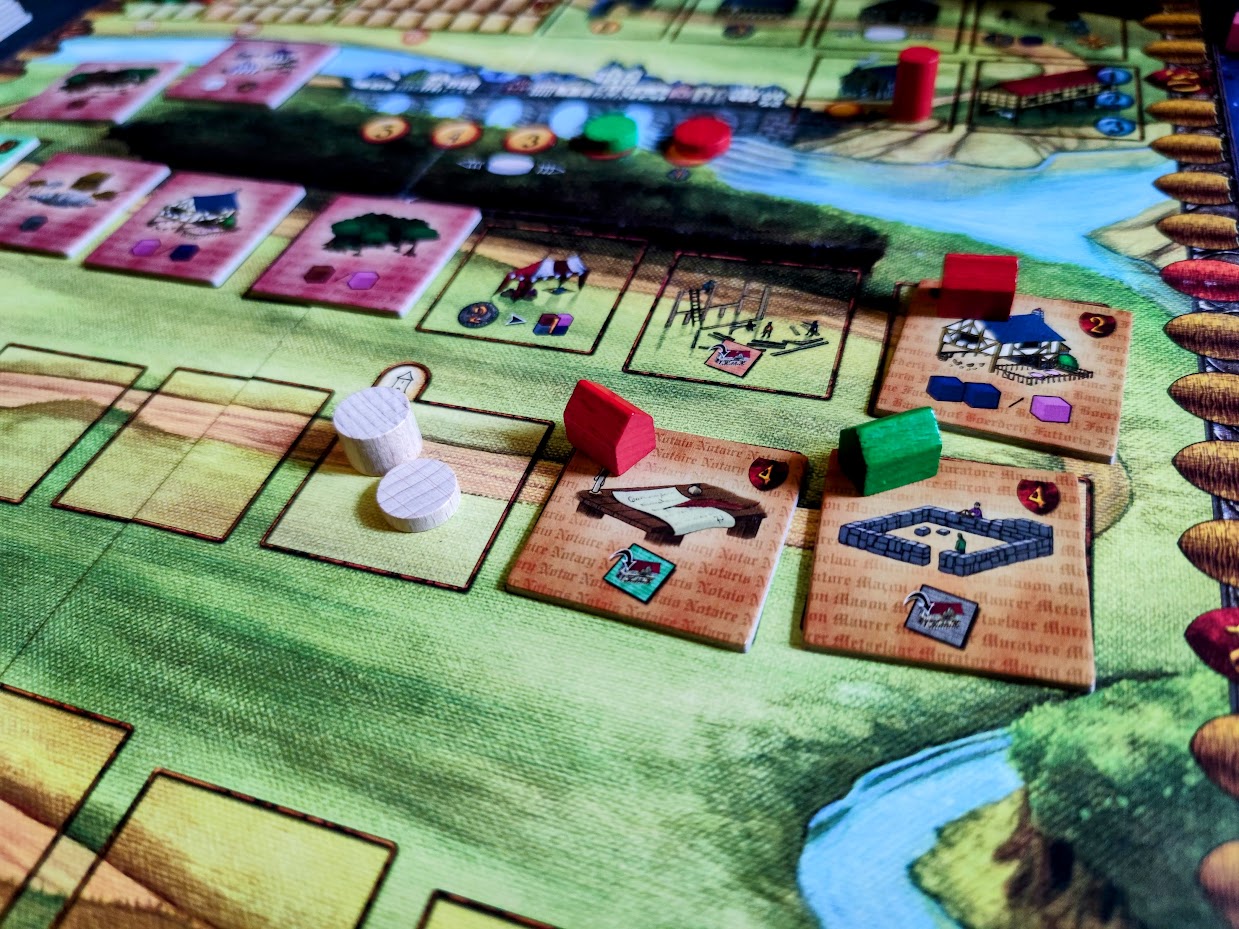

The Play Something Old series continues with one of my favourites today – Caylus! To get to Caylus we need to rewind the clock back to 2005, when William Attia adorned a box with the now-famous illustration of King Philip IV of France. Inside the box, he added the pieces for the game, which, despite often being described as a German-style Euro game, isn’t at all.
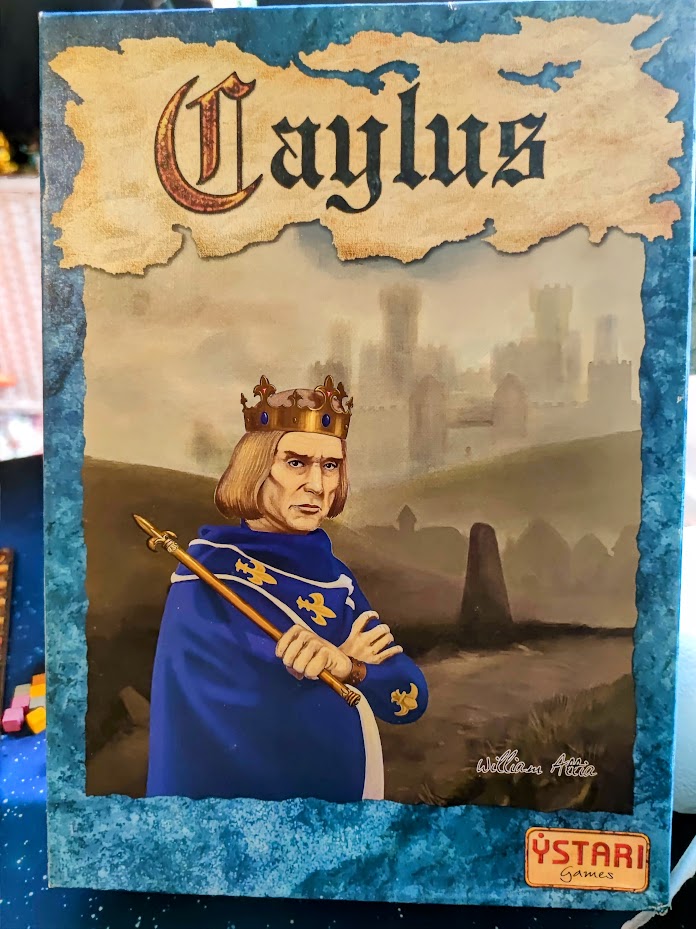
A lot of people say ‘German-style’ when they mean ‘has negative player interaction’, when in actual fact the German style of game was the sort of thing we saw in Carcassonne and Catan. Games which allowed for catch-up. They usually didn’t have any kind of player elimination. And, more often than not, were the kinds of games that families played together. A feature which pervades even today’s Spiel Des Jahres awards.
Caylus came careening out of France via the publisher Ystari, and Trojan Horsed its way into people’s lives. It looked like a normal game. It had the muted colours and the wooden pieces. But Caylus was different. Caylus was difficult. Caylus was mean. And you know what? I bloody love it for it.
What do you do in Caylus?
Caylus is set at the tail end of the 13th Century. King Philip wants to build and expand the town of Caylus. You, the players, represent master builders who are going to help him do just that. During the course of the game, you use your money and resources to help build the castle and also the buildings of the ever-expanding Caylus.
It’s a worker-placement game. In fact, it’s one of the original worker-placement games, like Keydom from the same era. Now, if you’ve played a worker-placement game in the last fifteen years, then you might be wondering how this could ever be a mean game.
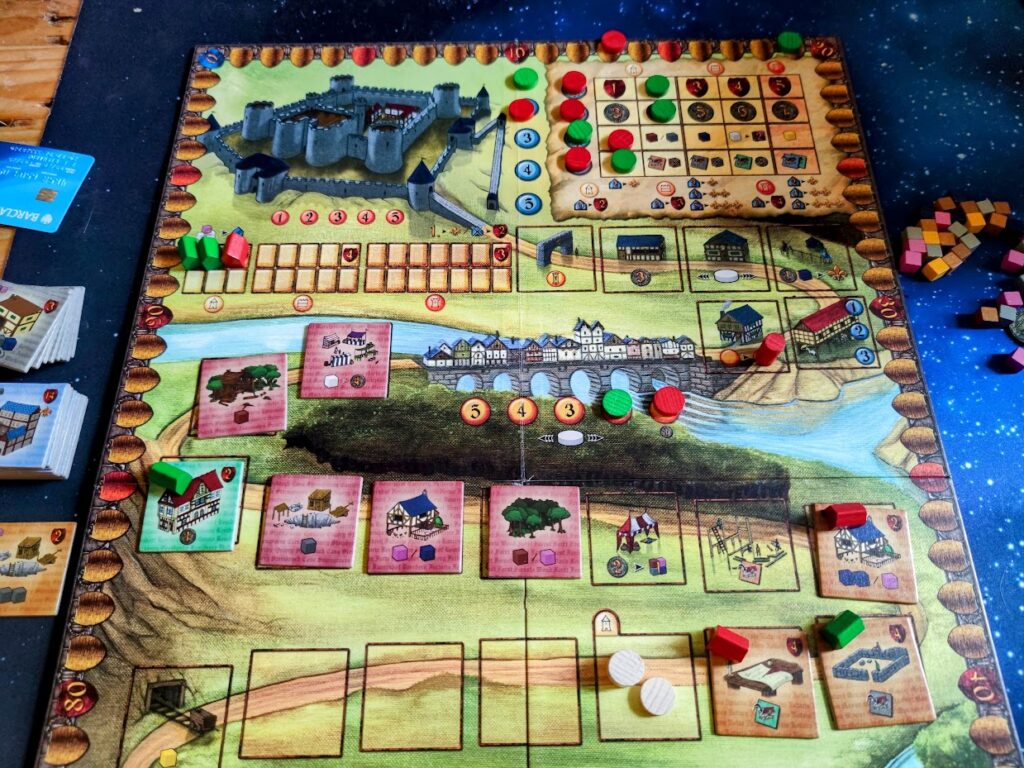
Firstly, you’ve got the fact that for most buildings, only one worker can ever use them per round. You combine this with knowing that the buildings you build are the same ones you use to generate resources, just like in a game like Lords of Waterdeep. Turn order really matters though, so it may be that you invest time, money, and resources in building something great only to never get to use it, because another player keeps going there before you.
Secondly, you’ve got the vindictive genius of the passing track. When you pass, either through choice or running out of money, you put your marker on the first available space on the passing track. For each player that passes, the cost of activating buildings with your workers goes up 1 denier, You might have a brilliant plan, and just enough money to carry it out, then someone passes and you can’t do it. It’s so annoying, but so clever and so much fun to to do other people.
All of this pales next to the wooden totem of evil that is the Provost. The provost piece moves along the road on the board, which all buildings are built adjacent to. After all players have passed, each person in turn gets a chance to pay money to move the provost forward or back along the road. Why would you want to? Because the only action spaces (buildings) that get activated are those along the road as far as the provost.
That’s right. You position your workers in just the right places to execute a plan with A-Team levels of precision, only for some ^$%& to move the provost back past them, and they do nothing. Everything you did was for nought.
The player at the end of the game with the most prestige wins, yadda, yadda, yadda.
Why should you play Caylus in 20XX?
This is a slightly harder game to argue than some of the others. Despite the fact that it was seen as a heavy game when it first came out, it feels pretty tame in terms of complexity nowadays. Then you’ve got the re-implementations. Caylus Magna Carta came out a couple of years later and reimagines the Caylus as a card game. I haven’t played it myself, but I’ve heard that it’s pretty decent, if not amazing.
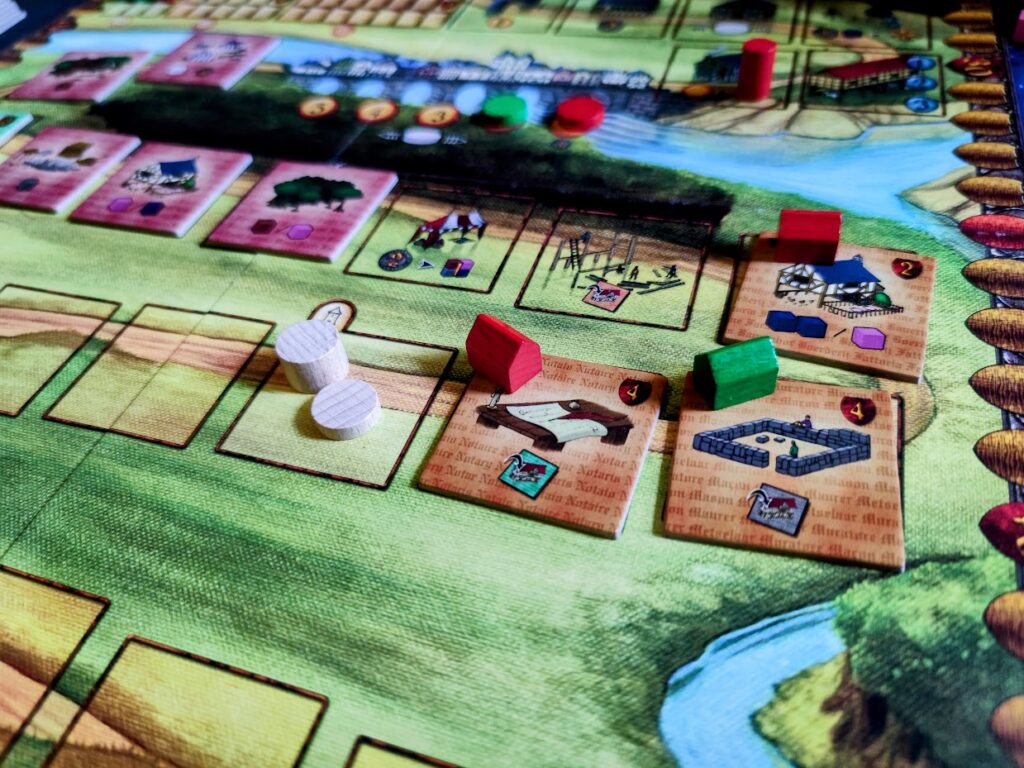
Then you’ve got Caylus 1303. This one came out in 2019 and overhauls a lot of the game to feel more like the sort of thing modern gamers would expect. The variable game length is gone now; there’s a fixed number of turns. The biggest change is removing money entirely and using available workers to pay for actions. It’s still Caylus, but it’s different. To paraphrase Dr Evil, it’s quasi-Caylus. Semi-Caylus. The Margarine of Caylus. The Diet Coke of Caylus. Not quite Caylus enough. You could even argue that it’s the better game, but I prefer the original.
Not many Euro games that come out these days feel so mean. So harsh. It’s a real departure from what people getting into the hobby since 2020 are used to. It’s really refreshing to have your eyes opened to a sub-sub-genre of game you never knew existed. It’s still tight. It’s still full of broken promises. Anyone who tells you that they definitely won’t move the provost back is a damn liar! You might even hate it, some people do. But either way, you owe it to yourself to try one of the pillars of worker-placement. One of the pillars upon which our new games are built upon.
THANKS TO MY SUPPORTERS
Krissie  Craig Paul Brendan Brett Gary Becky
Gavin Chris Mark Johan Richard Simon Ben Sam (new!)
Help me keep Punchboard independent by joining the supporters

 Buy me a coffee
Over to you
❓ Have you played Caylus?
❓ What do you think about it?
❓ Is Caylus the meanest game you know? If not, what is?
⬇️ Let me know in the comments below ⬇️

Played Caylus (the original one) back in March at AireCon and I was blown away. I really enjoy discovering some of the classic “beige euros” like Hansa, etc. They’re so much meaner than modern euros which tend to round off some of the sharp edges and minimise direct interaction.
In our game one player lost every single action in one round as he’d gambled on placing workers later on the track only to have the provost move and prevent him acting at all! He took it well though but it certainly hit his chances of winning hard. I think that’s OK as long as everyone is aware of the risks and can make a choice about whether the potential pay-off is worth a punt.
Time to go look at the rest of the Play Something Old series I think!
Troyes is my favourite of this older style of games with a bit of bite, have you played that? Still has a bit of needle in, and I love stealing other peoples’ dice and ruining their plans, but the strategy feels a bit broader.