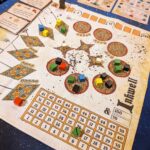

Disclaimer: I was sent a copy of Railway Porters for free. I am working on the Saashi & Saashi stand at UKGE 2026. This is still my honest opinion of the game, but in the interest of transparency, I’m declaring our working relationship.
New Saashi & Saashi releases are like Christmas for me. As a board gamer with a huge interest in indie games (and especially Japanese indie games), it’s always really exciting to see what they come out with next. Railway Porters is their latest and greatest, and it veers in a bit of a different direction compared to a lot of their games. The question you’re probably here to have answered is “Is it any good?” and the answer is a resounding yes.
VERDICT
players 2-4 | playing time 30 mins
Saashi & Saashi do it again, with a gorgeous push-your-luck battle of dice and tactics.
dice rolling
push your luck
variable setup
multiple boards
Railway Porters puts you loosely in the roles of, well, railway porters. The people employed at railway stations to help passengers with their luggage. Think of the golden age of rail, of Poirot stepping onto a train amidst a cloud of steam as a conductor peeps on his whistle. That’s the vibe of Railway Porters.
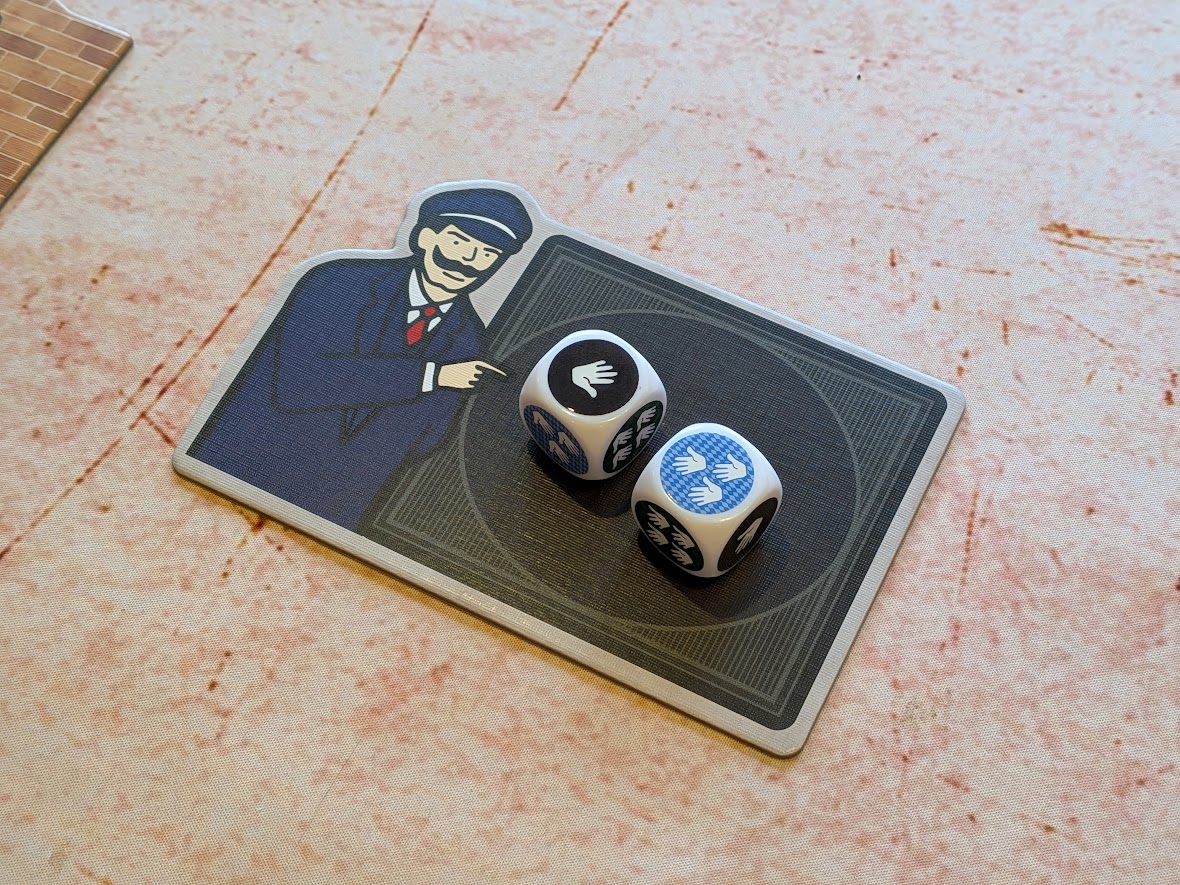
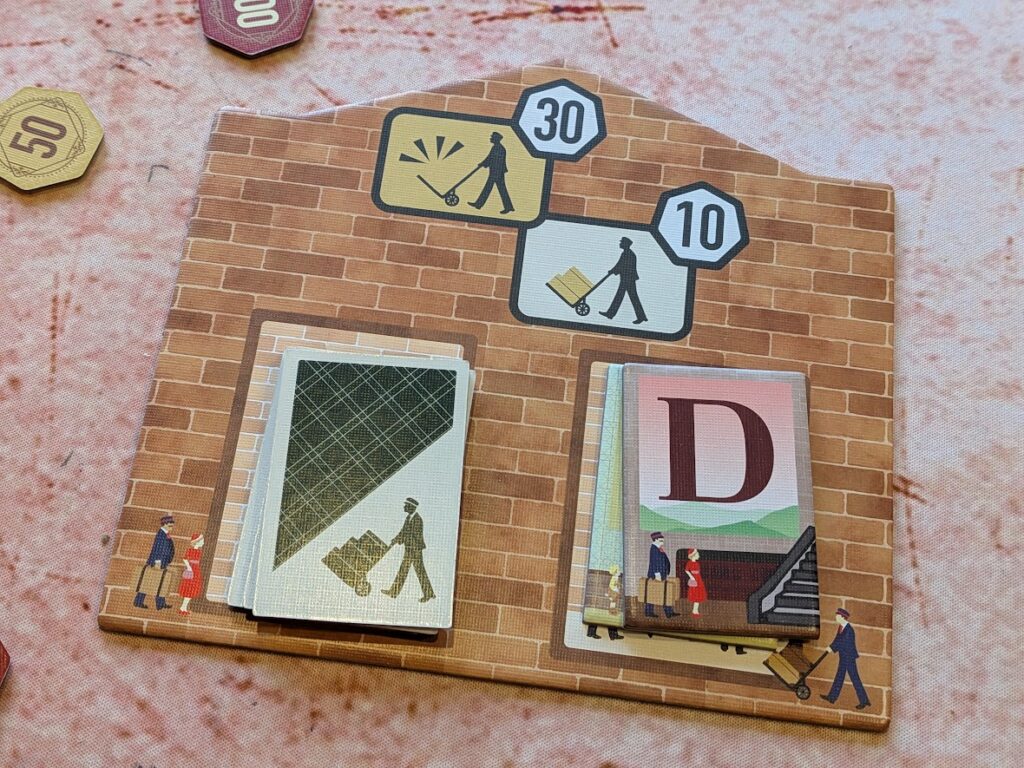
In practice, it’s a push-your-luck game of dice-rolling, but not in the same style as the master of dice-based luck-pushing, Can’t Stop. Each of the five rounds in a game uses one of the six player board sides included in the game. The Head Porter, a role that cycles each round, rolls two super-satisfying chunky dice. Those dice tell you which colour of luggage you can load this turn, and how many of each.
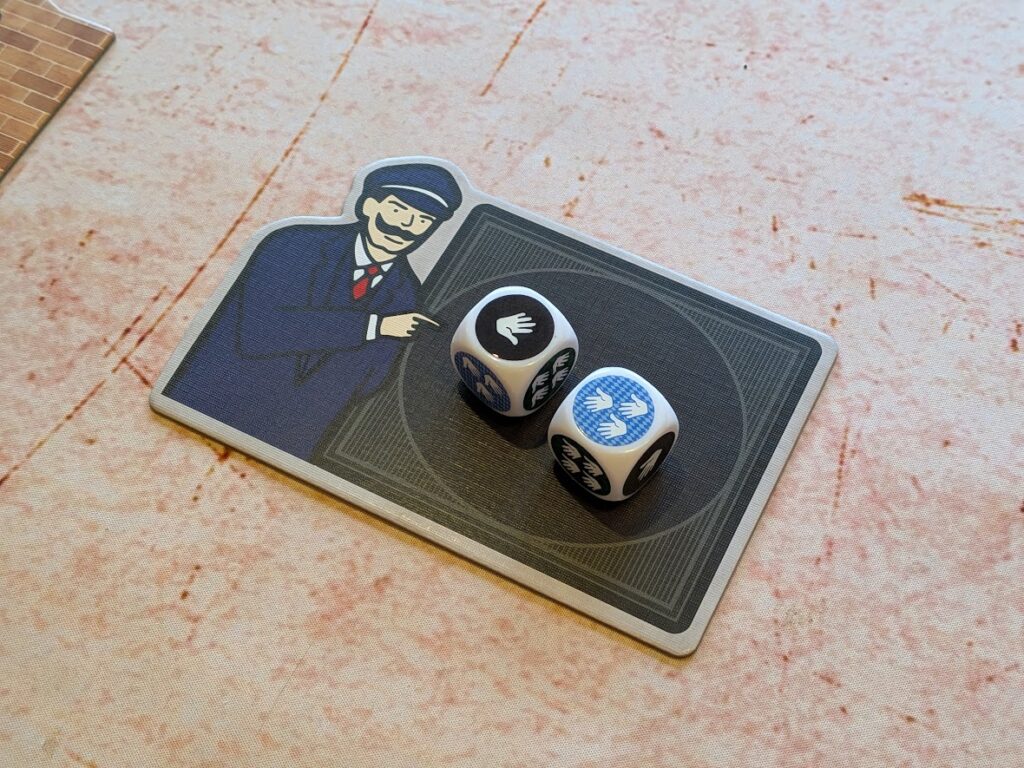
Each player rolls their dice and adds the matching dice to their boards. After this, you get the chance to effectively cash-out and stop rolling, or to keep going. You start each round with six dice, and as you add them to your board, the chances of you rolling dice matching dice get increasingly smaller. If, in a single turn, you can’t place a die for any reason, you take a penalty and can’t claim the big bonus at the end of the round. Do it a second time, and whatever score you did manage to get is halved. Ouch.
You see where this is going. But wait!
Turn order matters
The really clever twist in Railway Porters is what happens after each turn. The Head Porter turns to the player to their left and asks them if they want to continue or head home. If that player decides to head home, effectively banking whatever points they’ve managed to achieve on that board, any remaining dice are distributed, one at a time, to the players to their left.
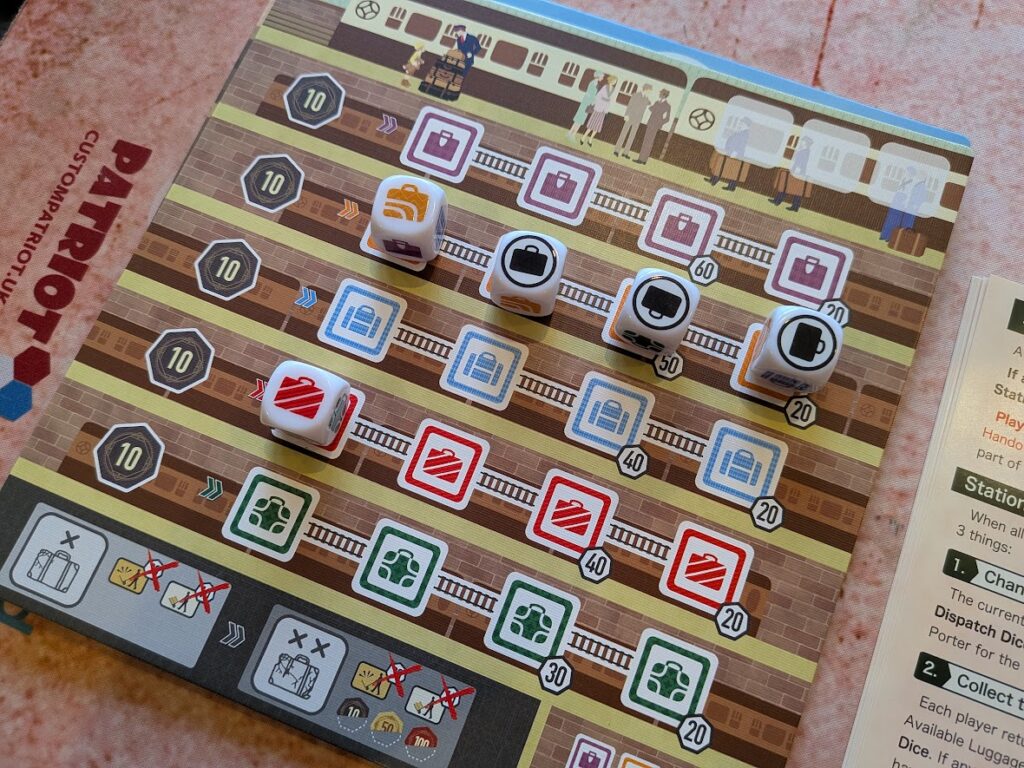
If you’re the last player before the Head Porter, you might have thought you were headed home, having placed five of your six dice. But if both players before you choose to head home, you end up with two more dice. Maybe now you fancy your chances rolling against Lady Luck and seeing if you can eke a few more points out.
It adds a level of tactical play that you might not appreciate in your first few games. If you can see your opponents have rolled lots of yellows, for example, and there’s big dice showing multiple yellows, you might opt to just place a single die of another colour instead. If the others pass a turn or two before you do, you might end up with extra dice to roll later.
This is really nice. If you’re the player who’s asked first each round, it sucks. You’re setting the others up for potentially more points at the expense of guaranteeing your own. You’ll get your own chance to be last, but it’s a devilish little detail that elevates the game above where it might otherwise have sat.
Making tracks
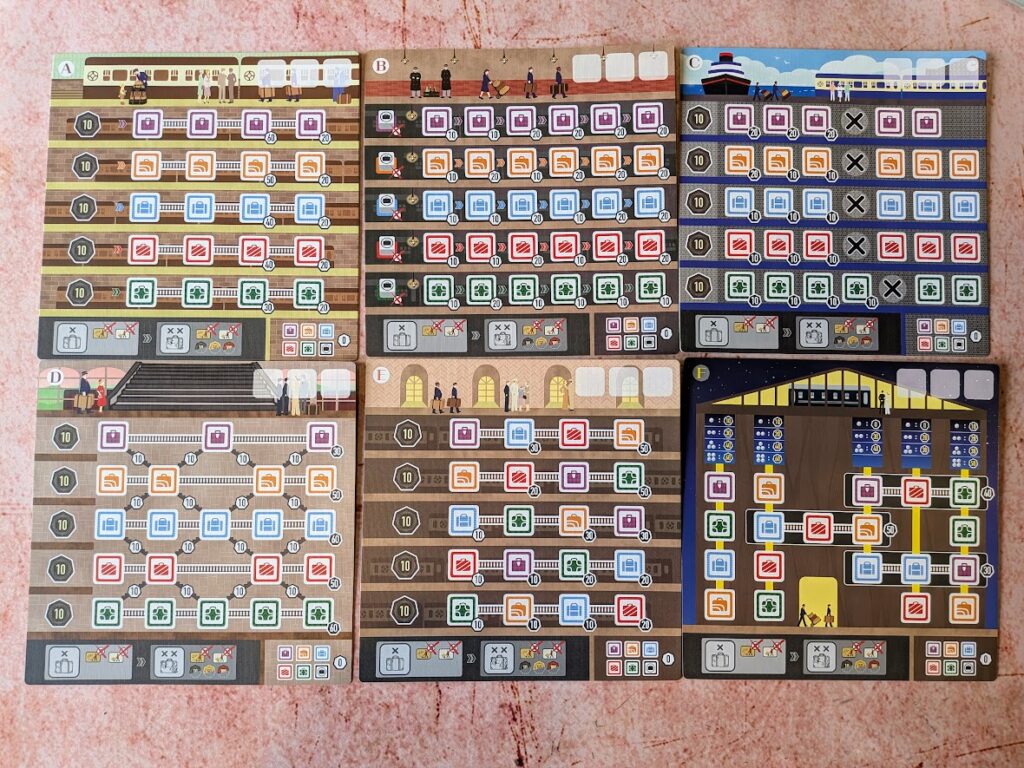
Each of the six boards is easy to understand, but different enough to make the game a lot of fun. The A board, for instance, just wants you to create rows of a single colour, left-to-right. If you manage it, there are plenty of points on offer. The would-be annoyance of not rolling the same colour each turn is tempered on this board by awarding you points for each different row you manage to get at least one die on, so that’s something.
The C board has each row split in two, with the score you get on one side being multiplied by the number of dice you get on the other side. The D board has stairs linking the different platforms (rows), which can earn you extra points if you get dice on both ends of a staircase.
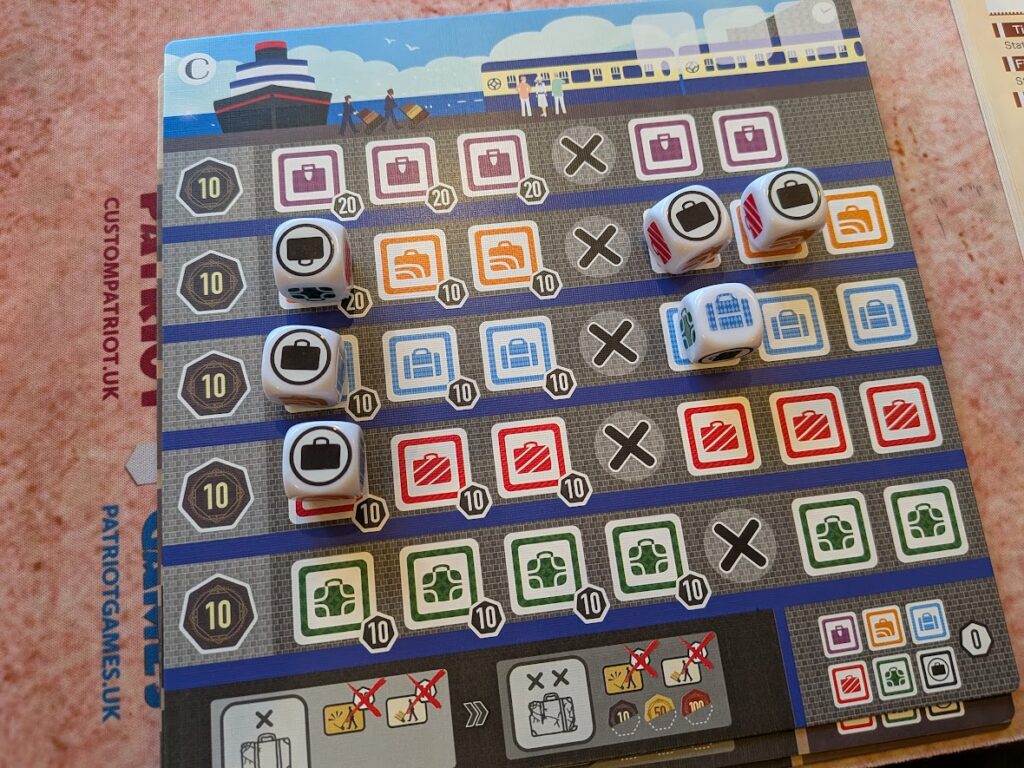
Even though the scoring conditions on each board are relatively easy to understand, the game manages to cause you a lot of headaches very quickly. There’s no way you can score everything, so you’ve got to decide where you’re going to play and what you’re going to try to do. The game will inevitably throw sand in your gears and not give you the dice you want, but that’s half the fun. Dynamic, on-the-fly tactical choices.
Steam train? More like Shinkansen!
Railway Porters moves quickly. Each of the game’s five rounds is over before you know it, which makes it a fantastic choice for family play. If your family is anything like mine, they roll their eyes at another invitation to play another new game.
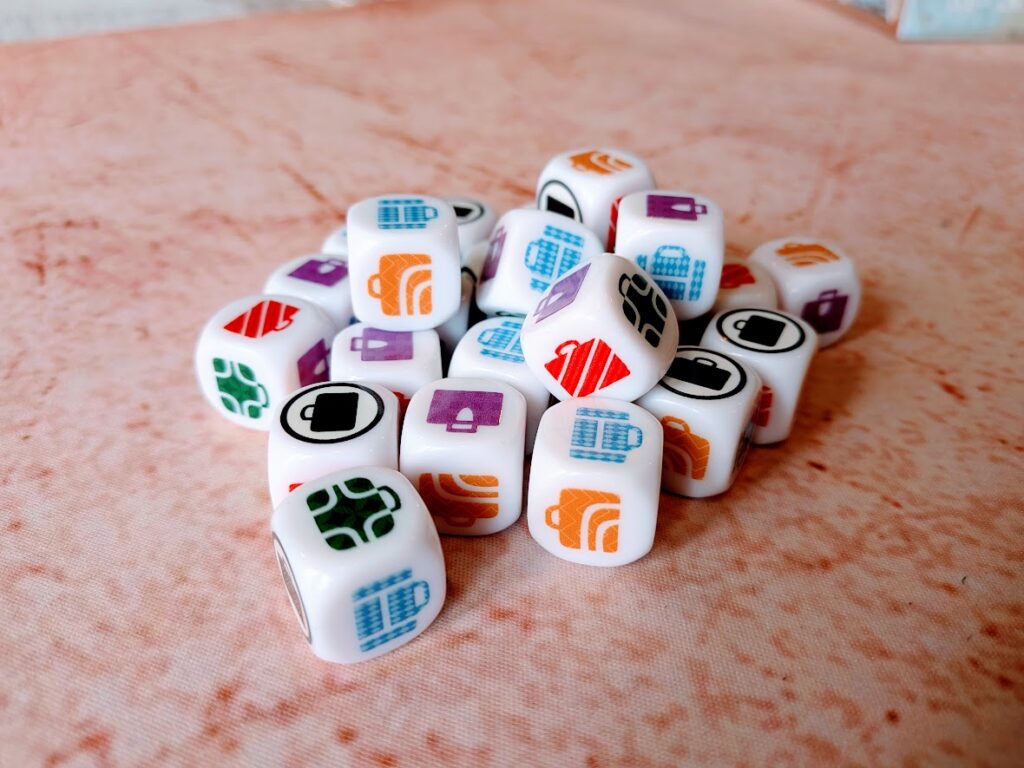
“Is it complicated? Is it long? Is it boring?” Sound familiar? Railway Porters doesn’t give anyone a chance to get bored, and rolling a bunch of dice is one of those fun, toy-like experiences. Find me someone who doesn’t like rolling a load of dice.
The other really neat feature, which really helps first-timers get to grips with things, is that you don’t need to teach each of the six different boards until it appears. In that first game, you can teach A, play A, then see what’s next. You can then approach the next board, whatever it might be, with a line like “Ah, this one is just like the one we just did, but this bit is a little different”. Even my 13-year-old with the attention span of a goldfish on stimulants was able to grasp what was going on each round.
Games like this at the lighter end of the difficulty spectrum really need to make sure they’re doing this. If you can keep a game brief, you do two things. If someone enjoys playing the game, they’ve done so quickly and are more willing to play it again. If they really don’t have a good time, at least it didn’t leave as sour a taste in their mouth as if they’d spent three hours learning to dislike it.
Final thoughts
Saashi and Takako have done it again. The husband and wife team are so good at targeting this very specific corner of the board game market. Small, quick, beautiful games built on traditional mechanisms, but with meaningful modern twists. Railway Porters is a change of mechanism with the handfuls of dice being thrown, but it still retains their signature feel throughout.
Figuring out what kinds of sets you want to work towards, and hoping the gods of fate are on your side, are the heart and soul of Saashi & Saashi’s games. In Come Sail Away (read the full review here), it was using a mancala system to put people in places. In The Great Evening Banquet (read that review here), it was about using drafting to make multiple sets at once. Railway Porters is still set-driven, but with the excitement of dice and the added gamble of a push-your-luck mechanism.
Complexity-wise, when compared to their other recent bigger box games, it probably goes Come Sail Away > Railway Porters > The Great Evening Banquet, in order of heaviest first.
It’s not for everyone. If you don’t enjoy lightweight games, you might find it shallow. If you’re a solo gamer, there’s nothing here for you. But if you like this approachable, friendly, great for new gamers style of game, Railway Porters is a treat. It’s not just one for the collection, nor just to boast that you’ve got it. Railway Porters is engaging, funny, clever, and gorgeous.
THANKS TO MY SUPPORTERS
Krissie  Craig Paul Brendan Brett Gary Becky
Gavin Chris Mark Johan Richard Simon Ben Sam (new!)
Help me keep Punchboard independent by joining the supporters

 Buy me a coffee
Pros & Cons
Pros
- Takako’s beautiful illustration throughout
- A push-your-luck mechanism with a twist
- Lots of variety in the different boards
Cons
- At its best with three or four players
- Perhaps not enough meat to be your game night featured game
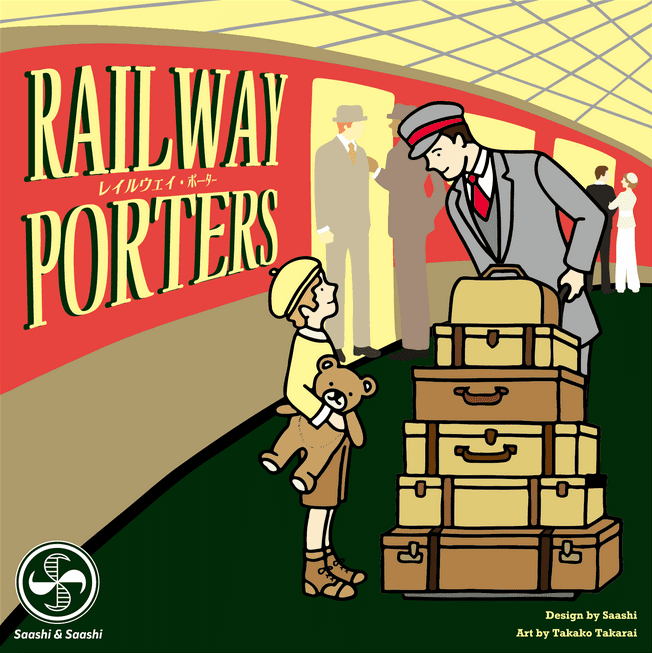
Railway Porters (2026)
Design: Saashi
Publisher: Saashi & Saashi
Art: Takako Takarai
Players: 2-4
Playing time: 30 mins
More games like this one