

Ark Nova marked Mathias Wigge’s entry to the board game world and immediately shot him to fame. The game of building a zoo combined tableau building, tile placement and a clever action card mechanism, and it was (and still is) a huge hit, currently riding at #2 in the BGG all-time list. Sanctuary, the Ark Nova spin-off, came out of the blue and many people – myself included – were worried that it was just an easy cash-in on the name. Happily, I was wrong. Dead wrong. While Sanctuary undeniably inherits a lot of its predecessor’s DNA, it’s a very different game, and there’s definitely room for both in your collection.
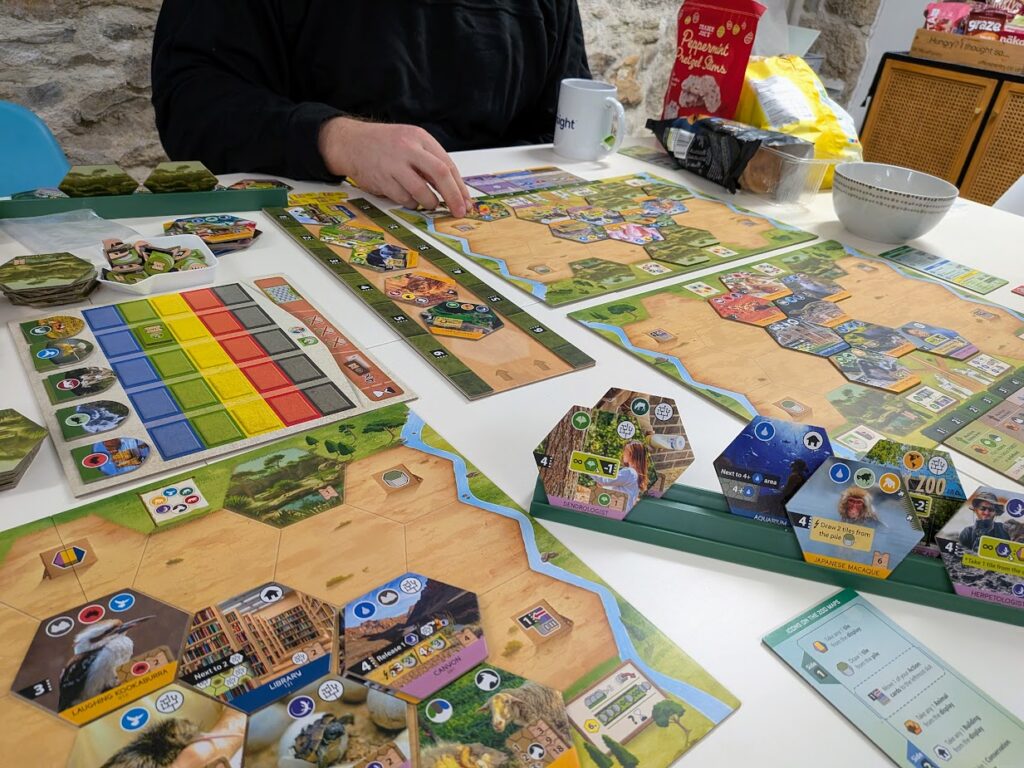
I’ll spare you explaining how Ark Nova plays. If you want to know more about the original game, read my review first. In Sanctuary, you’re aiming to create a zoo/wildlife park. You do this by drafting big, chunky hexagonal tiles with various animals, buildings and projects on them. You play them onto your player board strategically, aiming to maximise the scoring potential of each and every tile that goes down.
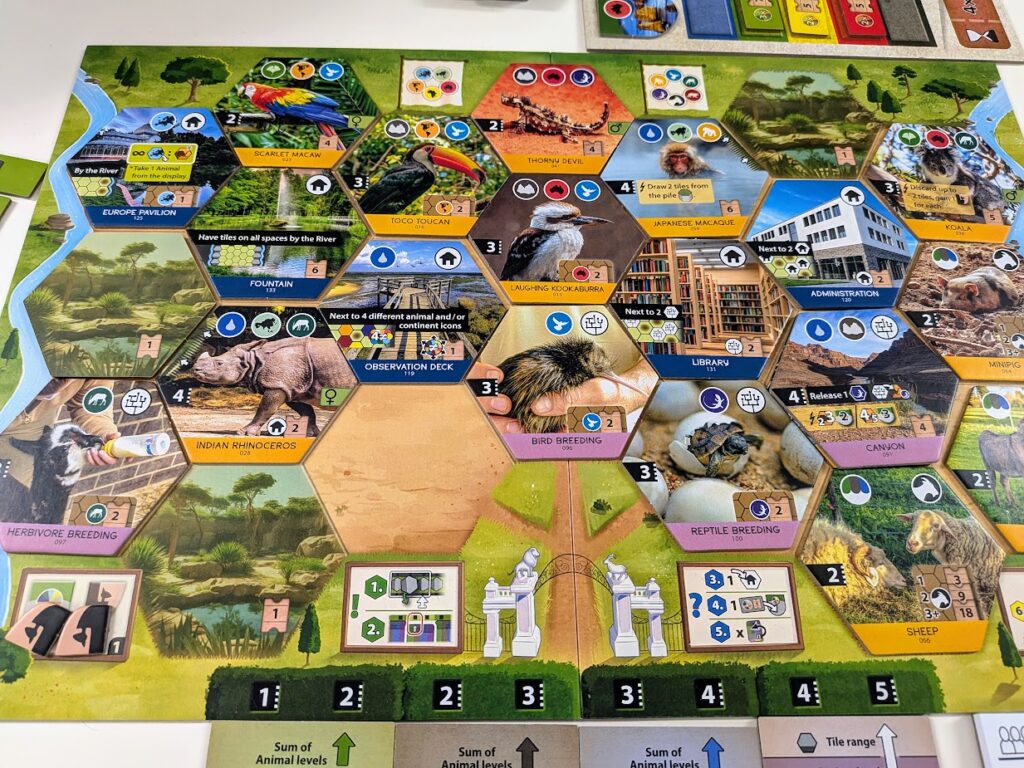
Animals are one of six types, and come from one of the five continents on offer (Antarctica doesn’t exist in the game, and North & South America are combined into one), and have icons to show these traits. Much of the game’s scoring is based around these icons and maybe their total number, or other things like contiguous chains of tiles with matching icons. Sanctuary is a spatial game of strategic tile-placement, and if that sounds like your kind of thing, you’re in for a good time.
Action stations
One of Ark Nova’s ‘oooh, that’s cool’ features is the way the action cards work. That same feature is here in Sanctuary, too, albeit slightly watered down, to make the game more accessible and approachable. The four action cards sit below your player board, and each has an arrow that points at a number above it. The number it points at is the strength of the action. So if you have a water animal that shows it needs a strength of 4 to be placed, you look at your water card (you also have cards for rock and grassland types, as well as one for playing projects), and make sure its arrow is pointing at the 4 at least.
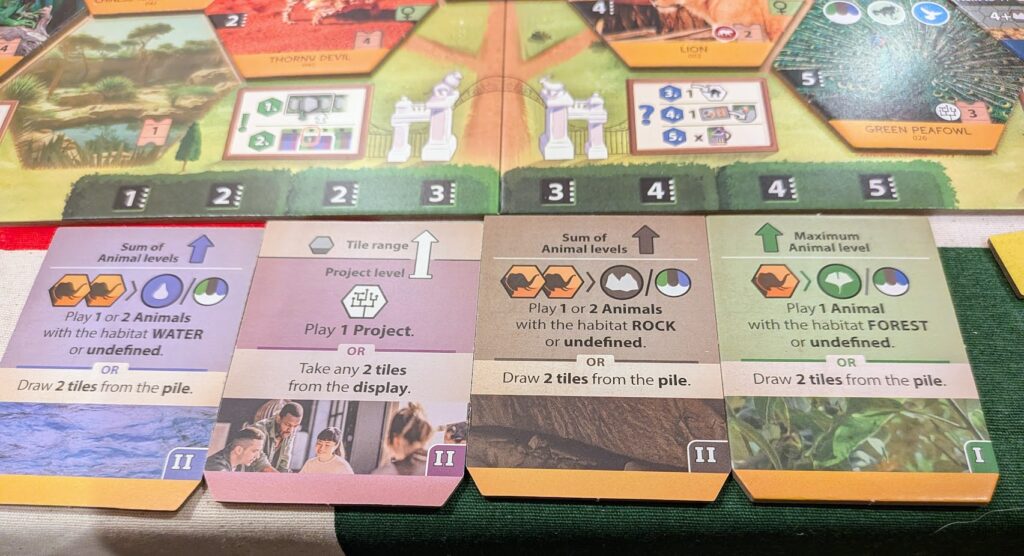
The trick, the little bit of fizz in the Ark Nova family of gaming cocktails, is how the action cards move about. When you use one, it moves all the way down to the left and shoves the remaining cards to the right, pushing them further up the numbers, increasing their strength in the process. During the game, you can upgrade the cards, flipping them and giving them more strength. It’s a really nice system, which means you can employ a bit of planning.
One of the things I really like in Sanctuary is that there’s no necessity to use an action to gain new tiles. You have to take at least one each turn. It’s a nice feature to have in a game aimed at lighter games fans, because it means you can just concentrate on playing the tiles into your zoo, and not have to think about making sure you have the tiles to place in the first instance.
Location, location, location
Sanctuary leans heavily into one of the most underplayed aspects of Ark Nova by making the tiles’ relative placement the key to the game. In the original game, most of the time it didn’t matter where a particular habitat got placed. Sure, some animals needed to be next to rocks or water, and some of the maps had bonuses associated with certain spaces, but mostly it didn’t matter.
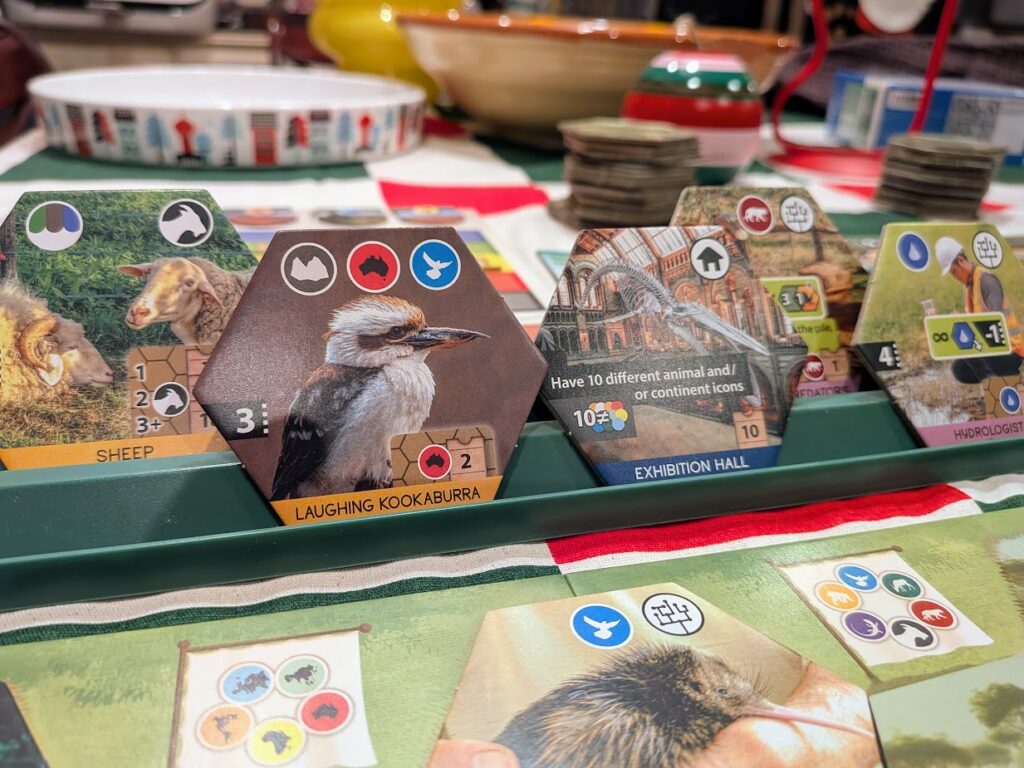
Sanctuary flips this on its head by making the choice of where each tile goes the most important thing. As I mentioned above, some of the tiles’ end-of-game scoring conditions want them to be contiguously connected to more of the same kind. Some like to have as many different icons surrounding them as possible. Some animals have male and female counterparts in the game, and placing them next to one another presumably makes them happy, because you get bonuses for it.
Enjoying this article? Consider supporting me.


More awkwardly, some of the creatures you choose to house aren’t very sociable. Or they’re dangerous. Or maybe a bit of both. These animals demand that empty spaces be left adjacent to one or more edges of their tiles. To make an empty space, you just flip one of your tiles over and place it down where it needs to go, but it feels like a big decision. Open spaces feel like they get in the way, because they do. In a game where you get the general feeling that you want to ensure that every tile in your zoo either scores or gives you good bonuses, demoting one of them to just lie fallow feels harsh.
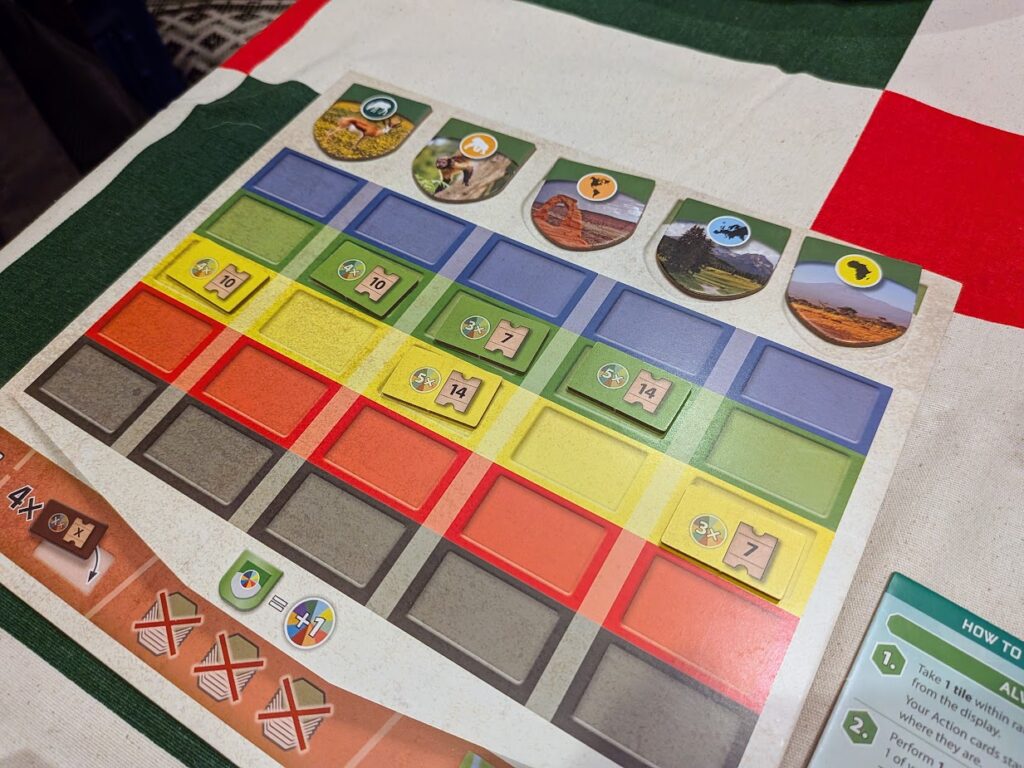
Given the huge number of tiles in the game (135!) you could be forgiven for not knowing how to even start during the game. Luckily, you’re given some steer by the objectives which are drawn at random before each game. They might reward you for getting a certain number of Europe icons, or Asia, or maybe herbivores or predators. There’s quite a big change in the way objectives work, compared to Ark Nova, where all players can complete any of the objectives. You’re never locked out of one by other players. Your only decision is when to use an objective marker. Trigger it early and use your 2x tile, or hang fire and use the 5x one, hoping for a big payday at the end.
Final thoughts
Sactuary is an odd duck. Or maybe odd swan is a better turn of phrase. It looks really simple on the surface, but when you get into it, there’s lots going on beneath the surface. It’s one of those rare games where you can just let young or very inexperienced players build a zoo with the animals they like the best and have a good time, but hardcore players can also expend some serious mental energy trying to optimise every decision and placement. Games which cater to both ends of the spectrum so well are hard to come by.
So, where does it fit in your game collection? If you pushed me, I’d say it’s the game which sits nicely between Castle Combo and full-fat Ark Nova. The idea of trying to make each tile score well from all of its neighbours, combined with the objectives, action card system and general zoological feel, means it wedges itself right there on the sofa between those two games.
I want to mention the components, too. The tiles are thick and heavy, and really colourful. The publishers saw fit to include some nice big, plastic tile holders too, so you don’t have to worry about how the heck you’re meant to hold and arrange your ‘hand’. The objective board feels and looks a little bit cheap in comparison, but it’s a small moan about what is otherwise an excellent game. Lighter than Ark Nova, but still enough to get your teeth stuck into, and yes, I believe there’s space in your collection for both. I want to see what Mathias has up his sleeve in the future in a non-animal design, because he’s two for two so far for me.
Pros & Cons
Pros
- Far more than just ‘Ark Nova lite’
- Fans of tile-placement games will love it
- Really good production values for tiles and holders
Cons
- Not as light as it first seems
- The objective board feels cheap
You can buy Sanctuary right now from my retail partner Kienda – remember to sign up at kienda.co.uk/punchboard for 5% discount on your first purchase over £60.
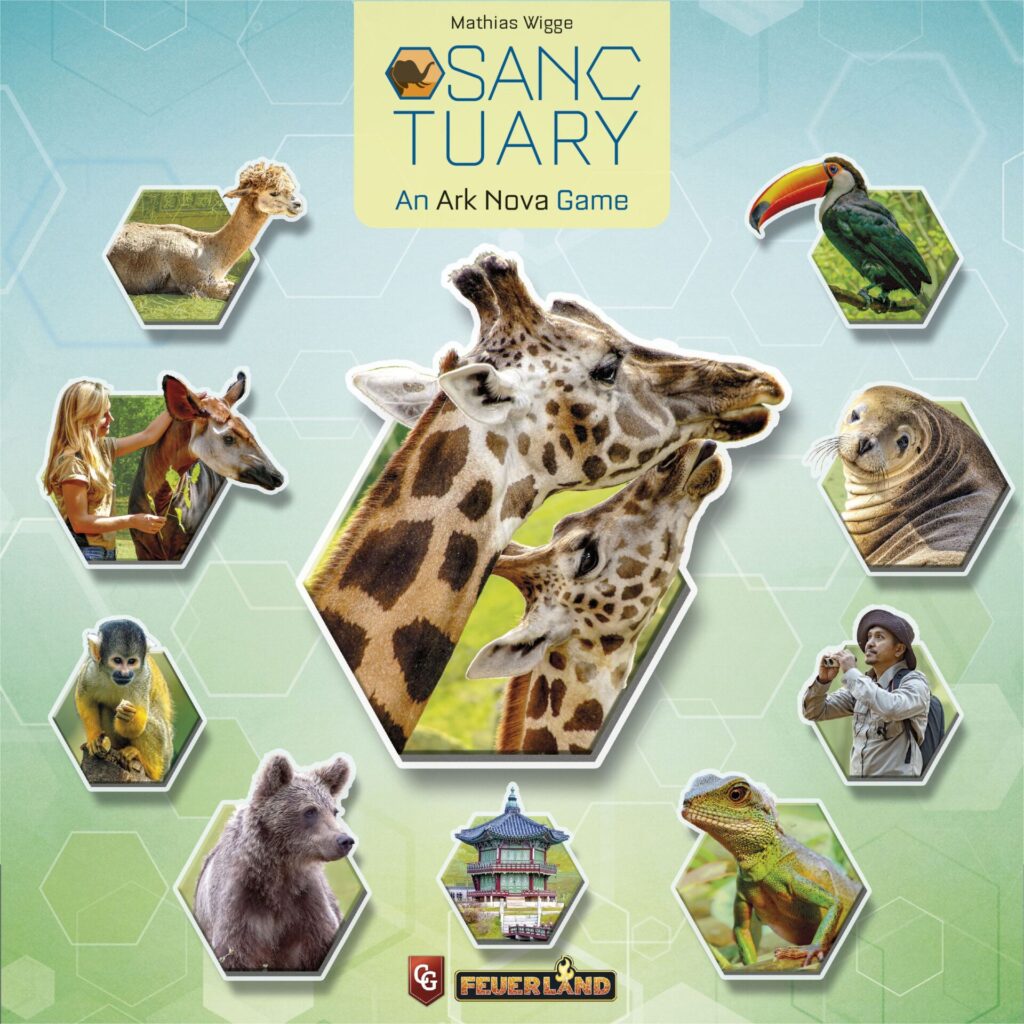
Sanctuary (2025)
Design: Mathias Wigge
Publisher: Capstone Games, Feuerland
Art: Dennis Lohausen, Christof Tisch, Felix Wermke
Players: 1-5
Playing time: 40-100 mins

Adam is a board game critic with over 15 years of experience in the hobby. A semi-regular contributor to Tabletop Gaming Magazine and other publications, he specialises in heavyweight Euro games, indie card games and transparency in board game media.
I’m not a big fan of Ark Nova, but you’re final thoughts have me intrigued! Thanks for the write-up