
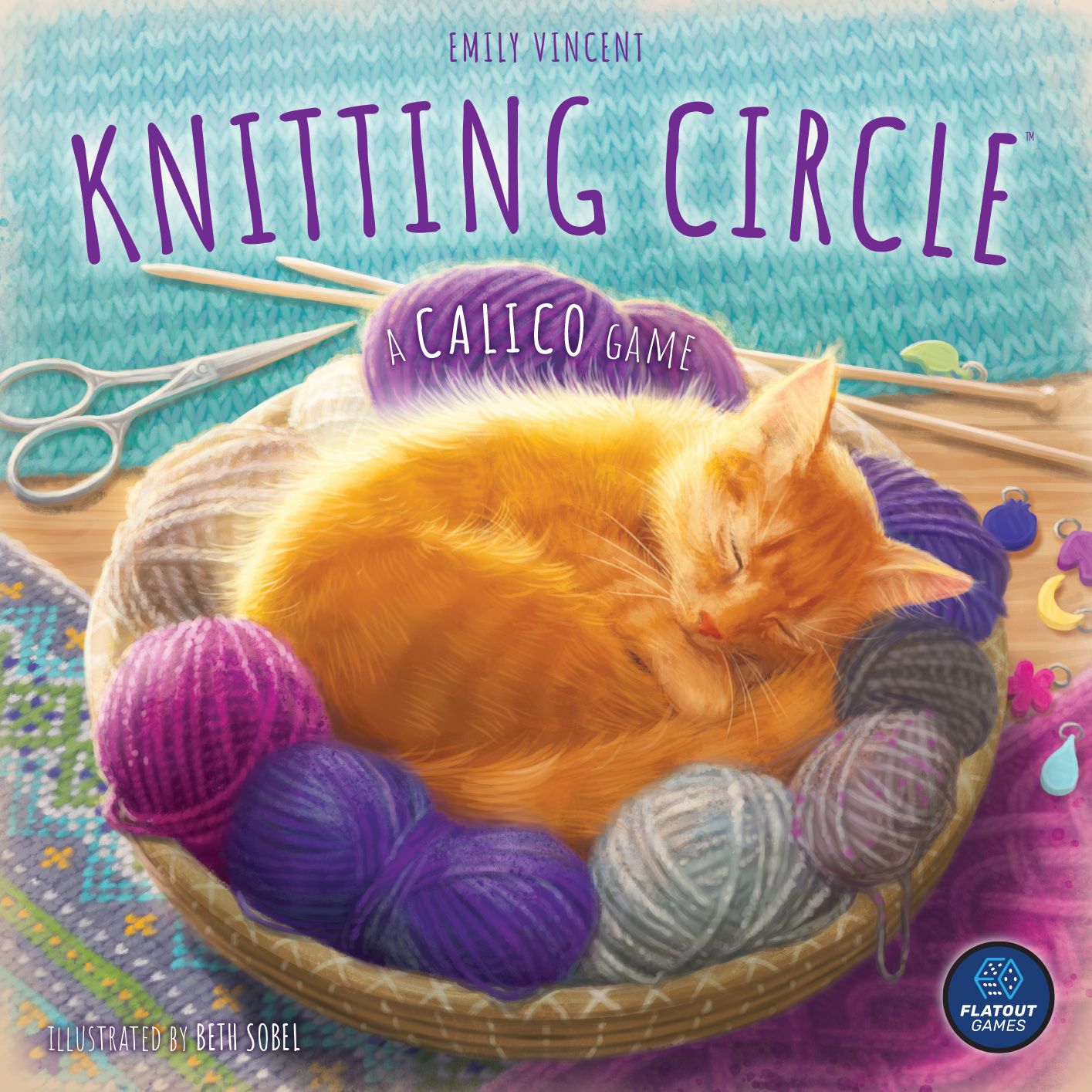

A review copy of Knitting Circle was kindly provided by AEG. Thoughts & opinions are my own.
A few years ago, I discovered that the type of mystery story I immediately head for when it’s winter, and I feel blue, is called a ‘cosy mystery’. I thought it was sweet, but since then I’ve been unable to escape the term ‘cosy’. It’s slapped on everything, much to my middle-aged chagrin. I got two sentences into Knitting Circle‘s rulebook before I tripped over “In this gorgeous puzzly tile-laying game for the whole family, players are knitters competing to create the coziest, most beautiful assortment of garments”.
Regardless, ignore my curmudgeonly griping and stick around, because Knitting Circle delivers on its aims.
I make no secret of the fact that I love what the team over at Flatout Games are doing. I’ve reviewed several of their games, most recently Point Galaxy (you can read that review here). They make some brilliant games on the lighter end of middle-weight when it comes to complexity, and to date, I haven’t played one that I didn’t enjoy.
Put the cat among the patterns
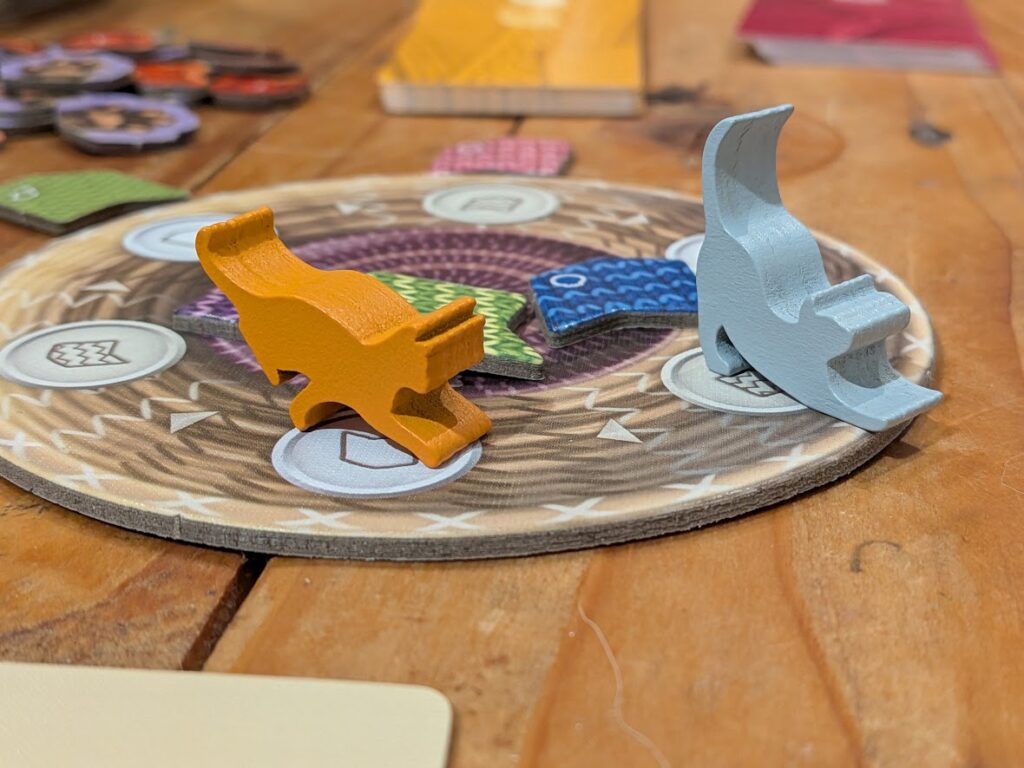
The astute among you might have noticed that on the box for Knitting Circle it proudly proclaims “A Calico Game”. If you haven’t played Calico before, it’s a brilliant little puzzle combining tile-laying and a bit of drafting. It featured cats on quilts heavily, and Knitting Circle continues its Feline forebearance. The player pieces, while not heavily used, are unique little wooden cats, and there’s a cute little Ginger Tom in a bowl of yarn balls on the cover. Awww.
Anyway, cuteness be damned, we’re here to talk games. Ruthless, cutthroat, competitive games, right?
The concept behind Knitting Circle borrows heavily on Calico’s. You take knitting patterns from those on offer, draft pieces of knitting from the middle of the table, and use them to complete your patterns with aplomb. That’s right, aplomb. The game centres around a shared rondel (I freakin’ love a rondel). You move your cat one or two spaces around the central tile and then take one of the two yarn tiles at that space. Once all knitters have a full set of yarn tiles, you move on to actually making stuff.
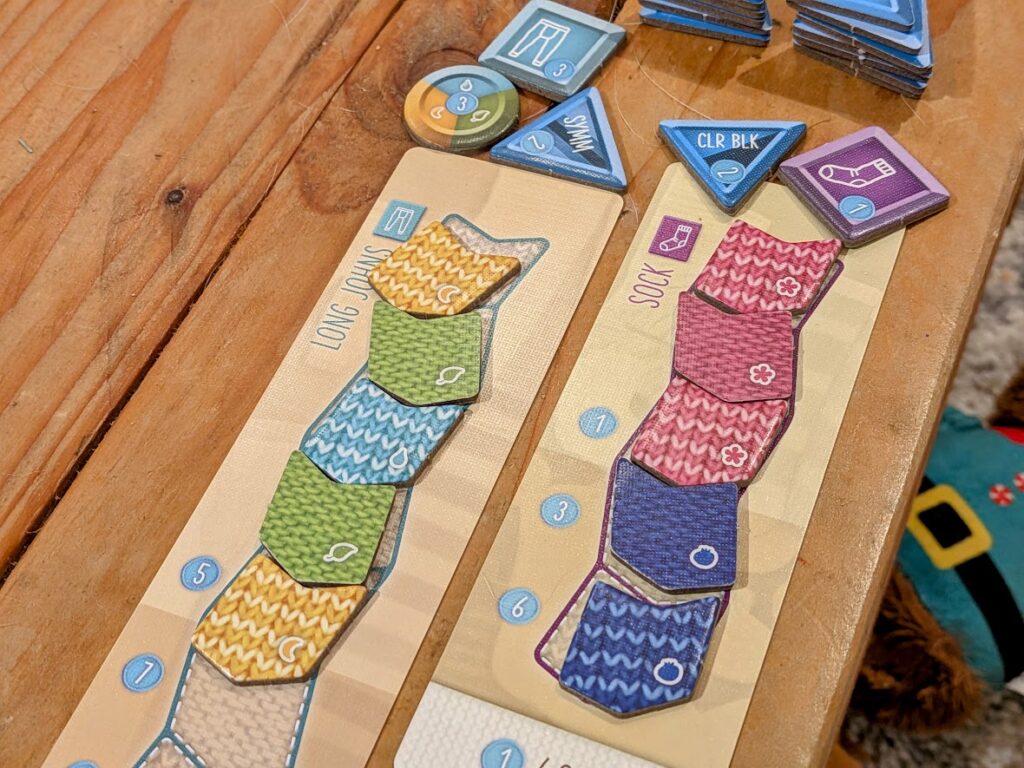
I was going to start this paragraph with “This is as simple as…” but then I realised that it’s far from simple. That is to say, the actual rules around what you can do is simple, but flexing your grey cells to work out the best way to do it is tough. Each pattern you own shows whether the next piece of yarn added to it needs to be Knit or Purl side. You see, each tile is double-sided, and you have to play them with the same side up as you drafted them with, and this is where things get thinky.
Of irons in fires
What do you do if you want to place a piece, but it’s the wrong way up? Luckily for you, you can flip any number of your tiles to their opposite side, but only if you discard a tile. Which of those four precious tiles that you just drafted are you happy to throw away? The answer is usually ‘none of them’, and that’s where the meat and potatoes of Knitting Circle are.
Enjoying this article? Consider supporting me.


You very rarely have exactly what you want, and when actions like flipping tiles or taking new garment patterns require you to discard tiles, the game forces you to make agonising decisions again and again. You collect button tokens, which you can add to garments to add more points to those you complete, based on things like the number of colours, repeated patterns – that sort of thing. Fans of Calico will feel immediately at home with the concept.
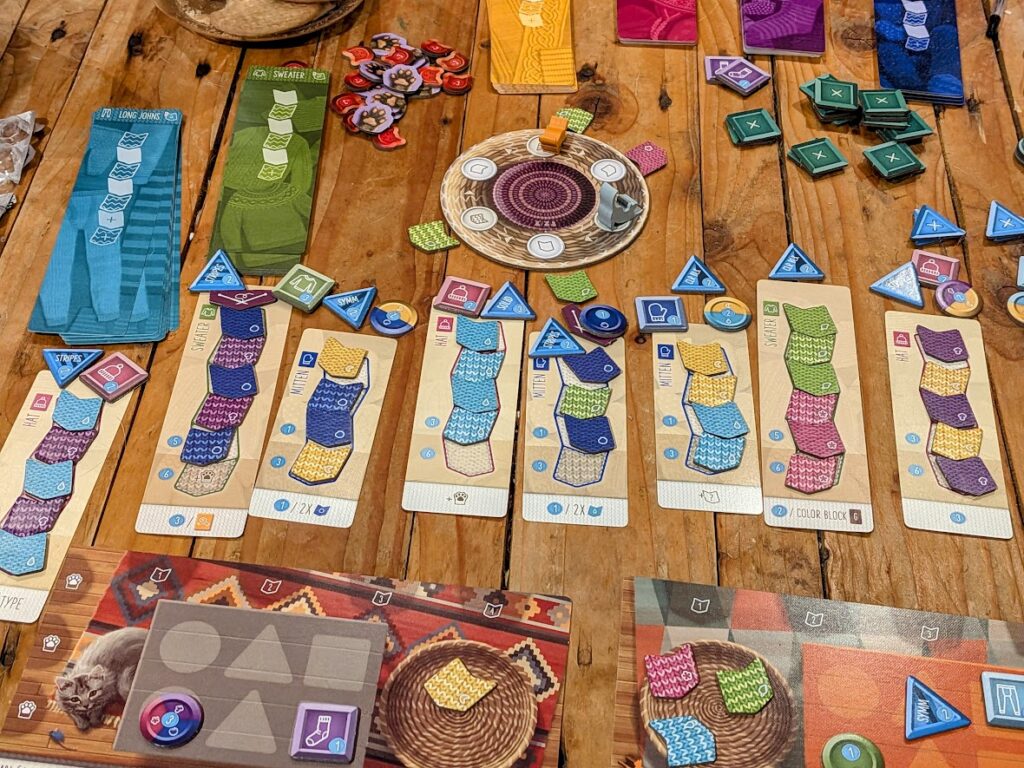
The biggest difference between Calico and Knitting Circle from a gameplay point of view is that each garment is unique and distinct. They’re also optional. So while in Calico, you had overlapping areas of quilt that you try to score well with, Knitting Circle lets you concentrate on one thing at a time. Multiple ‘one things’ for sure, but this way of doing things is more accessible to new players.
Final thoughts
If you like Calico, you’ll like Knitting Circle. And yes, it’s different enough to warrant owning both. That’s the short version. Knitting Circle is a slightly friendlier spin on the pattern-making, tile-laying foundations laid by Calico. It feels a little messier on the table because you have garment tiles wherever they’ll fit, and the yarn tiles sit loosely on top of them without the double-layer luxury of Calico. I really like the rondel at the center of the game, and I have to say I much prefer not having to pass the bag of tiles around the table.
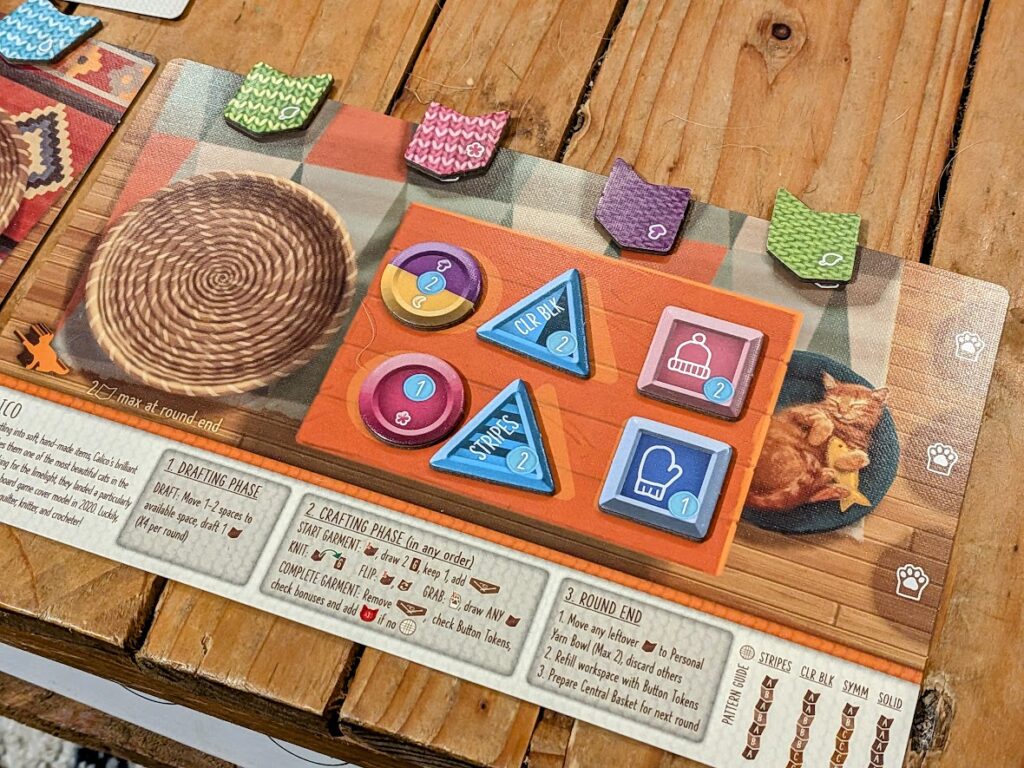
It alters the pace of the game in a nice way. Drafting is done as a group, then players get to simultaneously place their yarn, and it just feels a little more connected, for want of a better word. I’ve lost count of how many times someone has said “Whose turn is it? Oh, mine?” during Calico, because it’s easy to get absorbed in your placements.
The puzzle of Knitting Circle is a little different to that of Calico, and in a way that I think will appeal to board game newbies, and younger players. I love the way you can alter the tiles you’ve collected, but knowing that if you do you’ll end up with fewer tiles as a result. It’s a delightful little dilemma which pinches your brain throughout the game.
It feels a little less premium than Calico, but Knitting Circle is still a fantastic puzzle that fans of games like Calico, Azul, and River Valley Glassworks will really enjoy.
Pros & Cons
Pros
- More lightweight puzzle mastery from Flatout
- Coziness in overload for those who yearn for it
- Rondel!
Cons
- A little messier on the table than Calico
- If you don’t like tile-placement, this game won’t change your mind
Thanks to my supporters
A big shout-out to my current Ko-fi and Patreon supporters:
Krissie, Craig, Paul, Brendan, Brett, Gary, Becky, Gavin, Chris, Mark, Johan, and Richard.
You guys are all amazing ❤️
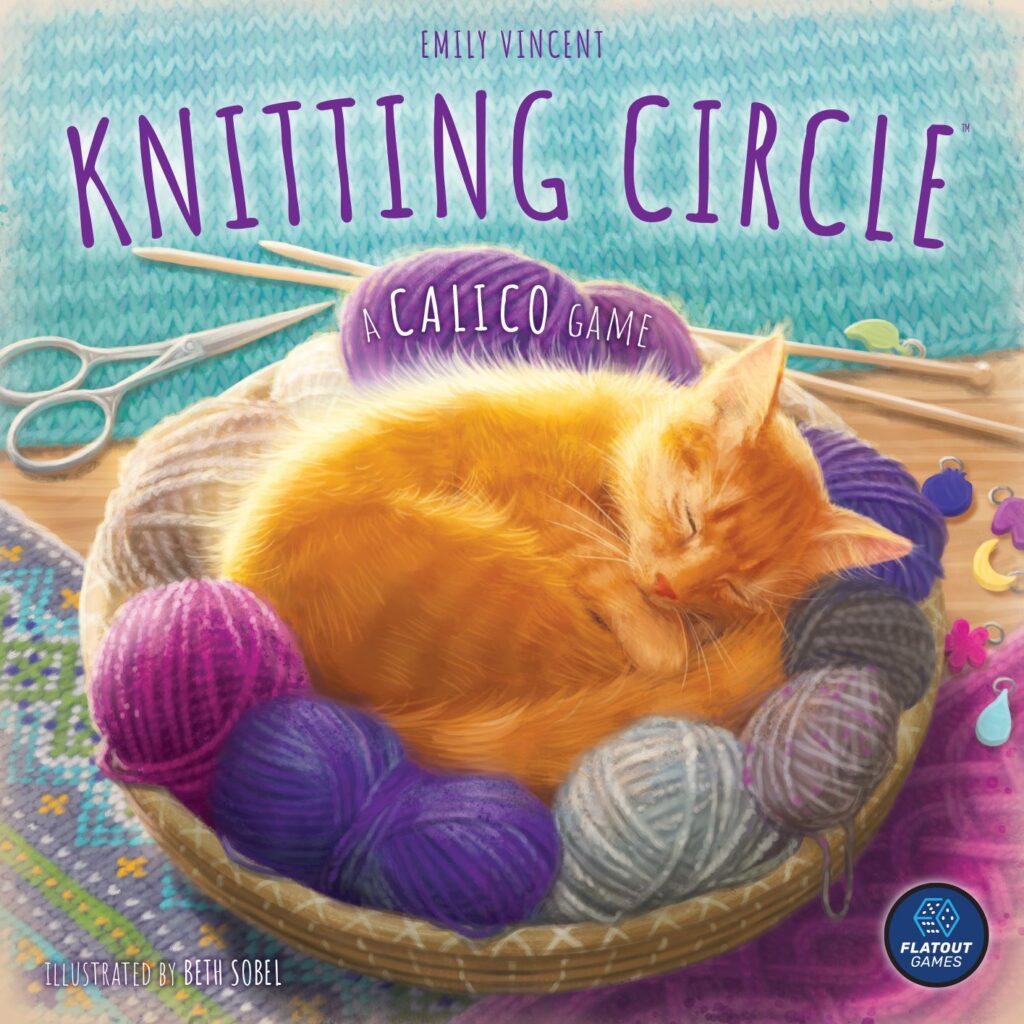
Knitting Circle (2025)
Design: Emily Vincent
Publisher: AEG, Flatout Games
Art: Beth Sobel
Players: 1-4
Playing time: 30-45 mins

Adam is a board game critic with over 15 years of experience in the hobby. A semi-regular contributor to Tabletop Gaming Magazine and other publications, he specialises in heavyweight Euro games, indie card games and transparency in board game media.
Knitting and games? That sounds like a fun combo. Did you find it easy to pick up for beginners?