
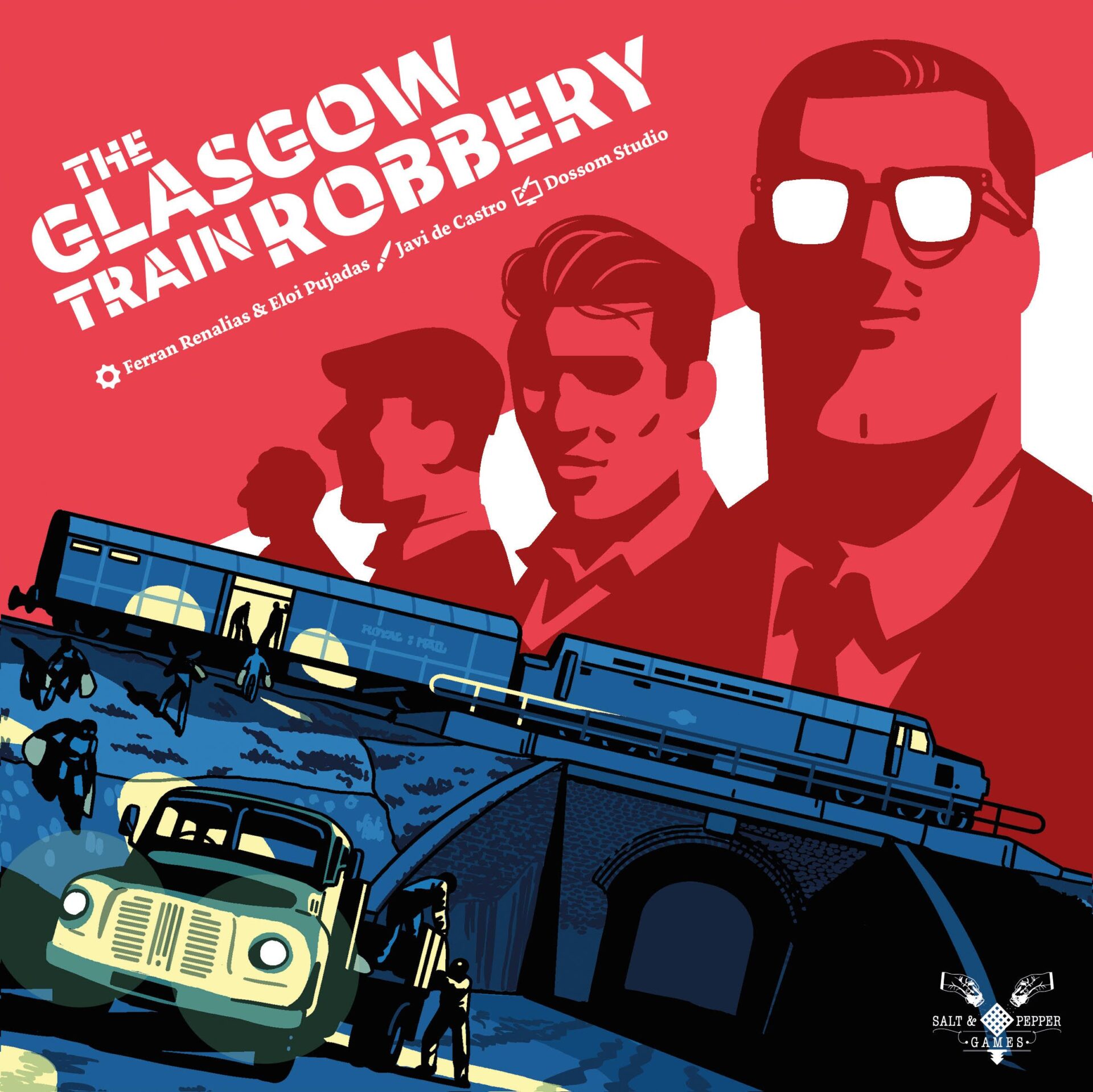

A review copy of The Glasgow Train Robbery was kindly provided by Salt & Pepper Games. Thoughts & opinions are my own.
Let’s answer the two most important questions right off the bat. Yes, this is a game about The Great Train Robbery. No, I don’t know why it’s called The Glasgow Train Robbery. Maybe it’s a translation thing, maybe it’s a copyright thing. While I can’t tell you about the name, what I can tell you about is the game. I can tell you that it’s a tight, uncompromising two-player treat. I can tell you that it’s going to hurt your brains. I can tell you that you’ll want to play it again straight after you finish. I can also tell you that it is definitely not a game for everyone.
Let’s get a little loco.
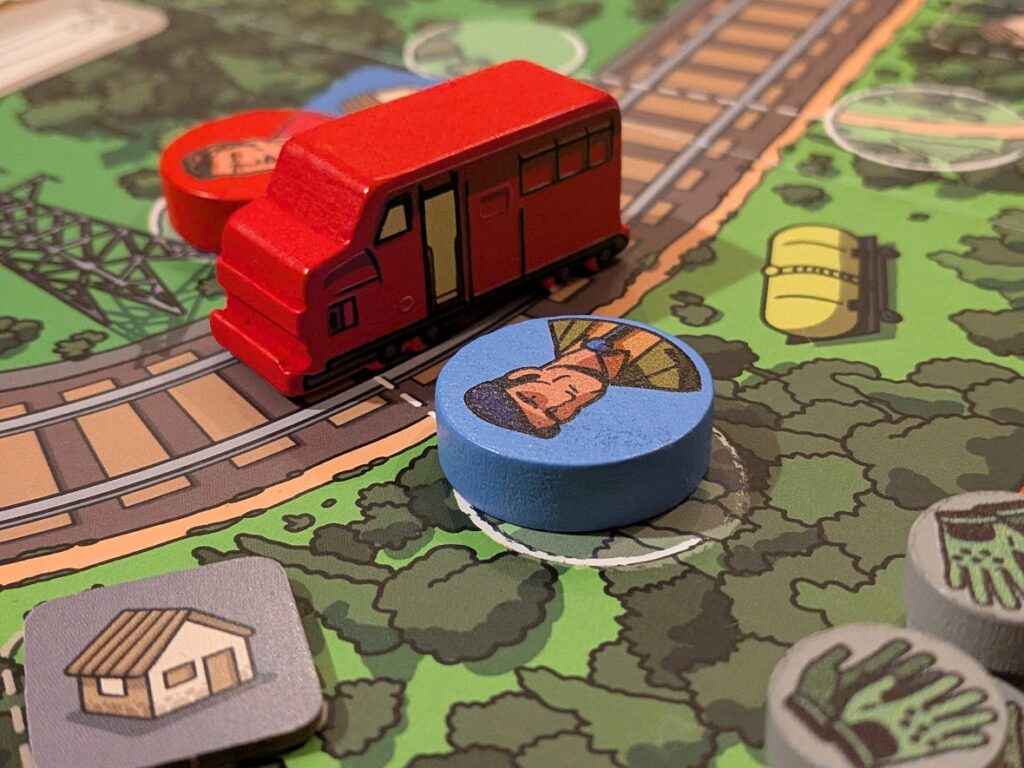
If you’re not familiar with the Great Train Robbery, head over to Wikipedia to do some required reading. In this game the two – and two only – players sit opposite each other with the game board between them. One of you plays the role of coordinator, the other is the operator. The two roles are asymmetric, but with a good deal of crossover between them.
Central to the game, its lit fuse, its draining sand timer, is the train on the track that runs around the edge of the board. Nearly every action in the game has a time cost, and that cost is represented by moving the train. It only moves a short amount each time, but those small increments soon add up.
The twin sister themes of time and timing run throughout. Not only do you need to complete your shared objectives before the train leaves the board, but the things you’re doing – your plans. Your machinations. Those need to be completed while the train is in a particular area of the board. Each of the five plans you need to complete to win the game asks for a certain type of operator(s) to be present at the right place, at the right time, and hopefully carrying the things they need to do the job.
Unfortunately, there’s a massive, greasy fly in the ointment. You’re not allowed to talk about what you’re doing.
“What we have here is failure to communicate”
Ahh, limited communication. That old chestnut. Loose lips sink ships, and all that, so the players cannot outright say ‘I need a tech and a camouflage operator at the red building, and I need to be carrying two batteries, a walkie-talkie, and some gloves’.
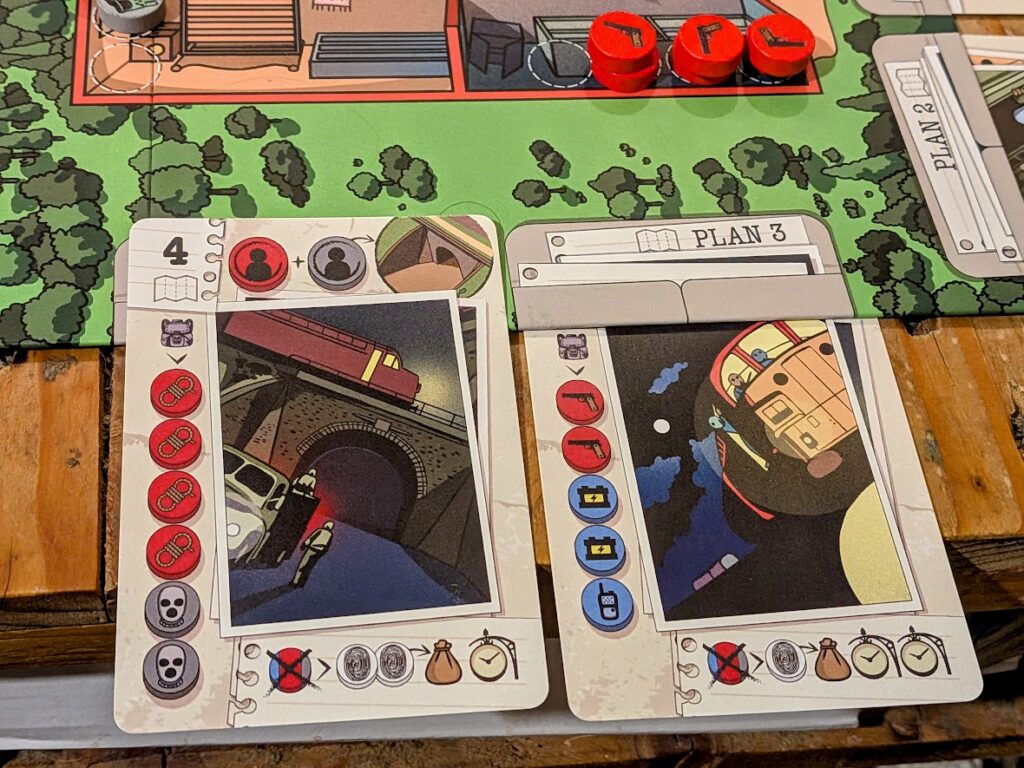
Instead, you’ll need to devise ways to steer the other player in the right direction. As the coordinator, for instance, you might be moving the particular type of operator tokens in a direction which makes no sense to the operator player, because they need them somewhere for some reason.
When the various items are distributed during a rest turn, the player drawing the tokens from the bag decides how they’re distributed between the players. If someone is making sure there are plenty of guns on your side of the divide, there’s probably a reason why.
So verboten is communication in fact, that some of the actions on the cards you play to do just about everything in The Glasgow Train Robbery let you say a few key words to the other player. Speaking of those cards, they’re a tricksy little minx in their own right, too. You can play them for one of a couple of normal actions, like moving characters around the board or the hideout building, and also use the more powerful actions at the bottom of the card, at the expense of that card then leaving the game instead of heading for the discard pile.
The Landlord’s Game
One of the more interesting bits of trivia about The Great Train Robbery is how they got caught. After the robbery, the gang hid out at a farm. While they were there, they played Monopoly to pass the time. They carelessly left their fingerprints on the game pieces, which helped lead to their eventual identification and capture. So the next time someone tells you “Monopoly isn’t as bad as you think”, ask them what Ronnie Biggs, Charlie Wilson, et al think about it.
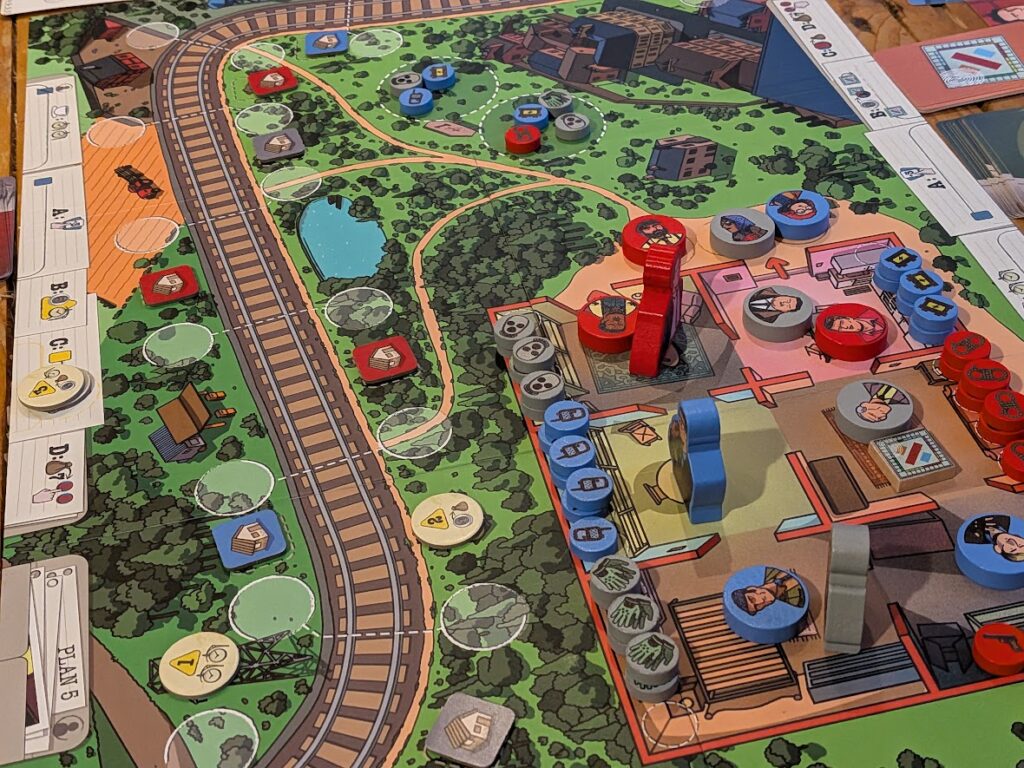
There’s a monopoly board game piece in the hideout in The Glasgow Train Robbery, and it, too, plays an important role. During a coordinator’s rest turn, they get to put an item token in the draw bag for each character in each room in the hideout. So if you’ve got two people in the room with the balaclavas, two of those tokens go in the draw bag. Unfortunately, if there are any characters in the same room as the monopoly board, fingerprint tokens go in the bag.
The draw bag ultimately decides your fate, as it’s only the pieces which come out of it which you get to use during the game. All you can do is try to stack the deck in your favour by adding more of the things you need, increasing the likelihood that they come out. Fingerprints coming out are bad news, though. If any character’s card gets a second fingerprint, it’s game over. You lose. If you need to add more fingerprints to the draw bag and there aren’t any – game over. You lose.
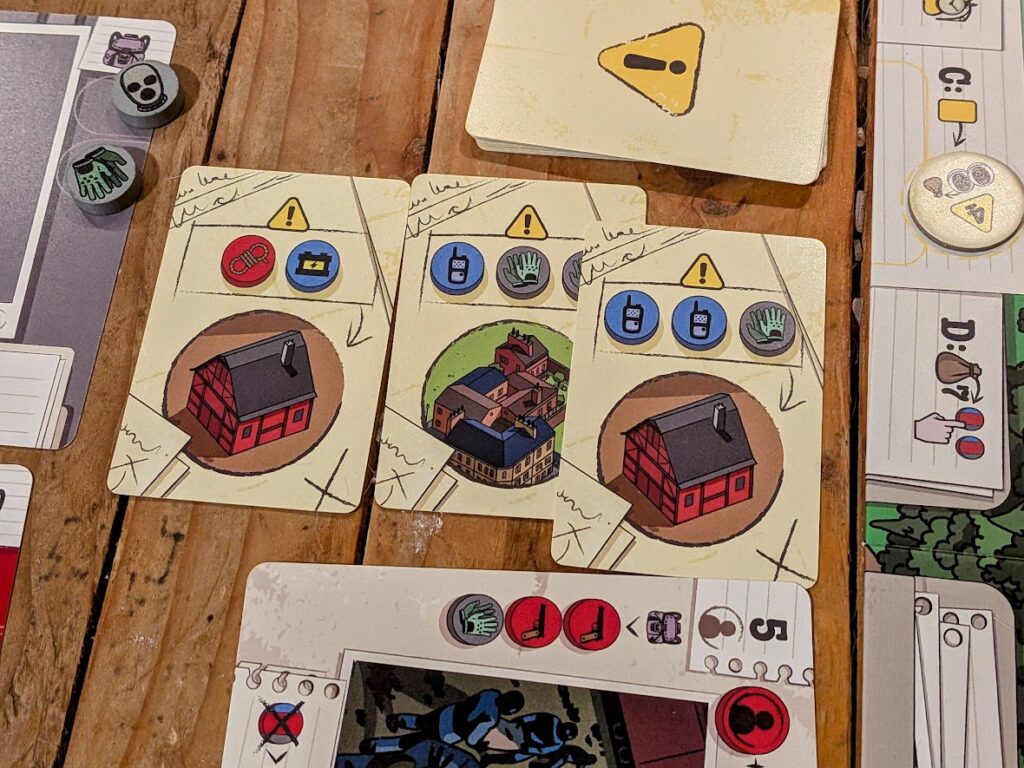
So, not only are you trying to move people and objects around to be at the right place at the right time. Not only are you trying to manage your actions to make sure you have enough cards to do what you need to. Not only are you trying to perform the actions that upgrade the character cards to make your life easier. You’re trying to do all of that while not being allowed to talk to one another, and as if that wasn’t bad enough, you’ve got to stop them playing sodding Monopoly too!
Final thoughts
The Glasgow Train Robbery is a great game, but it occupies a narrow intersection on the board gaming Venn diagram. You need to have only two players, and ideally two players who know one another well. There’s so much unspoken communication that needs to happen, and some level of innate understanding makes for a much smoother game. You also need to like co-op games, and on top of that, you need to enjoy limited communication games. If you don’t tick all those boxes, this probably isn’t the game for you. You won’t get much from it.
Enjoying this article? Consider supporting me.


If, however, that sounds like you, then you’ll really enjoy this game. I love The Halls of Hegra and Lanzerath Ridge (read my review of that one here), and the feeling of being up against it in terms of available actions and time constraints is alive and well in The Glasgow Train Robbery.
Expect to lose plenty. This game is tough. It’s really rewarding, though. Even though a lot of the theme is pasted on, it still manages to evoke the feeling of planning and carrying out a heist. Scrambling to get everything in its place while the train rumbles ever onward is honestly pretty exciting. Don’t get me wrong, I don’t want to glamorise crime, but the whole thing puts me in mind of something like The Italian Job.
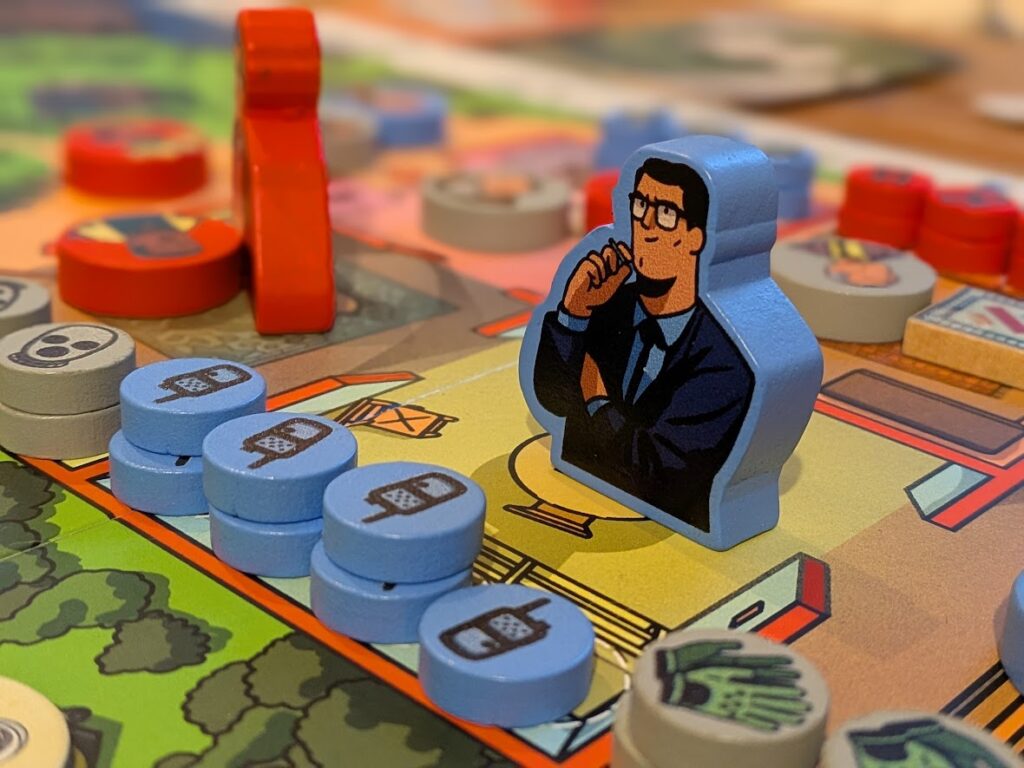
The Glasgow Train Robbery, then. Not for everyone, but the outstanding production quality, combined with thematic ties and nods to historical accuracy, make this a fantastic game for regular two-player gaming couples who want something a bit different.
Pros & Cons
Pros
- Really beautiful production, which carries the theme well
- A great two-player puzzle to solve
- Genuinely thrilling at times.
Cons
- Not for you if you don’t like co-op games
- …or limited communication
- …or don’t have a regular player two
Thanks to my supporters
A big shout-out to my current Ko-fi and Patreon supporters:
Krissie, Craig, Paul, Brendan, Brett, Gary, Becky, Gavin, Chris, Mark, Johan, and Richard.
You guys are all amazing ❤️
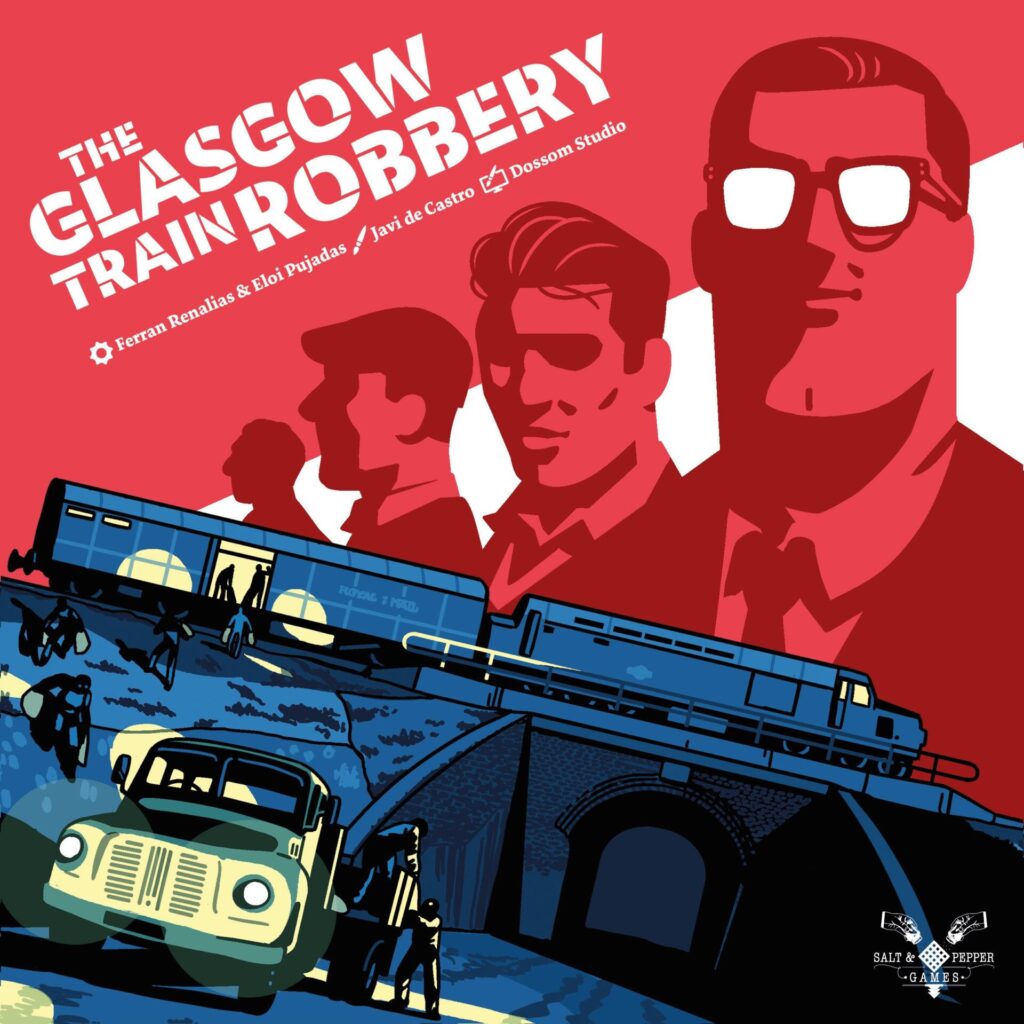
The Glasgow Train Robbery (2026)
Design: Eloi Pujadas, Ferran Renalias
Publisher: Salt & Pepper Games
Art: Javi de Castro
Players: 2
Playing time: 45 mins

Adam is a board game critic with over 15 years of experience in the hobby. A semi-regular contributor to Tabletop Gaming Magazine and other publications, he specialises in heavyweight Euro games, indie card games and transparency in board game media.