
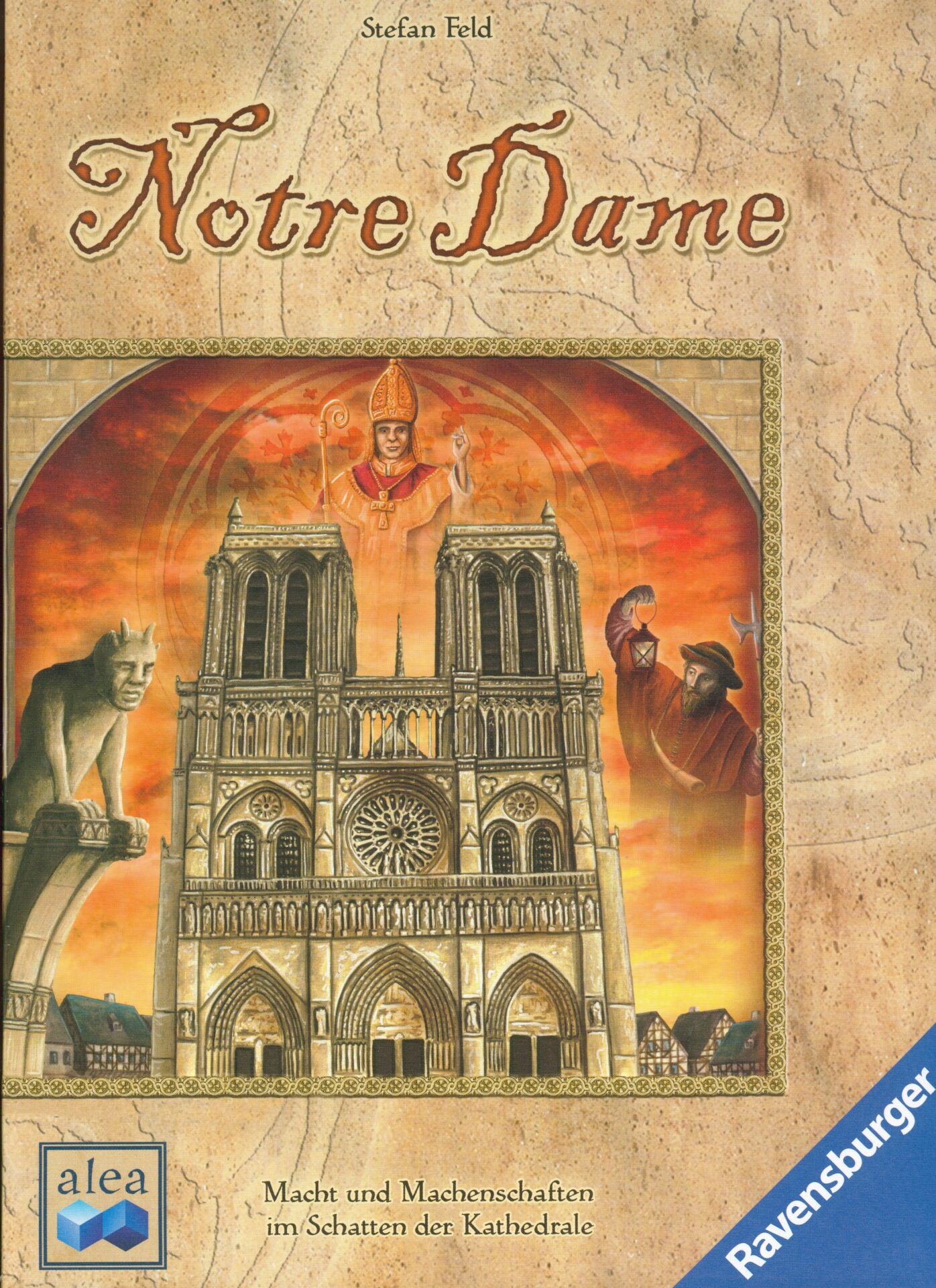

I’m winding back the years again today with another in the Play Something Old series of retrospectives. This time it’s the turn of Stefan Feld’s oft-overlooked 2007 game, Notre Dame. Notre Dame takes place in the French city of the same name, not the university of the same name in Indiana. Unlucky this time, college football fans.
The game is set in 14th-century France around the famous cathedral. The city is rife with disease, but that doesn’t stop the rich and powerful from wanting to get richer and more powerful. You play as a powerful family who wants to increase their standing, but you can’t ignore the plague-ridden rats. After all, if the plague kills all of the people in your districts, who’s going to spend their money with you?
What do you do in Notre Dame?
There are a few main things going on in Notre Dame. There’s a lot of point-to-point movement around the modular board, exponential-like addition of cubes in different areas, and it’s all tied together with a really clever card-drafting system.
In each round, you draft three cards, choose one, and pass the other two to the left. Then, from the two cards you’ve been given, you take one and pass the other on. So there’s some half-known knowledge which informs the game. You know for a fact that the two cards you didn’t choose are split between the two players to your left; you just don’t know which player has which card.
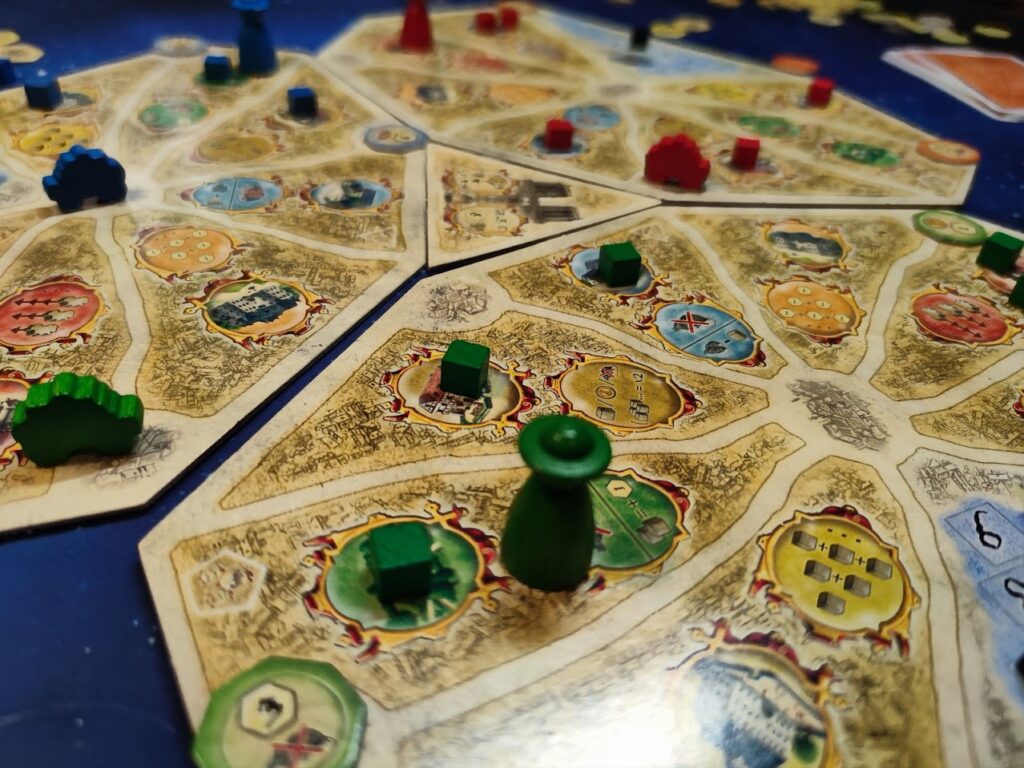
The other thing which keeps you guessing is that you only play two of those three cards you have. So those cards you passed along aren’t guaranteed to resurface. Tricksy.
So you play cards to move your carriage around the streets of Notre Dame, invest your influence in the hospital, cloisters, banks, etc., gaining and using money and influence, but all the while you’ve got this damn rat track. Most of the cards you play have a rat value on them, which advances the rat track. If you don’t manage the rat track well, it can have a big impact on your scoring.
There’s a real balancing act in trying to put cubes in areas for maximum effect, while making sure you have more cubes to place (remember the cloisters, folks!), and trying to control the infectious rodents scurrying around the streets.
Why should I still play Notre Dame in 202x?
Notre Dame does a lot of things very well. Once you understand the roles the cards play and how your decisions on what to keep and what to pass on during the draft affect your neighbours, the game just opens up.
I love the dilemma every action introduces. The way the cubes stack up in each area is cumulative, which you don’t see often anymore. So for example, your first cube invested into your bank gives you a coin. Your second cube gives you two coins. Your third cube yields three coins. It makes you want to lean into something, but it’s a game where neglecting any one thing can cause you real hassle. It’s a delightful problem to have.
I’m also a big fan of the modular board design. Each district board is a really unusual shape, and at first you’re thinking ‘Huh?’ but then you realise there’s a different central district board for three, four, and five players, and by rotating the districts they can tessellate perfectly. For some reason, it makes me really happy.
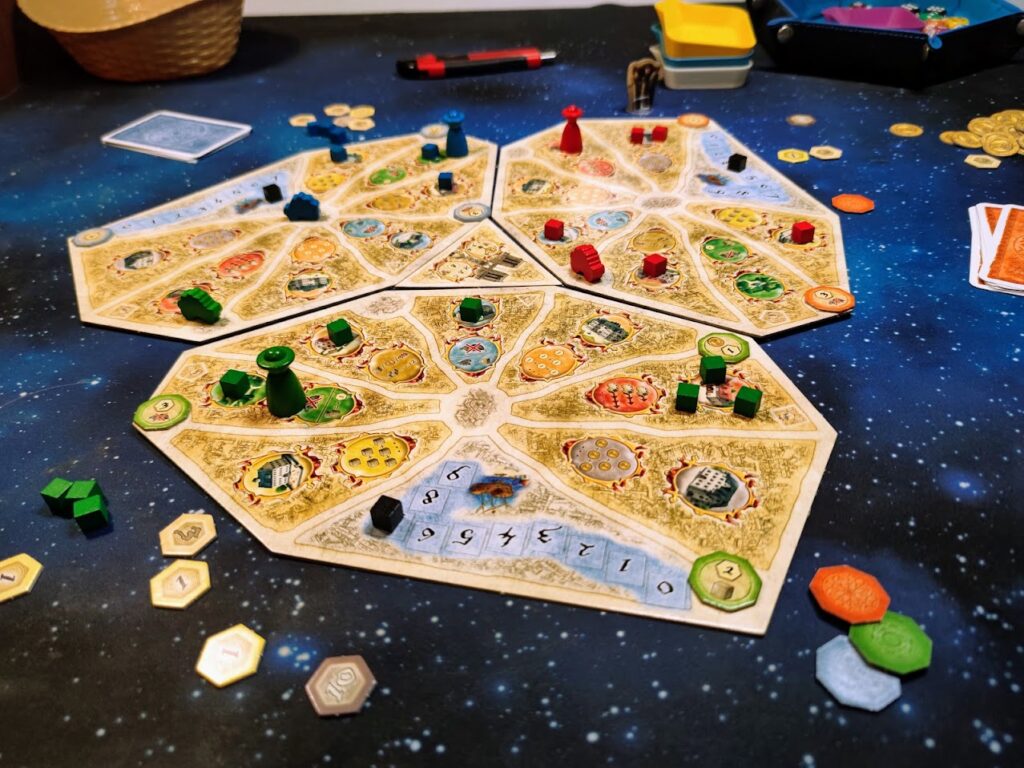
It’s a tough game to do well at, and that, combined with the player interaction from the card drafting, just feels different. It feels fresh, and that’s a weird thing to feel in a game that’s nearly 20 years old now. Stefan Feld has so many absolute bangers to his name (Castles of Burgundy and Civolution to name but a couple. Read both reviews here and here, respectively) that some of his older games get overlooked.
Enjoying this article? Consider supporting me.


Notre Dame is one of those overlooked games, and it deserves some attention. The production quality is admittedly low compared to most newer games (the old Alea version that I have certainly is), but it takes a few minutes to setup and put away. Track a copy down.
Over to you
❓ Have you played Notre Dame?
❓ What do you think about it?
❓ Is there a better, overlooked Stefan Feld game?
⬇️ Let me know in the comments below ⬇️
Thanks to my supporters
A big shout-out to my current Ko-fi and Patreon supporters:
Krissie, Craig, Paul, Brendan, Brett, Gary, Becky, Gavin, Chris, Mark, Johan, and Richard.
You guys are all amazing ❤️

Adam is a board game critic with over 15 years of experience in the hobby. A semi-regular contributor to Tabletop Gaming Magazine and other publications, he specialises in heavyweight Euro games, indie card games and transparency in board game media.
I quite enjoy this series! Good stuff
Thanks for the kind words, Phil.