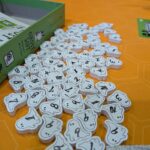

Rumble Nation (or Tenka Meidou as it was first known) was released in 2017. It didn’t make huge waves at the time, but it persisted, and here and now in 2026, it’s still one of the best. It’s a stripped-back game about dominating Japan around the turn of the 16th Century. Sometimes keeping something simple feels empty, but in the case of Rumble Nation, we’re dealing with a game which is still a delight, and one you really ought to have in your collection.
VERDICT
players 2-4 | playing time 20-40 mins
Rumble Nation is a pure, simple example of area control which packs a huge amount of fun into its half-hour stay.
area-control
dice
variable setup
Rumble Nation is a game which feels so simple to learn that your first read-through of the rules leaves you with two feelings. Firstly, a game this simple can’t be worth playing, surely. Secondly, you must have missed something, because people love this thing, but it doesn’t seem to have any guts.
You rattle through that first game in about half an hour, and despite it blasting past in a flash, you get it. Rumble Nation gets its hooks into you that quickly, and they stay lodged in you. This isn’t the promotional speak of someone writing reviews who wants you to buy another game. This is coming from someone who experienced those same hooks first-hand.
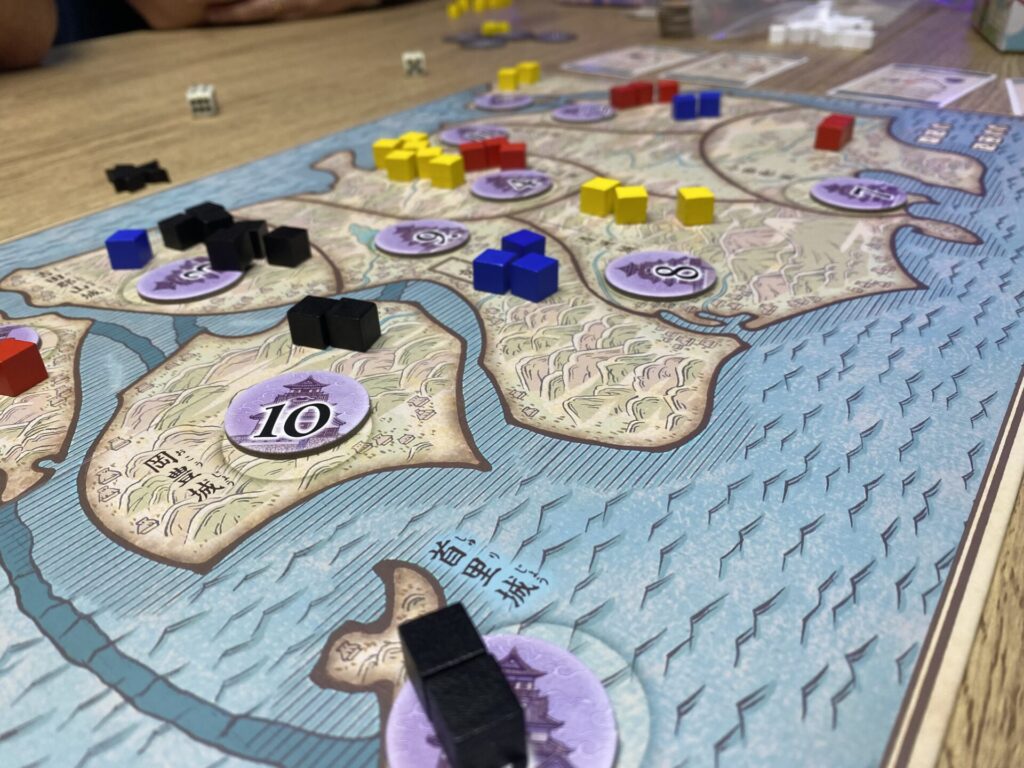
My first in-person play was at a local games cafe last summer (shout out to Piranha Cafe in Truro), and I wanted a copy ever since. Sam, from that cafe, has the original version he picked up in Japan, but there was a recent reprint, and I managed to grab a copy. I wanted it ever since, and now that I have a copy, you can have it once you pry it from my cold, dead hands.
Prefectural pressure
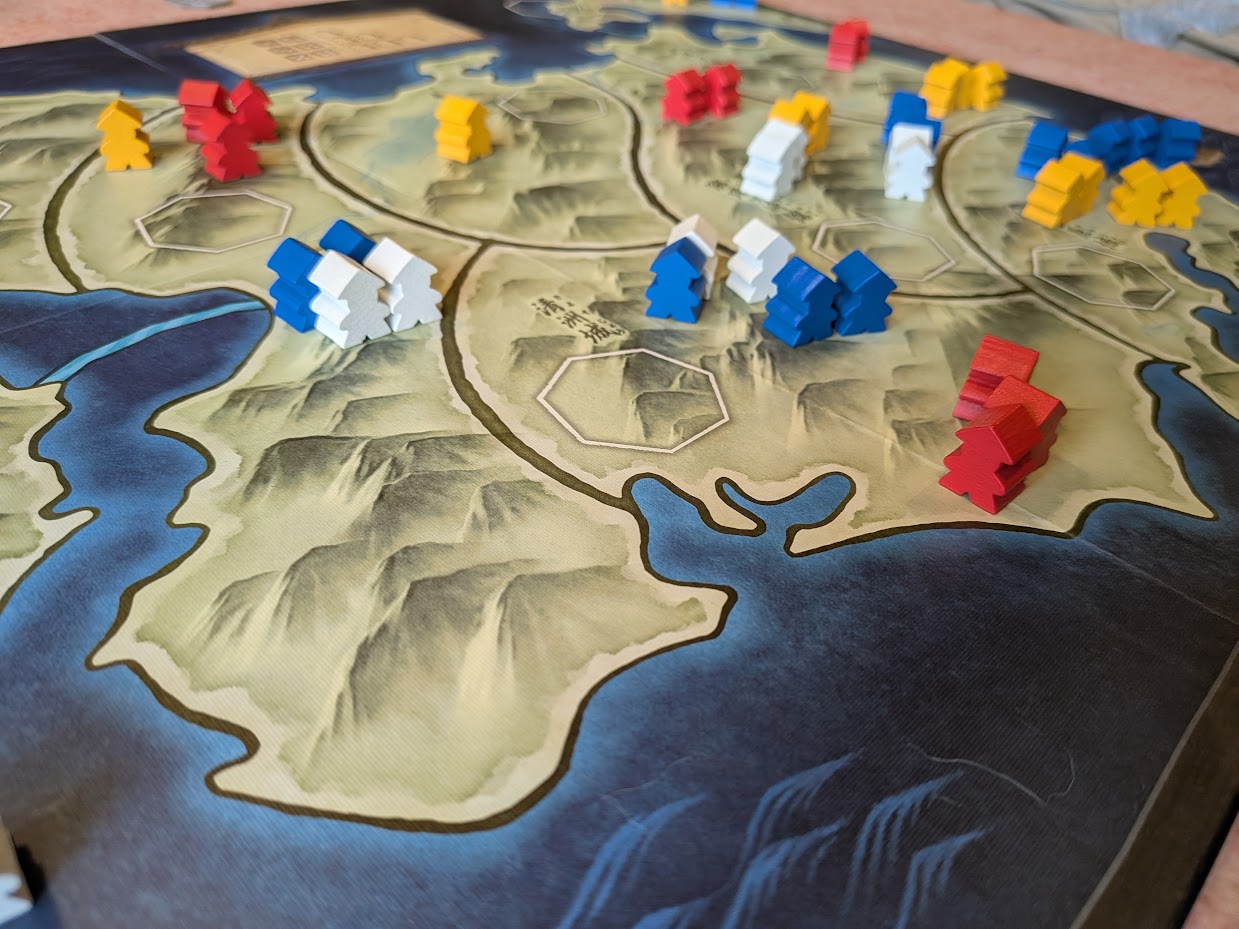
I can teach you how to play Rumble Nation in a couple of minutes. Each of the 11 districts on the board is assigned a number from two to twelve at random. Each player has three dice. You roll them and then split them into a pair and a single die. The total of the pair is the district, and the other die tells you how many of your little people go into that area. The number of people is the die’s value halved and rounded up, so a three gives you two people to place.
That’s it. The only other option available to you is to (once per game) choose one of the tactics cards on offer during this game and perform its action. It’s all pretty non-eventful. All of the drama comes at the end of the game when all of the tension that’s been wound up is left to dramatically unwind like a spring from the back of a sledgehammered carriage clock.
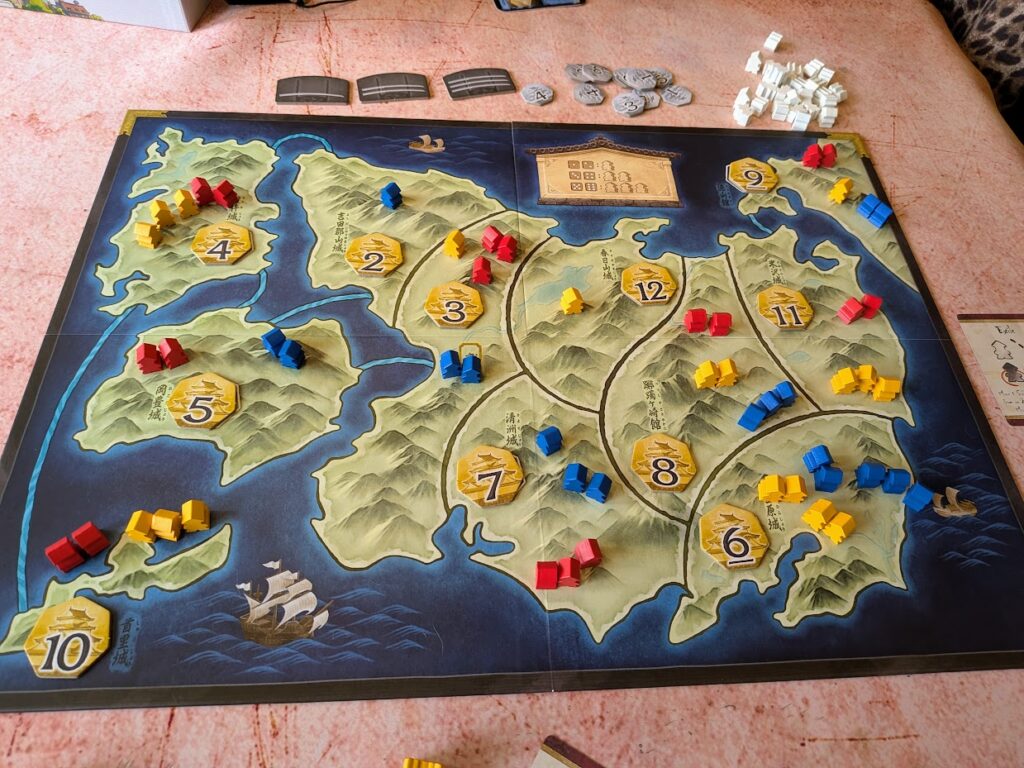
In numerical order from two to twelve, you resolve each area. The person with the most meeples in the area wins it and takes the chip from that area. The number two district is worth two points, the seven is worth seven points, etc. In the event of a tie the player with the highest value sword chip (i.e. the person who finished placing all of their meeples first) wins.
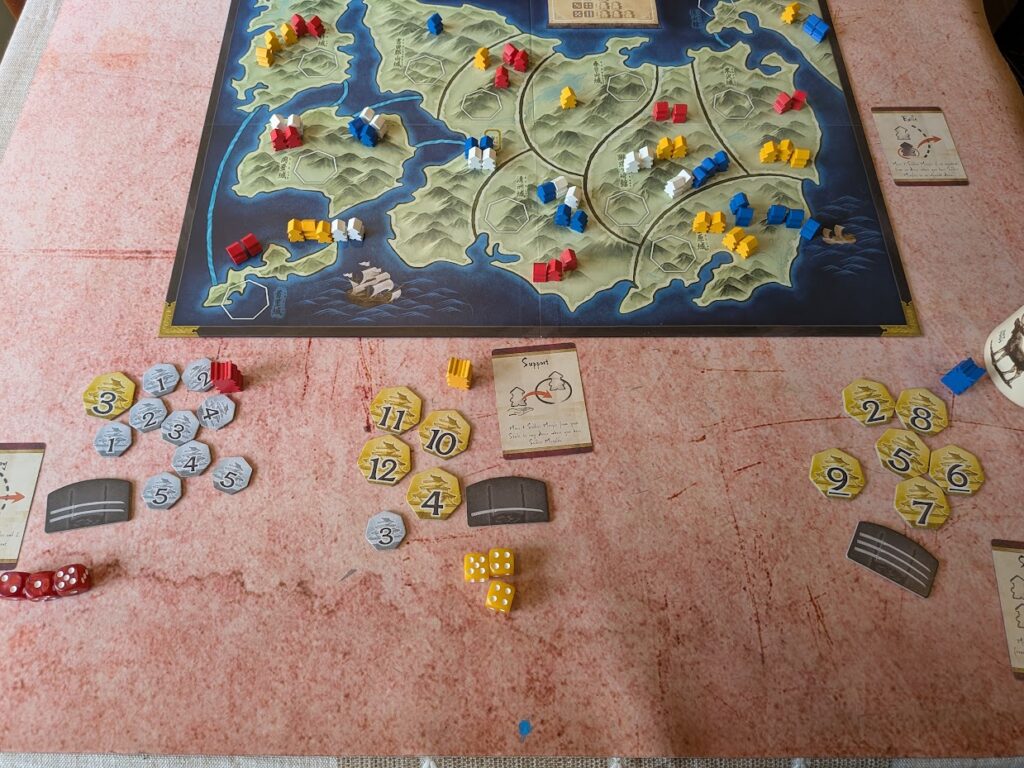
The winner checks all of the adjacent areas and, wherever they have at least one meeple, places two white support meeples who now fight for you. The area where you were losing 3-2, you’re now winning 4-3. This simple mechanism is SO good. You know those crappy games you play on your phone where you merge three things, then they explode outwards? It’s that, but without annoying adverts every three minutes.
Controlled chaos
Rumble Nation throws stuff at you constantly. It’s impossible to choose a strategy at the start of the game and to just stick to it, because you have so little control over what happens. Let’s say the number three tile is smack-bang in the middle of the board. You know that winning it could bump reinforcements into four other spaces, giving you what is essentially eight free meeples on the board.
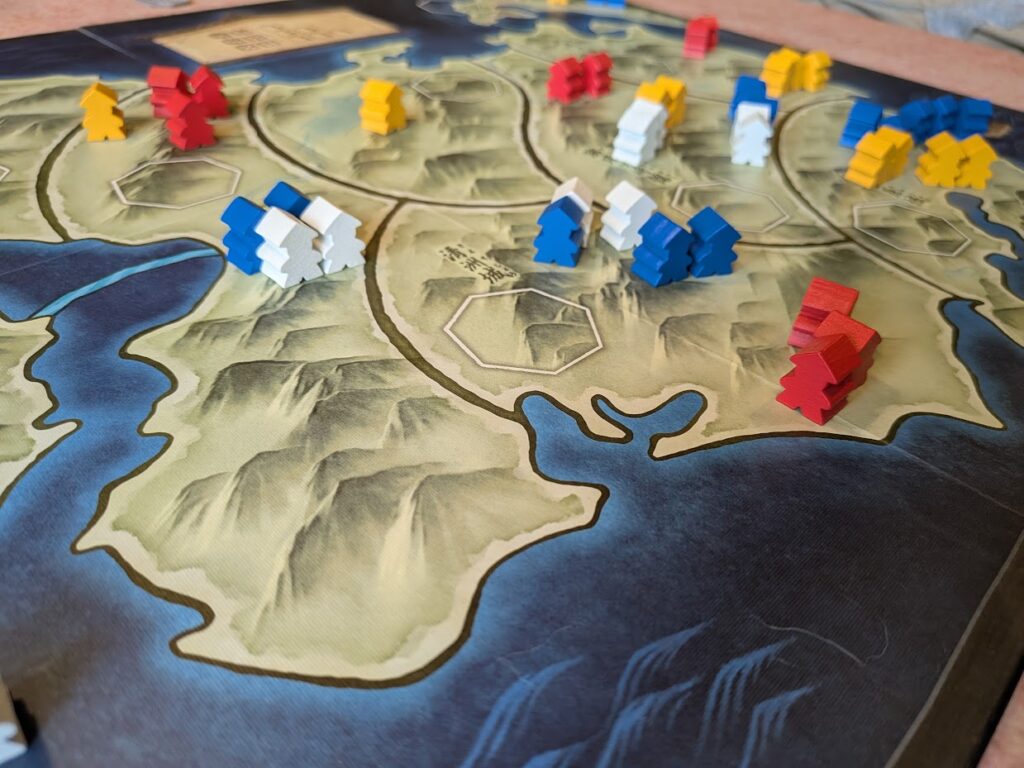
The problem here is that in order to place anyone in area three, you need to roll a two and a one during your turn. That doesn’t happen very often. Rumble Nation is a game about doing your best to mitigate for all the bad things that might happen, and throwing everything at one place if you think lady luck might be smiling on you. There are ways to get around the issue of relying on luck, most notably, the tactics cards.
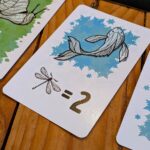
Tactics cards can do some crazy things, like bump enemies out of an area, move your own meeples around, and things like that. Using tactics cards, like everything else in this damn game, feels like a big deal. You only get to do it once in the whole game, and they’re first-come, first-served, so if you hang around for too long, there’s no guarantee the card you want will still be there.
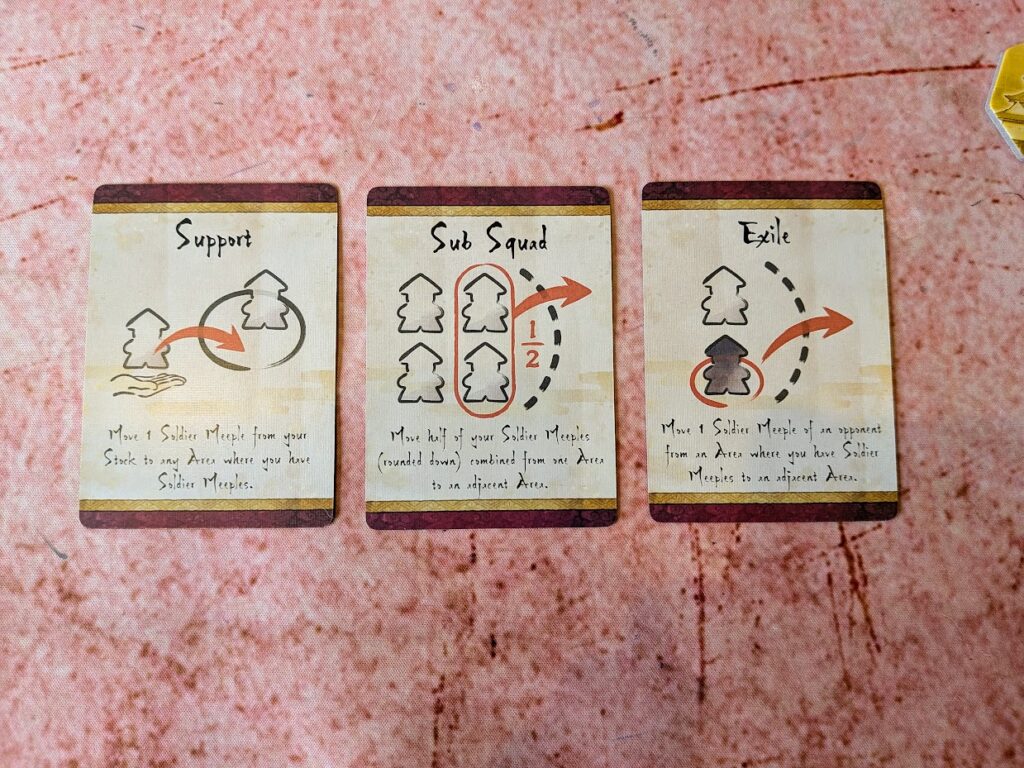
Then there’s the pain of taking a tactics card at all. If everyone takes one but you and you manage to place all of your meeples first, you get the biggest value sword chip. Ties for majority are broken by who has the bigger sword chip, which has the potential to be huge.
Or maybe, maybe, you choose to try to get all your people in the 10, 11, and 12 areas. Just winning those three can be enough to win the game, while you let the other players squabble over areas two through nine.
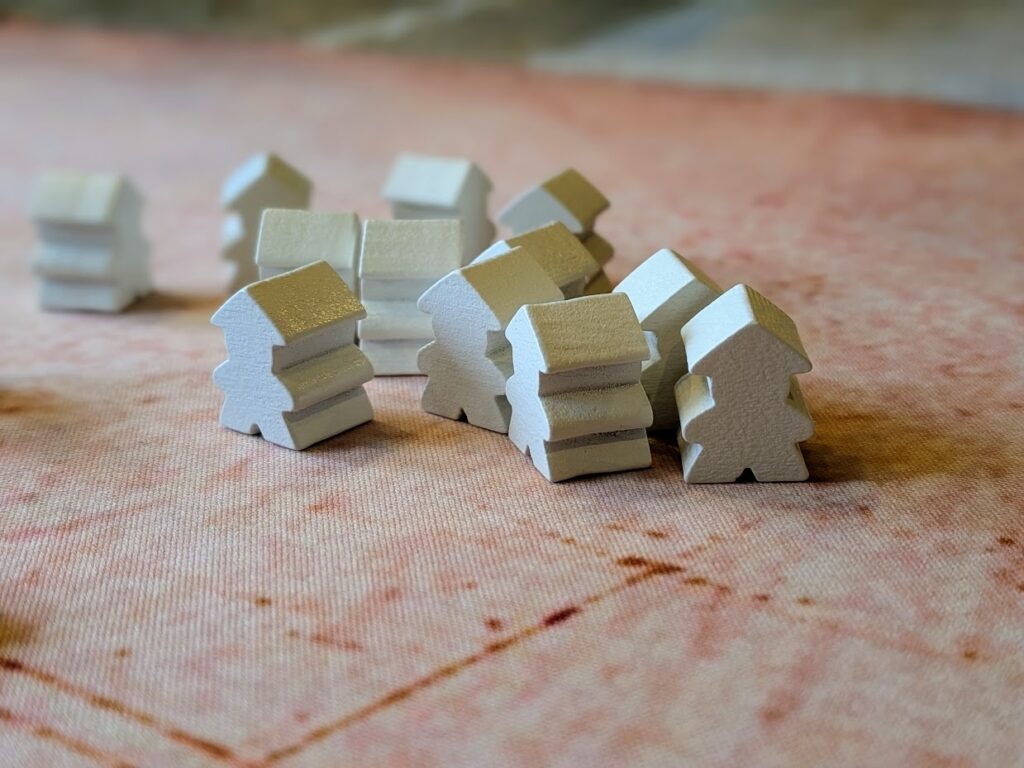
You see what I mean. A simple game that lasts thirty minutes gives you so much to think about. And the whole time you’re trying to make these decisions, up to three others are all doing the same. It’s pretty special.
Final thoughts
Rumble Nation is great. Let’s just get that out of the way before anything else. I don’t think I’d bother playing with two players again, but with three or four, it sings. If you’re one of those people who like a game where there’s very little luck involved, you might not get quite the same kick from it as I do, but as far as I’m concerned, that’s your loss.
You see, it doesn’t matter if you roll eights for the whole stupid game and just can’t contest the lower numbers. It happens. You might have a bloody awful game where you just can’t seem to get anything going, but you’ll learn from it. In the time it takes you to watch some half-assed video review of some new crowdfunded nonsense, you can be playing Rumble Nation again, and you’ll probably want to.
I bought the Deluxe edition, which uses meeples instead of cubes. In this version, you also get the Daimyo module for the base game. It gives you a special, bigger Daimyo meeple and a character card. Each different card gives a different asymmetric power to use once during the game, which spices things up without changing the game dramatically.
Rumble Nation is cheap, the box is small, it’s easy to learn, and it’s quick. It’s also absolutely brilliant. Keep your eyes open for a copy.
THANKS TO MY SUPPORTERS
Krissie  Craig Paul Brendan Brett Gary Becky
Gavin Chris Mark Johan Richard Simon Ben Sam (new!)
Help me keep Punchboard independent by joining the supporters

 Buy me a coffee
Pros & Cons
Pros
- Quick, easy, and small game
- The competition for areas is so good
- You could teach this to just about anybody
Cons
- The more players, the better; it’s not at its best with two
Where to buy Rumble Nation
As an affiliate, I may earn a commission from qualifying purchases made through these links, at no extra cost to you. This helps support Punchboard.

UK

US

EU/International
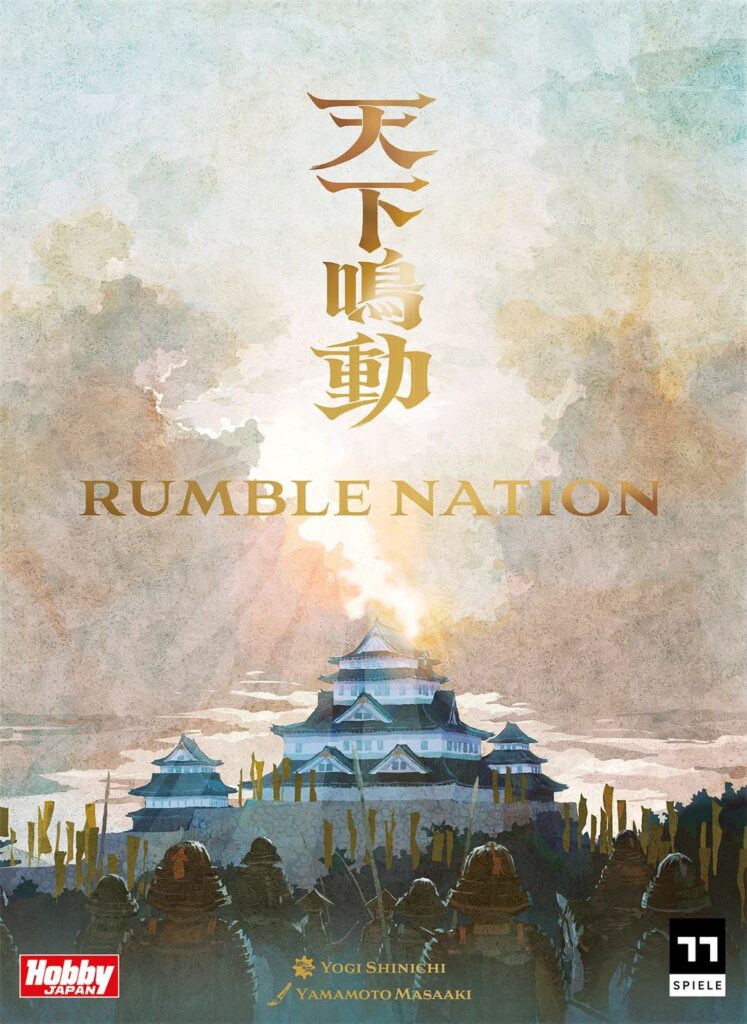
Rumble Nation (2017)
Design: Yogi Shinichi
Publisher: Hobby Japan, 77Spiele
Art: Toru Kagayama, Yogi Shinichi, Yamamote Masaaki
Players: 2-4
Playing time: 20-40 mins
More games like this one