
An early prototype of Ryugu was kindly provided by 14Games. All artwork and rules are subject to change. Thoughts & opinions are my own.
Ryugu The Fleeting Paradise, to give it its full name, is a clean, colourful new worker-placement game from 14Games, the studio that brought us Snow Planner (read my review of that here). Following the trend of Japanese Euro games doing things slightly differently, Ryugu’s high levels of player interaction feel more like an older game, but with a level of finesse and polish which feels much more recent. Clever, engaging, fun, and with a medium level of difficulty which puts it firmly on most players’ radar.
VERDICT
players 1-4 | playing time 60-140 mins
Ryugu turns time into a commodity and delivers a wonderful, brightly coloured, tightly-fought worker placement game.
worker-placement
time track
japanese
shared building
I knew nothing of the story of the Ryūgū-jō before designer Hiroki-san brought the game to my attention. It’s a Japanese fairy tale about a fisherman named Urashima Taro, who saved a sea turtle and was rewarded with a trip beneath the waves to the Dragon Palace (Ryūgū-jō). There he spent time with the princess Otohime and returned home a short time later, only to find that three hundred years had passed! He dared to open the gift box (tamatebako) that Otohime had given him, and forbade him to look inside (oops!), and suddenly he turned into an old man. Interesting stuff, right?
So interesting, in fact, that in the game you’re tasked with helping to build a theme park based on the legend. There’s a tight deadline to meet, and doing things like putting up buildings takes time. That’s right, it’s one of those games that uses time as a resource, like Gentes or Patchwork.
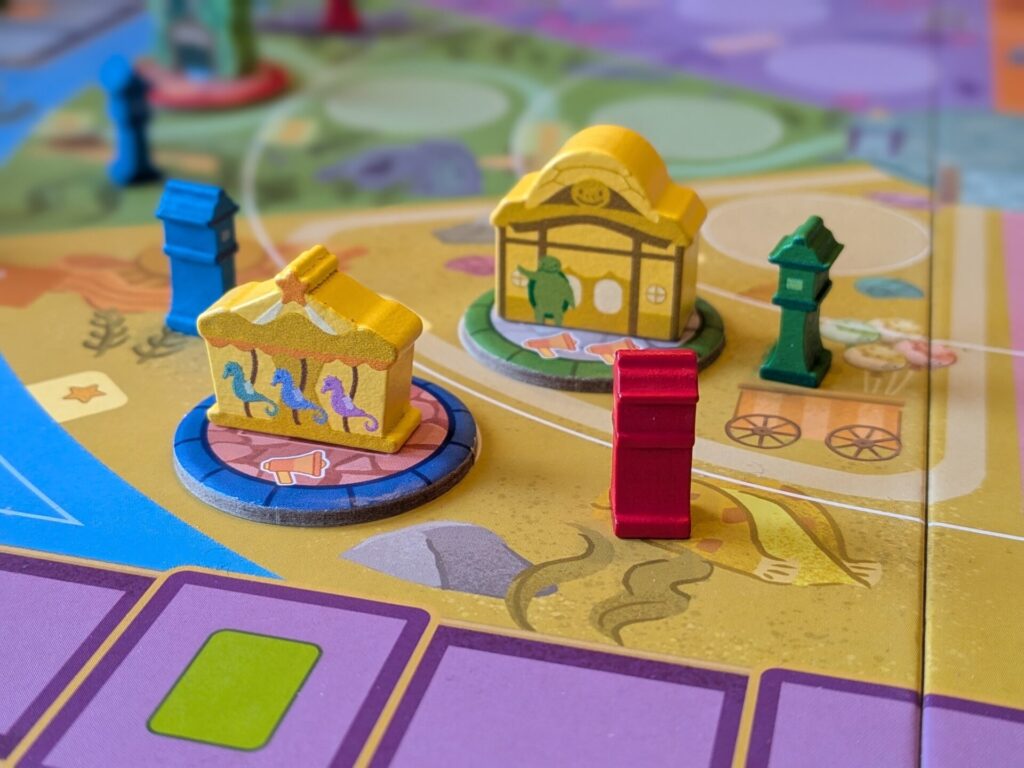
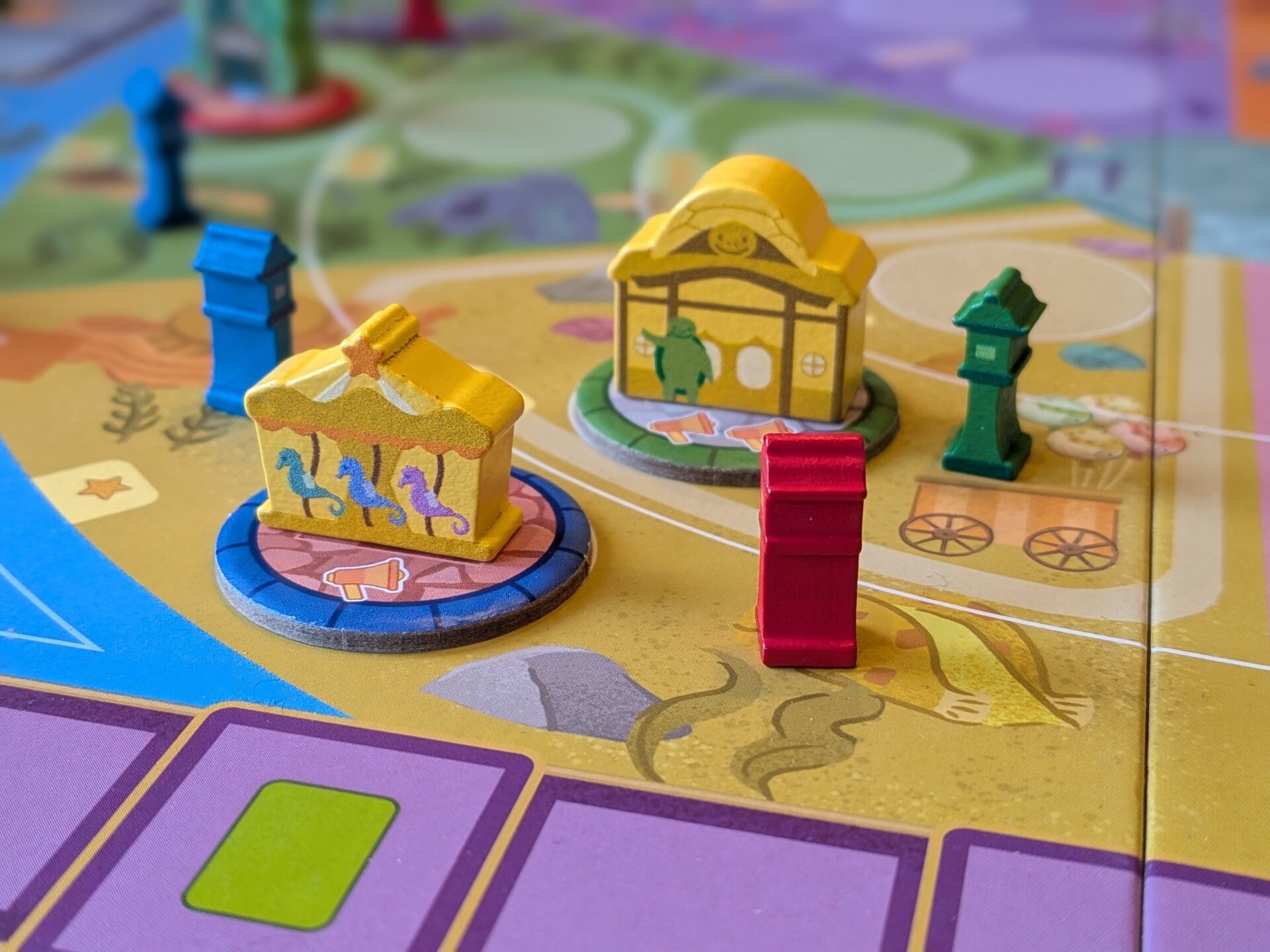
In practice, it’s a worker-placement game with a neat system of interlocking mechanisms. The main board houses the spots where the various buildings in the theme park will get erected, and between you you’ll need to put down bases and then add the buildings, trying to get it all done in time before the grand opening.
Time is money
Not literally, but there are times in Ryugu where the two are nearly indistinguishable. By placing workers out on the board, you can gain money, turtles (later employed as temporary workers, of all things!), increase your standing with supporters, and even get promoted. But remember, the park has a deadline for opening, and doing things takes time. Most of the places where you can drop a worker have a time cost, so when you take those actions, you move your time marker along the track. Where Ryugu gets really interesting is in the turn order.
Just like in Patchwork, the player furthest back on the time track is always the next person to take a turn. Another player might well have jumped on that spot, which gives them 13 cash, but it cost them six time. You could happily take a couple of actions which cost less time, leaving you free to plot and beaver away while those ahead of you can do nothing about it.
This all gets especially interesting with the way buildings are built. In order to put one of the fancy little wooden buildings on the board, someone needs to build a base first. Everyone has a the same set of bases available to them, and you can build on top of any player’s base. But if you put a base down and someone else builds on top of it, you get a little something each time it happens, so it can be pretty lucrative.
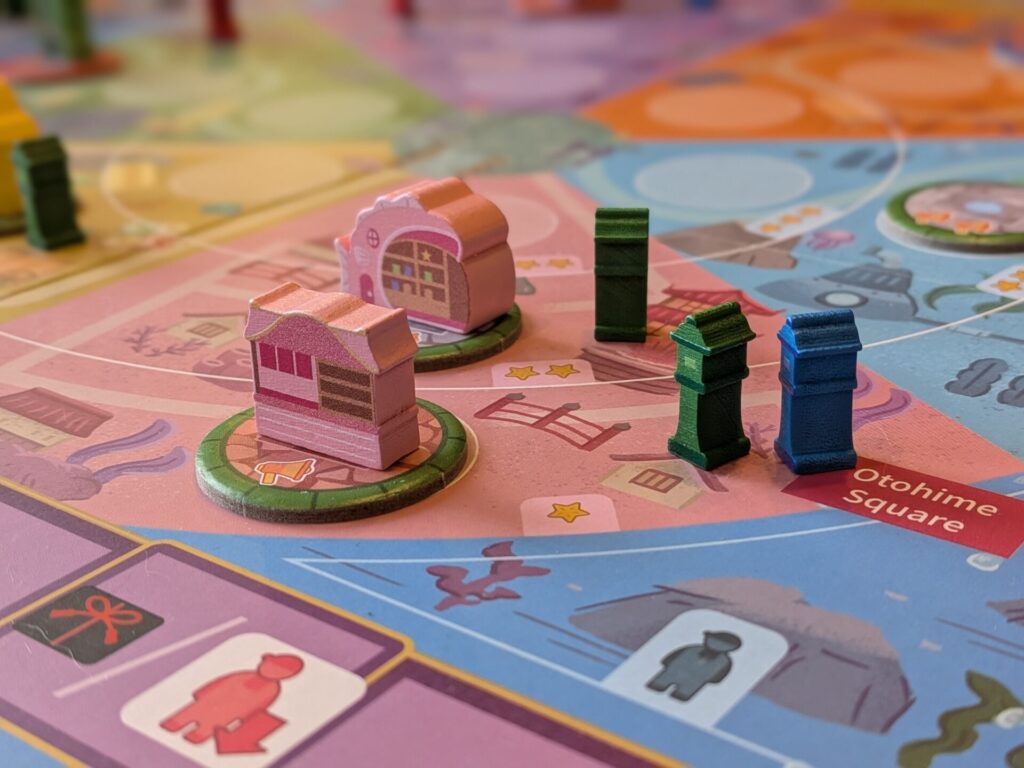
It all works together to create this lovely sort of race feeling. You want to do everything. You need to do everything. But you can’t. You need to the resources to do things, but getting resources takes time, pushing you further along the track and meaning other players can do things before you get the chance. You know that feeling in a game that everyone knows well, when you just know the person before you is going to do the thing you want to? Yeah, Ryugu is that, but for the entire game, and it’s great.
Theme park
It’s not controversial for me to say that the theme of a lot of Euro games is pretty loose. We all know it. Ryugu bucks the trend quite well, managing to implement its theme and source material pretty well. The idea of trying to get the park built before the deadline of the opening day comes across really strongly.
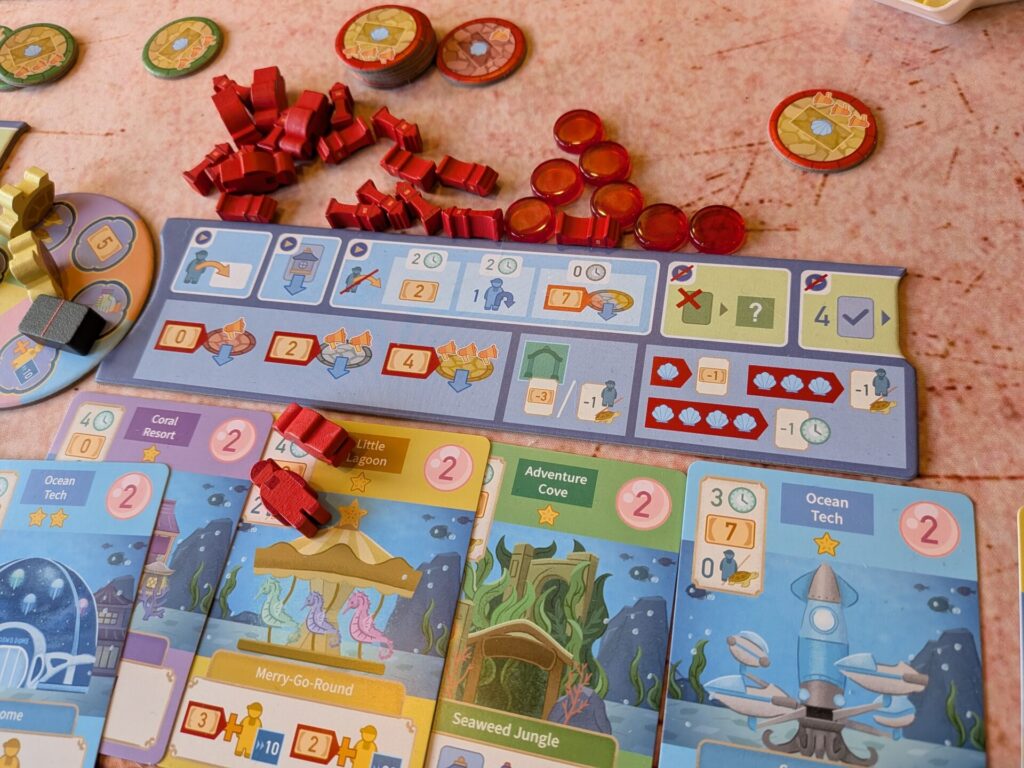
The end of the game is triggered when all players have passed the 75 mark of the time track, meaning they’ve all put in the equivalent of 75 days of effort into getting the park ready. There’s also a pre-opening, a bit like a soft launch, that happens on day 40 too. The VP scoring can be really close in Ryugu, and the player who ended up closest to 75 exactly gets bonus VPs, the next closest gets a few less, etc. I really like the tie to the story with the way the tamatebako are treated before final scoring. If you remember what I said about the original fairy tale, when Urashima Taro opened the box, he aged. At the end of the game, every tatamebako you have left moves you further along the time track.
It’s a little thing, but it made me smile the first time I saw it in action.
I like that working diligently moves you along a promotion track, and that at certain points you can jump ahead, snakes-and-ladders style, but at the expense of skipping over spaces that give you bonuses. I like that some actions put more workers of your colour on the time track, releasing them to your supply once the time marker gets there. It’s like the promise of future labour arriving, and it’s something you can actively plan for.
All the while you’re playing, you’re also working towards different objectives (chosen randomly during setup) and choose which partnership tracks you want to advance, based on their immediate and end-of-game rewards. There’s so much to try to keep your attention on; I love it.
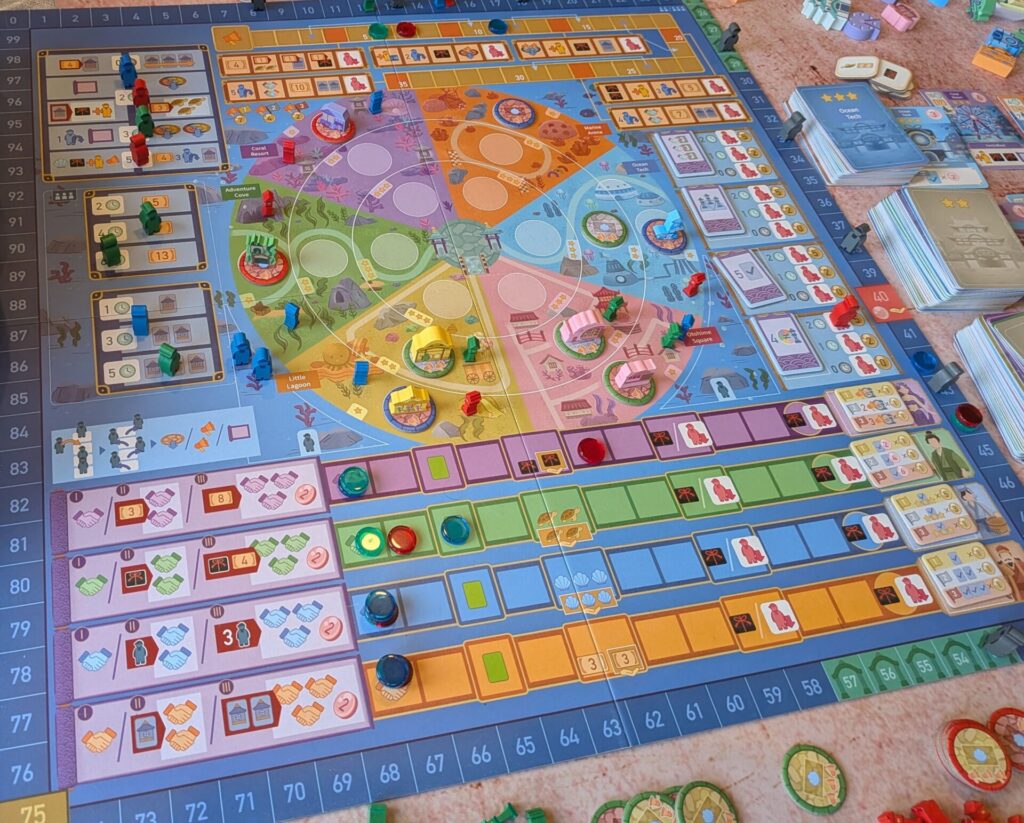
There’s another great mechanism whereby if you place the last worker in a block of action spaces, you trigger Dismissal. All of the workers previously locked there go back to their respective owners, and the person who triggered it gets a powerful bonus. The game tempts you into inefficient actions just to get workers and these bonuses. You know you shouldn’t, but sometimes the temptation is just too much…
Final thoughts
Disclaimer: I need to preface this part by saying that the copy of Ryugu I have is pre-production, and that the rules and even parts of the gameplay are still being written. The rulebook is a shared document, and it specifically calls out parts of the game and board to ignore for now. What I experienced may not be the same when you get the game.
That aside, Ryugu is great. Snow Planner was really good, and I can see a lot of the same strands of design threaded through Ryugu, especially in the competition. European and American Euro games seem to veer away from too much direct competition, but Ryugu embraces it. The frantic race to get bases built, to get the buildings down first to trigger the bonuses, and the sprint to claim the high-scoring spots on the objective tiles is just great.
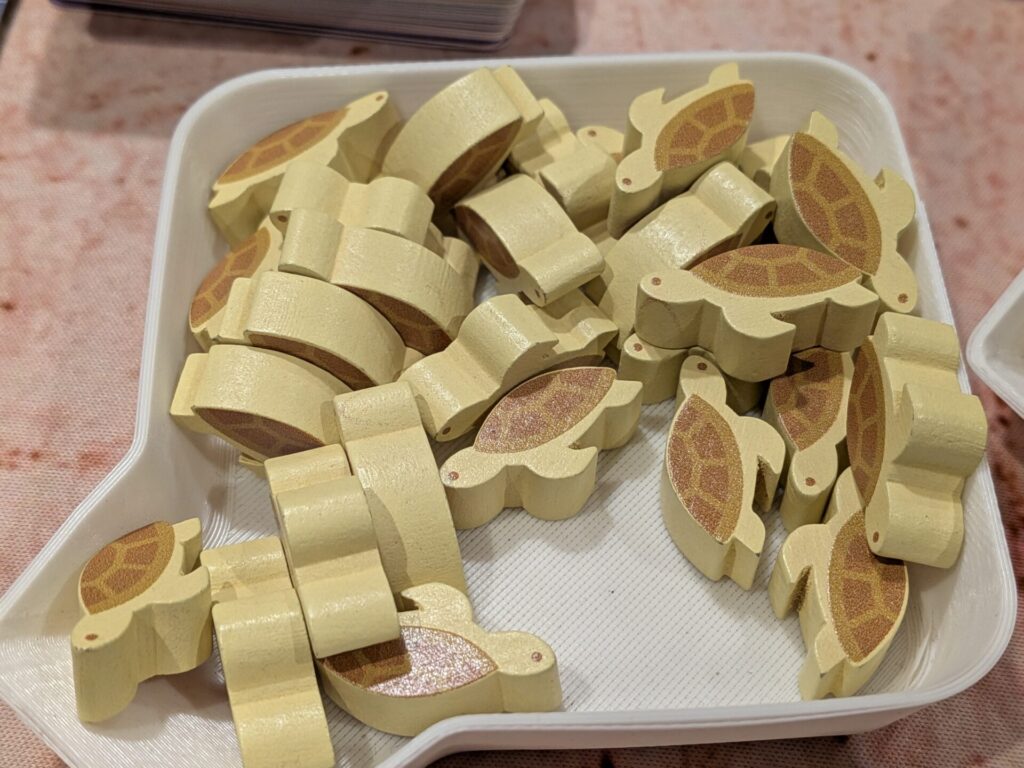
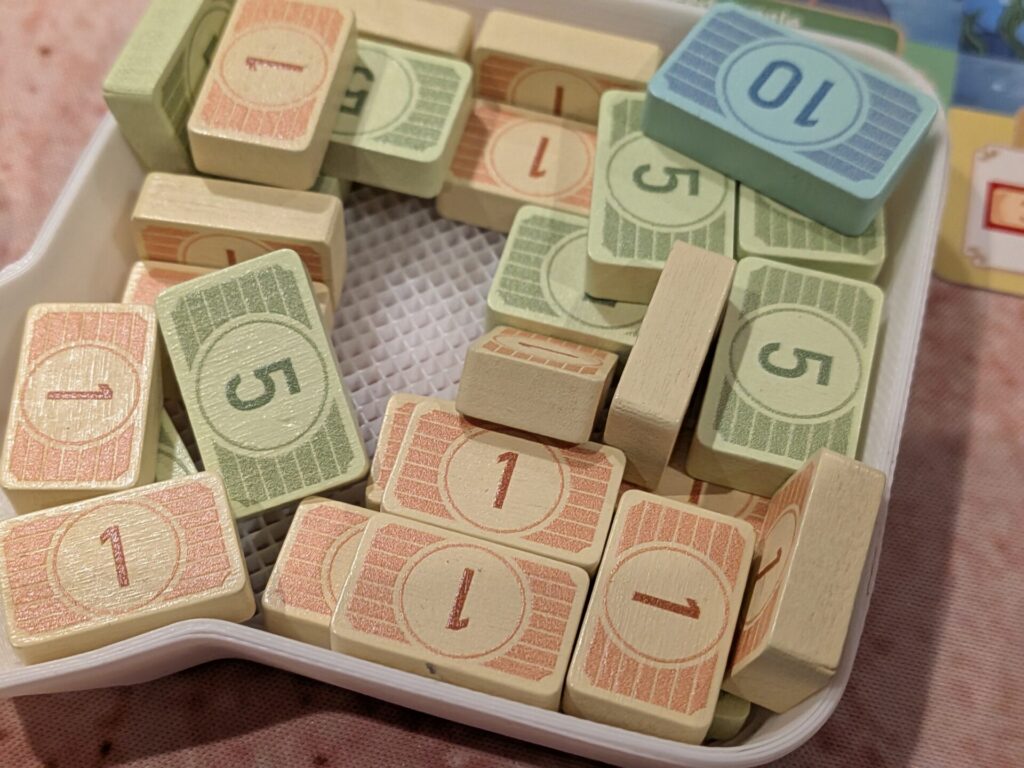
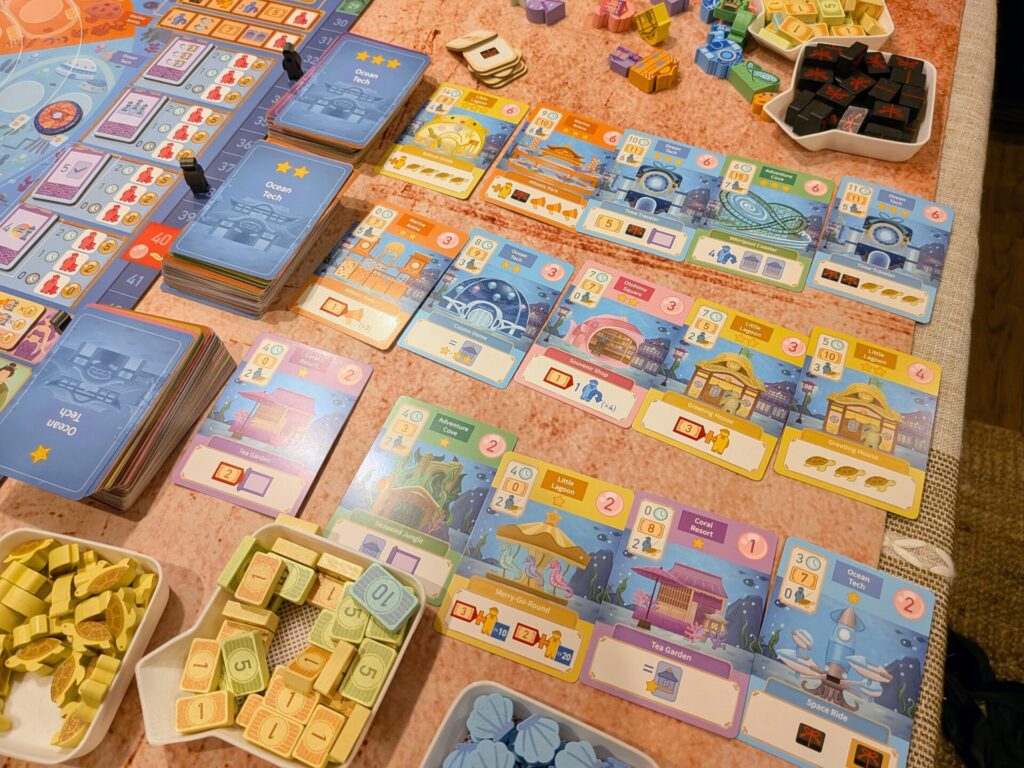
The production itself is gorgeous too. Snow Planner was functional, but Ryugu has stepped up with a ton of custom-shaped and screen-printed wooden pieces. The colours on the board really pop too; it looks really enticing on the table. Even with a far-from-complete rulebook the rules were clear, the iconography was great, and I was able to learn and play it with no trouble at all.
I definitely had the most fun with three and four players. Two players works, but the competition and hustle and bustle feel juicier with three or four people all going for it. The theme will definitely land better with a Japanese audience, given that the story is relatively unknown in the West, but it doesn’t stop it from being thoroughly enjoyable. When this hits crowdfunding in November, keep an eye on it.
Ryugu launches on Kickstarter late in November 2026. Sign up here to be notified when it launches.
Pros & Cons
Pros
- The time track and turn order feels fresh
- Tons of competition for every action
- The production is amazing
Cons
- If you don’t enjoy player interaction, you might not like the competition
THANKS TO MY SUPPORTERS
Krissie  Craig Paul Brendan Brett Gary Becky
Gavin Chris Mark Johan Richard Simon Ben Sam (new!)
Help me keep Punchboard independent by joining the supporters

 Buy me a coffee

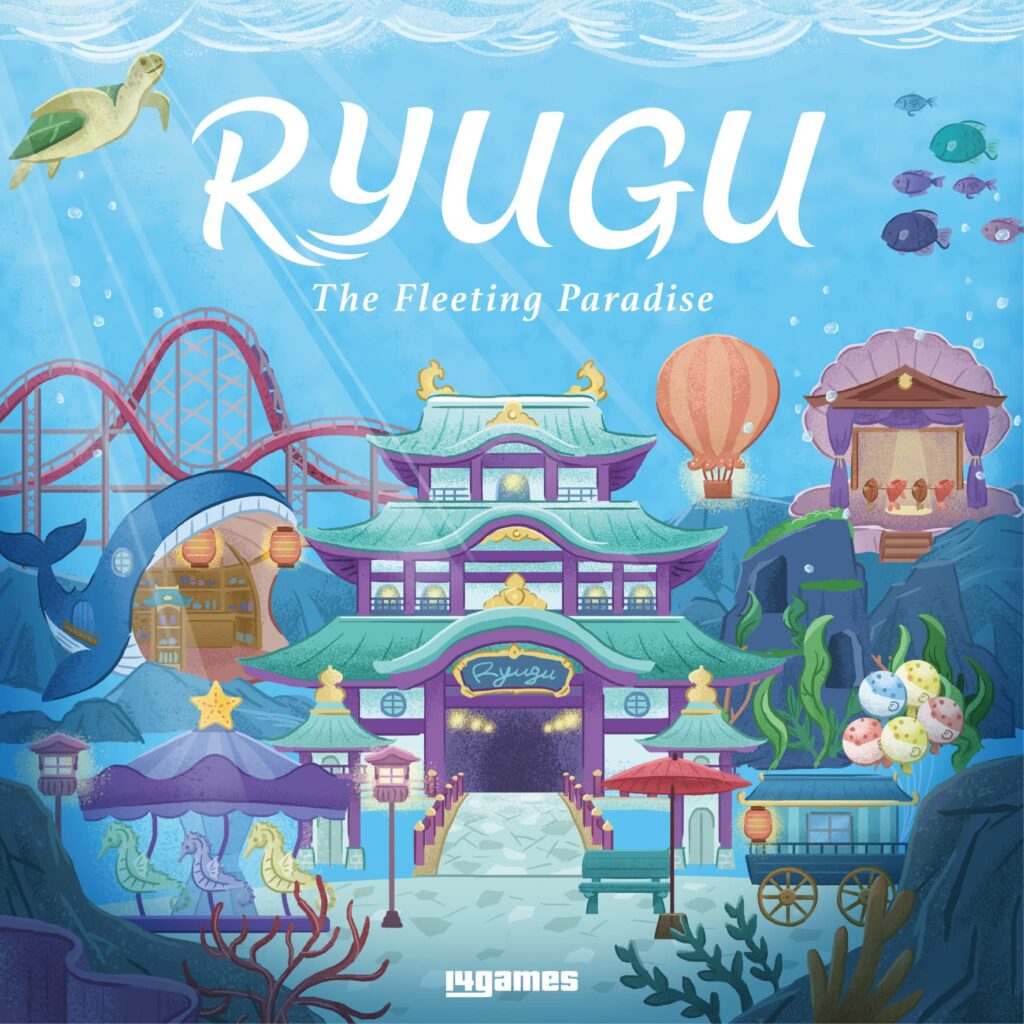
Ryugu The Fleeting Paradise (2027)
Design: Akashi, Isao Mukai
Publisher: 14Games
Art: Soragame Studio
Players: 1-4
Playing time: 60-140 mins
More games like this one